
AI screening and structured interviews for banking teams hiring at volume. Evaluate skills early, reduce repetitive screening work, and move forward with consistent evidence
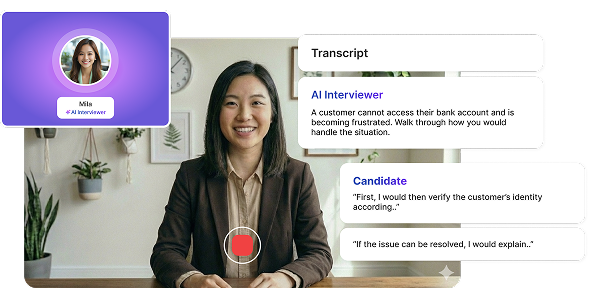
A customer says they cannot access their bank account and is becoming frustrated. Explain the steps you would take to resolve the account access problem
SKILLS ASSESSED
Communication clarity
Customer handling
Process discipline
Role: Banking Sales
QUESTION
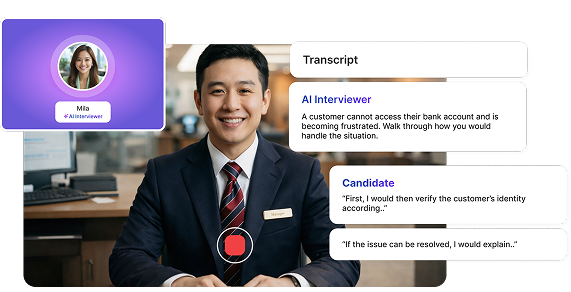
A customer cannot access their bank account and is becoming frustrated. Walk through how you would handle the situation.
Assessment Criteria
Clear Explanation
Calm and respectful tone
Correct process followed
Where KitaHQ Fits in Your Hiring Workflow
Best-fit hiring situations and clear boundaries
Fit Cases To Use KitaHQ
High churn and continuous backfill roles
Replace repetitive first-round screening for branch staff, contact centers, and junior support roles.
Multi-location hiring
Apply consistent screening criteria across branches, regions, and teams.
Spikes in Hiring
Handle short-term applicant spikes for sales activation or operational teams without adding recruiter load.
Initial screens for specialised roles
Use structured first-round screening for roles like junior credit analyst before deeper human-led evaluation.
Where Humans Are Still Required
Executive and senior specialist hiring
Background, sanctions, and fraud checks
Employment and credential verification
Final interviews and hiring decisions
Post-Hire Readiness with KitaHQ
KitaHQ can also be used after hiring, applying the same structured evaluation approach used by an AI tool for banking recruitment to support post-hire readiness checks
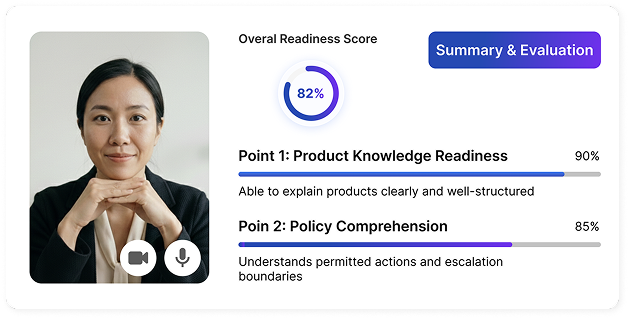
Product Knowledge Readiness
Clearly explains products, fees and common customer questions with confidence and accuracy
Policy Comprehension
Knows what actions are permitted, what must be escalated, and where to draw the line in customer situations.
Frequently Asked Questions Understanding AI-Powered recruitment in banking
Is this a fit for our banking hiring?
This fits high-volume or repeatable roles such as branch staff, contact-center staff, banking sales, and junior ops or risk support roles. It can also be used for initial screens for specialised roles like credit analyst, before deeper human-led evaluation. It is not a fit for executive hiring or senior specialist roles.
What do hiring managers actually receive?
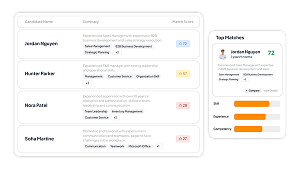
Managers receive rubric-based scores, the interview transcript, the recording, and a short structured summary. The intent is to skip re-asking basic fit questions and use manager time for deeper evaluation.
Where does this sit in the hiring process?
It sits after applications and before hiring manager interviews, replacing most if not all first-round screens for repeatable roles.
What still requires humans or other systems?
Final hiring decisions remain human-led. Background checks, sanctions or fraud checks, employment validation, and credential verification remain outside scope.
What is the most common failure case?
The workflow fails when answers become scripted, rubrics are vague, or managers do not trust the scores. Prevent this by using scenario-based prompts, clear pass and fail criteria, and regular calibration with managers.
Can this be used for banking sales without overpromising?
Yes, if the rubric rewards responsible persuasion and penalizes exaggeration. Use prompts that force clarity on fees, conditions, and what the candidate does when unsure. If your current sales culture rewards overpromising, expect false positives unless the rubric explicitly scores disclosure and restraint.
Can this screen specialised roles like credit analyst?
Yes, as an initial screen to assess reasoning and risk judgment. It should not replace deeper technical rounds or final evaluation for specialised roles.
Screen at Scale. Decide with Confidence
AI interviews provide clarity into candidate readiness before they step into your store