




Managing high-volume factory hiring when many candidates apply at once
Where Manufacturing Hiring Slows Down
Manufacturing hiring moves fast. Manual workflows often struggle to keep up.

High Applicant Volume
Recruiters spend days reviewing resumes, scheduling interviews and writing interview reports.
.svg)
Peak Season Hiring Pressure
Hiring surges create sudden applicant volume, urgent shift needs, and more candidates to screen in a short window.
.svg)
Urgent Hiring Needs
When shifts are short-staffed, recruiters need to identify qualified candidates quickly.
.svg)
Low Applicant Quality
Recruiters spend too much time filtering applicants who do not meet basic machine operation requirements.
Where KitaHQ Fits in the Manufacturing Recruitment Process
KitaHQ sits between candidate application and manager review, helping teams screen faster and send stronger shortlists.

1
Sourcing and Applications
Post jobs through job boards, referrals, career pages, or other applicant sources.

2
Early-Stage Screening
KitaHQ screens resumes, runs AI interviews, assesses candidate responses, and prepares clear reports for review.
.avif)

3
Manager Interviews and Selection
Hiring teams review shortlisted candidates and decide who should get hired.

4
Offer and Onboarding
Manage offers, contracts, employee records, and onboarding through your existing system.
AI Interviews for Manufacturing Hiring
Create role-specific question lists for manufacturing roles. KitaHQ conducts the
interview, captures candidate responses, and generates candidate reports.
interview, captures candidate responses, and generates candidate reports.
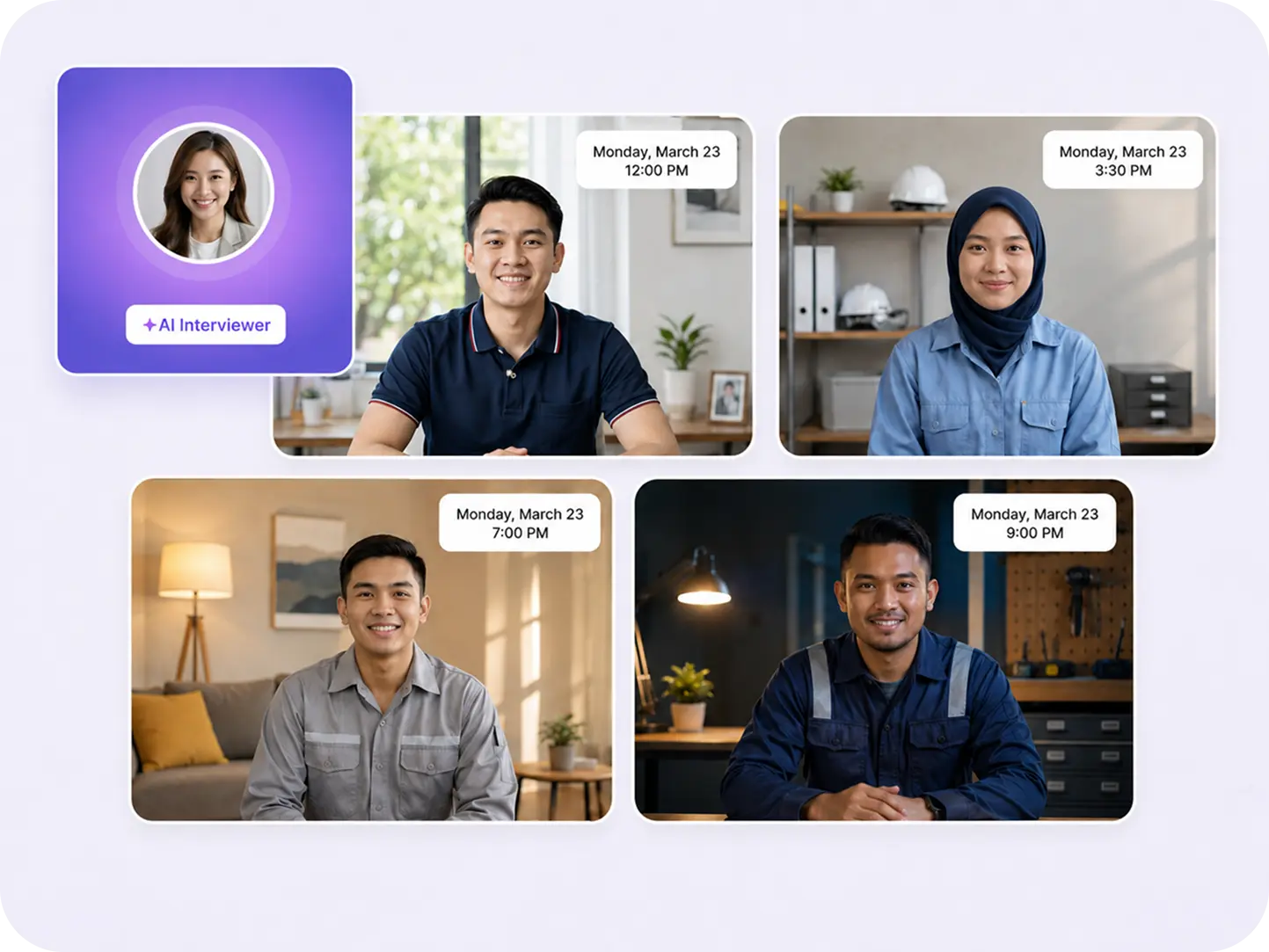
Interview at Scale, Without Extra Hands
Let candidates complete AI video interviews on their own time, while recruiters review AI-generated candidate reports.
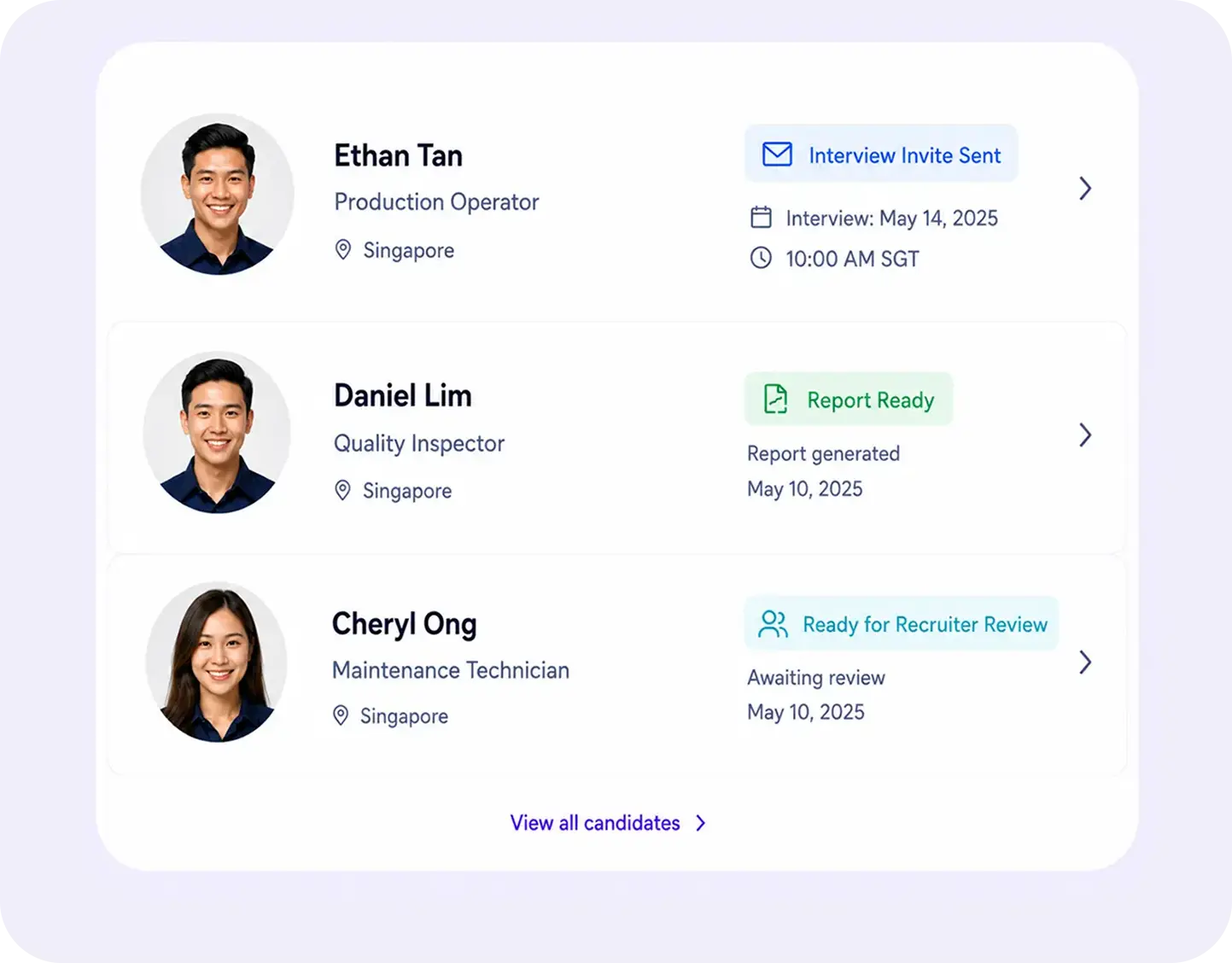
Faster Hiring, Less HR Workload
Send invites and reminders automatically without recruiter-led interviews, so teams can move faster without manually scheduling every first-round screen.
What Our Manufacturing Hiring Software Assesses
Our assessment tools for manufacturing help evaluate basic requirements and technical fit through structured
interviews before moving candidates forward.
interviews before moving candidates forward.
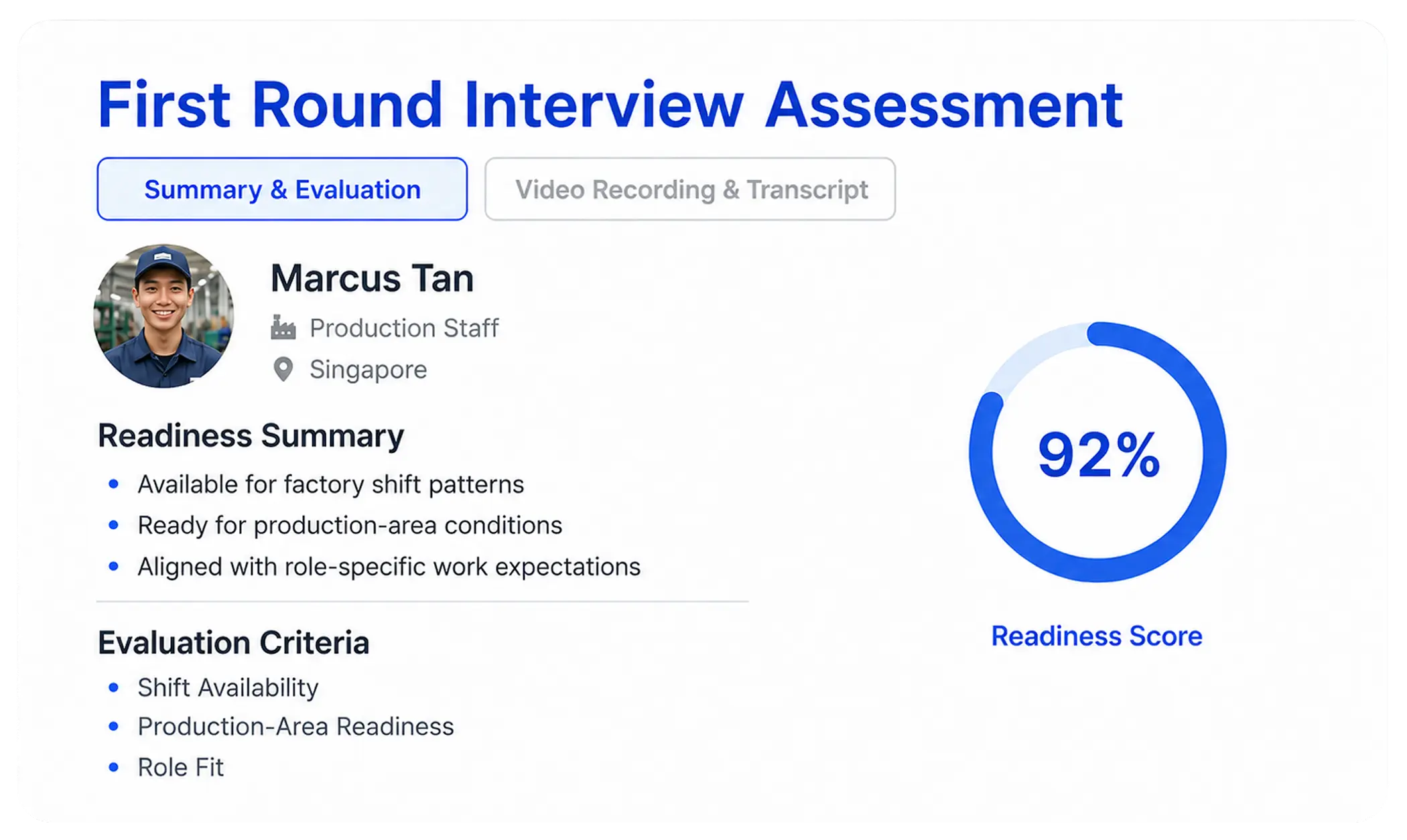
Basic Requirement Check
Production Shift & Floor Readiness
Assess candidate readiness for manufacturing work environments, including shift availability, factory experience, and hands-on readiness.
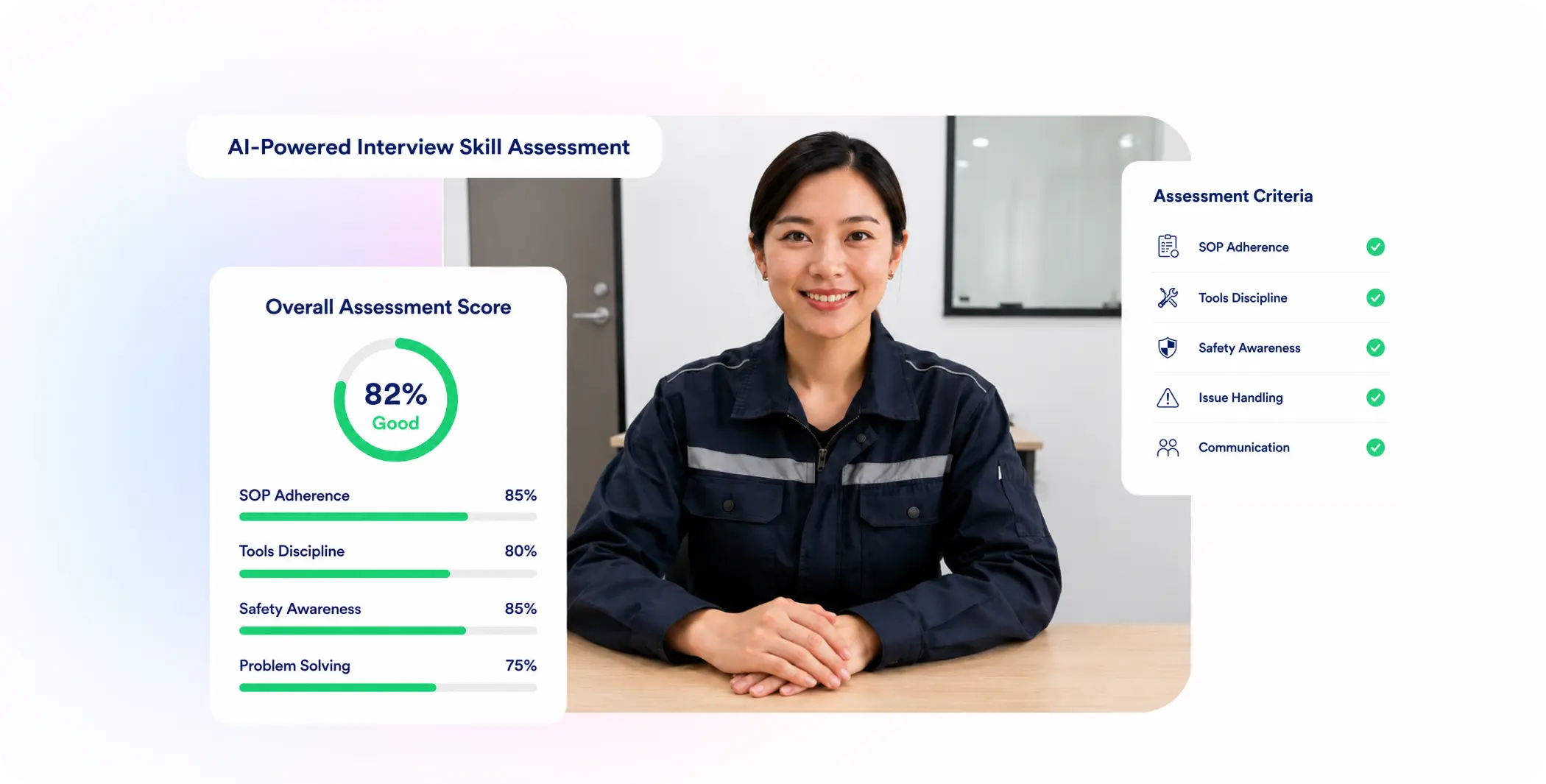
Safety Awareness
Safety and Process Discipline
Assess how candidates understand workplace safety, PPE usage, hazard reporting, and their ability to follow standard operating procedures on the production floor.
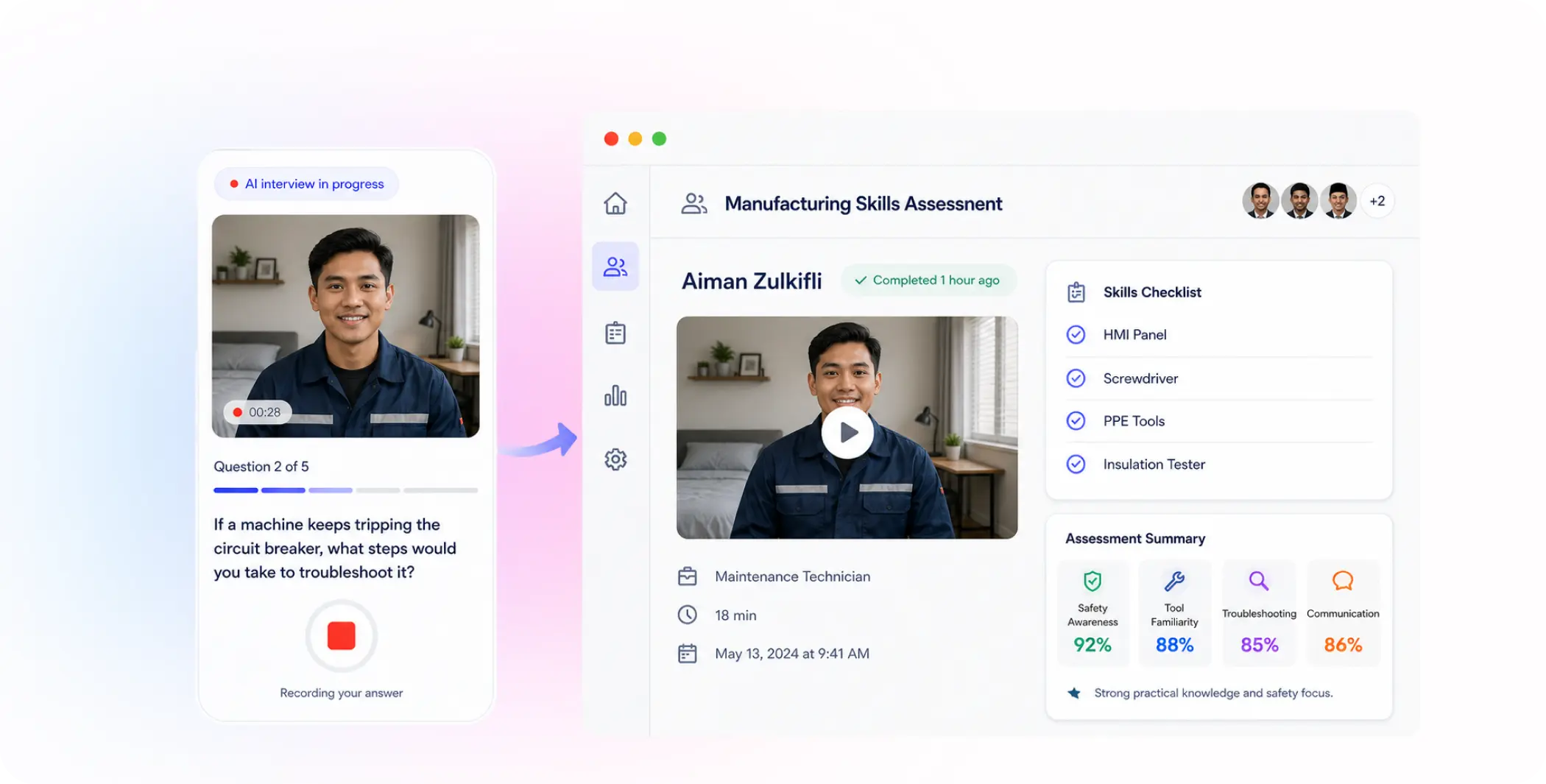
Technical Fit Check
Technical & Production Experience
Evaluate hands-on experience with machinery, assembly lines, quality checks, maintenance tasks, warehouse operations, or other role-specific manufacturing responsibilities.
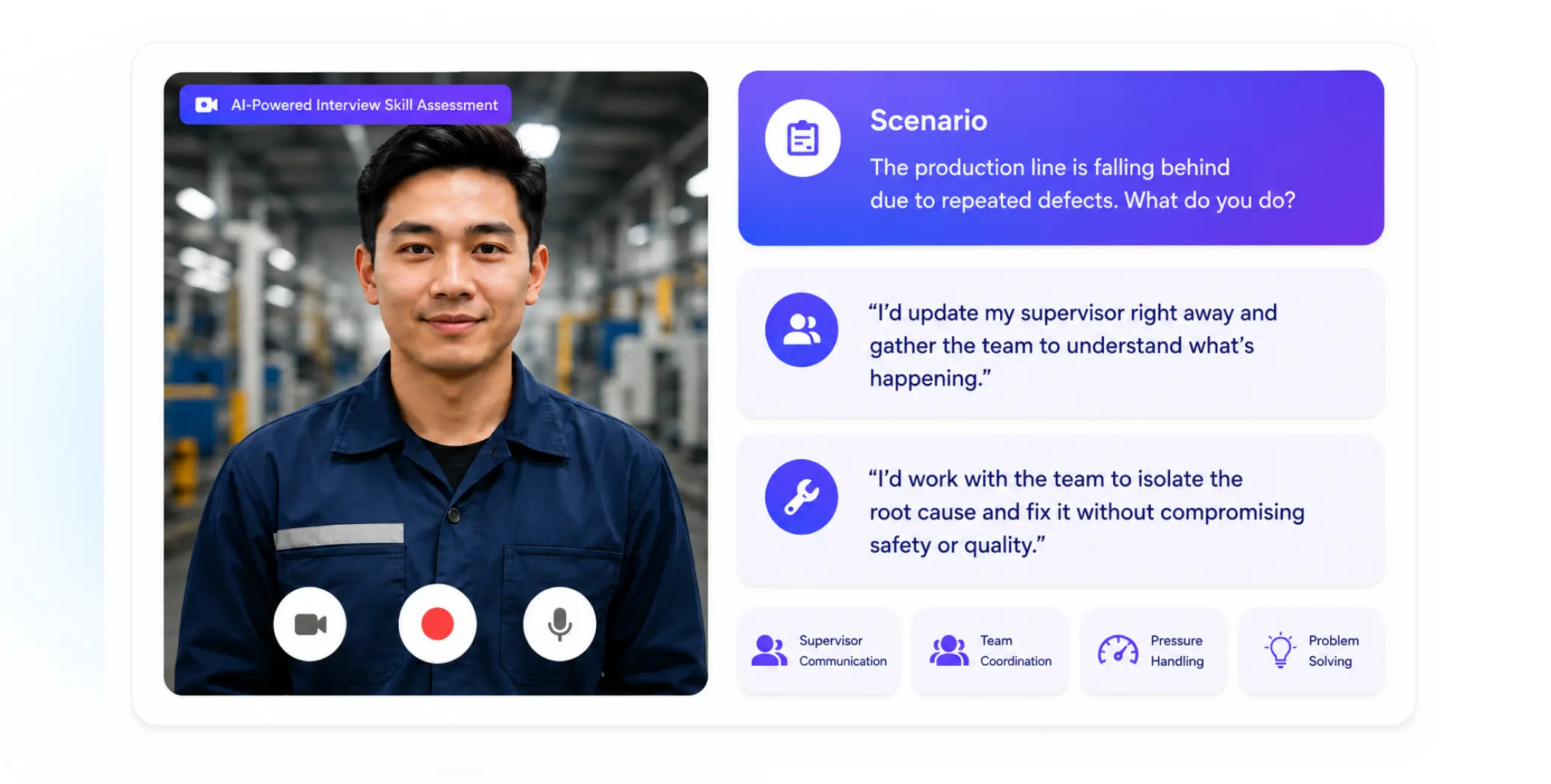
Teamwork Readiness
Teamwork & Problem Solving
Understand how candidates communicate with supervisors, work with production teams, handle pressure, and respond to issues such as defects, delays, or line disruptions.
Manufacturing Roles You Can Assess
Build role-specific assessments across production, warehouse, technician, and
quality assurance candidates.
quality assurance candidates.

Role: Line Operator
QUESTION
“If production targets are high but quality rejects increase, what do you do first, and who do you involve?”

Transcript
REAL-TIME ANALYSIS
AI Interview:
12.45
“If production targets are high but quality rejects increase, what do you do first, and who do you involve?”
Candidate
13:02
“The first thing I would do is assess the root cause instead of immediately pushing production harder.”
Candidate
13:05
“I would involve the Quality Control team, Production Supervisor, and relevant operators first because they are closest to the process.”

SKILLS ASSESSED
SOP Compliance
Production Judgment
Team Coordination
Problem Solving

Bad signal
- Ignores abnormal machine sounds during production runs
- Needs repeated help for basic changeover steps
- Misses material loading errors and jam risks

Good signal
- Starts machines correctly and follows startup checks
- Detects jams early and stops line safely
- Maintains output pace without skipping safety steps

Role: Quality Control Officer
QUESTION
“The production team is behind schedule and asks you to speed up inspection. What would you do?”
Transcript
REAL-TIME ANALYSIS
AI Interview:
12.45
“The production team is behind schedule and asks you to speed up inspection. What would you do?”
Candidate
13:02
"I understand the urgency of production deadlines, but my priority is maintaining quality and safety standards.”
Candidate
13:05
“However, I would absolutely work with the team to find a solution that doesn't compromise our standards.”
SKILLS ASSESSED
Quality Inspection
Process Control
Measurement Tools
Problem Solving
Bad signal
- Skips measurement checks when output appears normal
- Cannot explain defect categories or tolerance limits
- Fails to escalate recurring defects during shifts
Good signal
- Uses calipers correctly and records inspection results
- Follows sampling plans and checks critical dimensions
- Flags nonconforming parts before they reach packing
What Hiring Managers Receive After the Interview

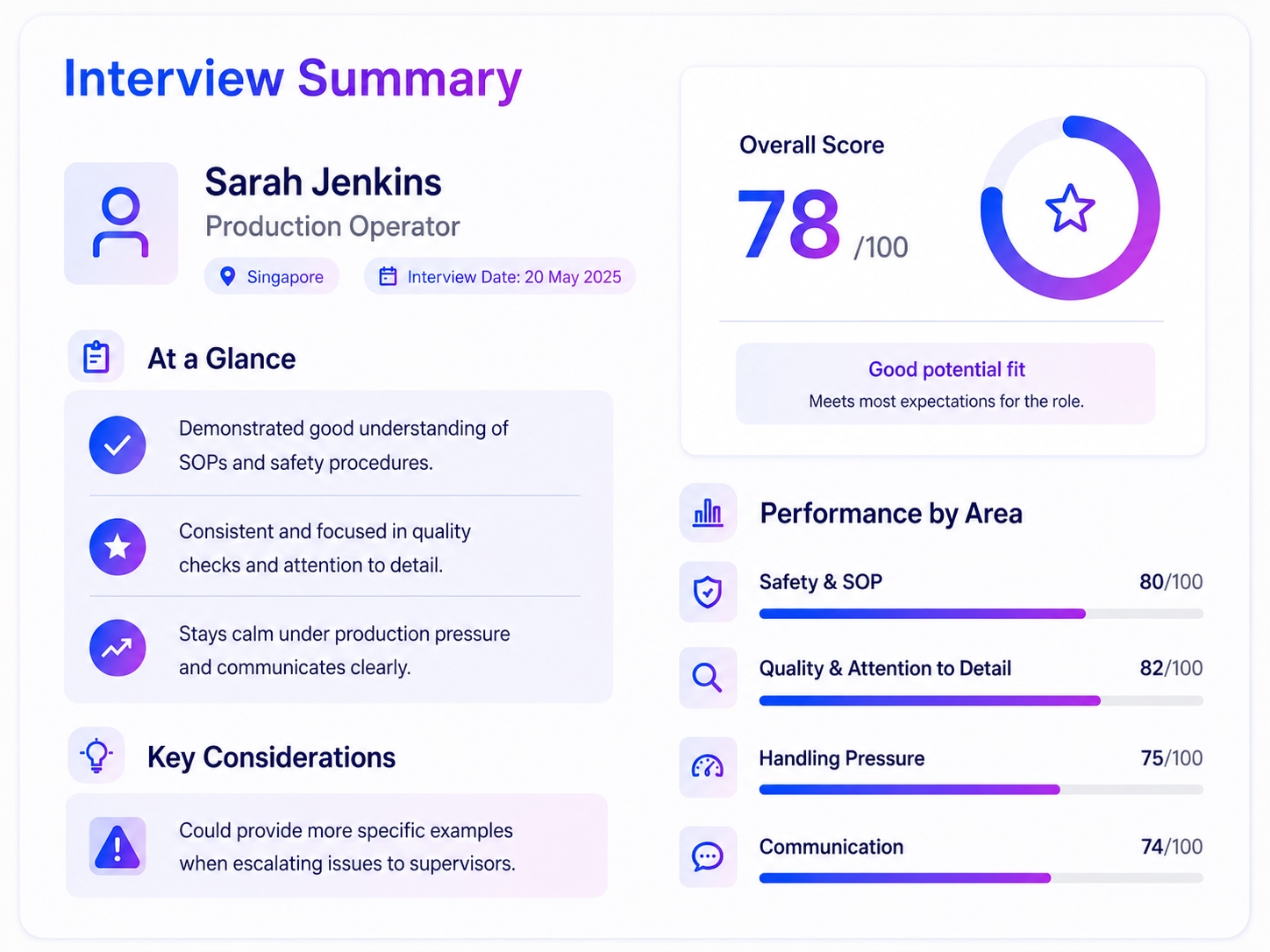
Screening Summary

A summary covering line or machine experience, shift and start readiness, pay alignment, and safety and SOP discipline.

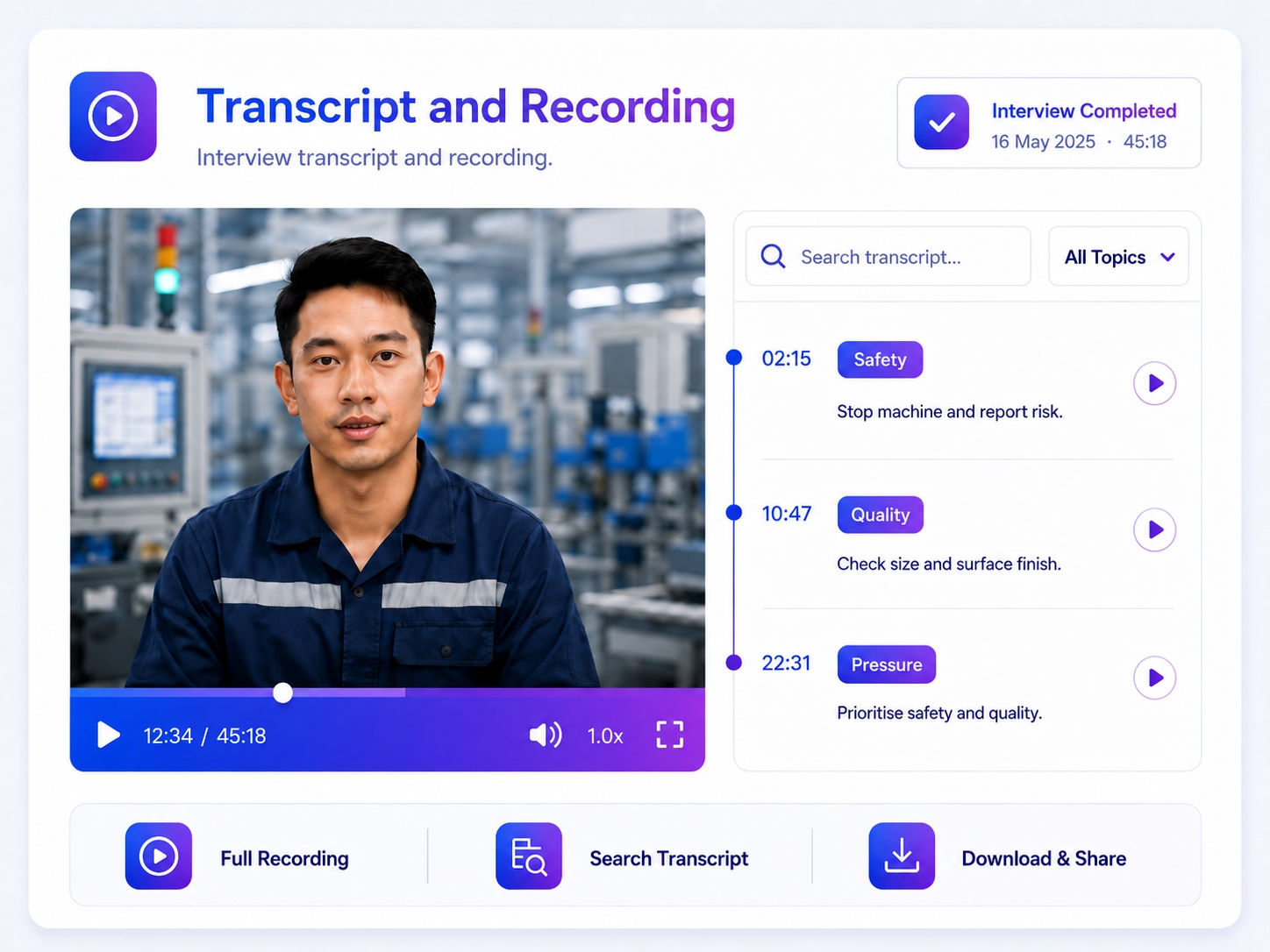
Transcript and Recording
A full transcript and recording of how the candidate responds to safety scenarios, quality checks, and production pressure situations.

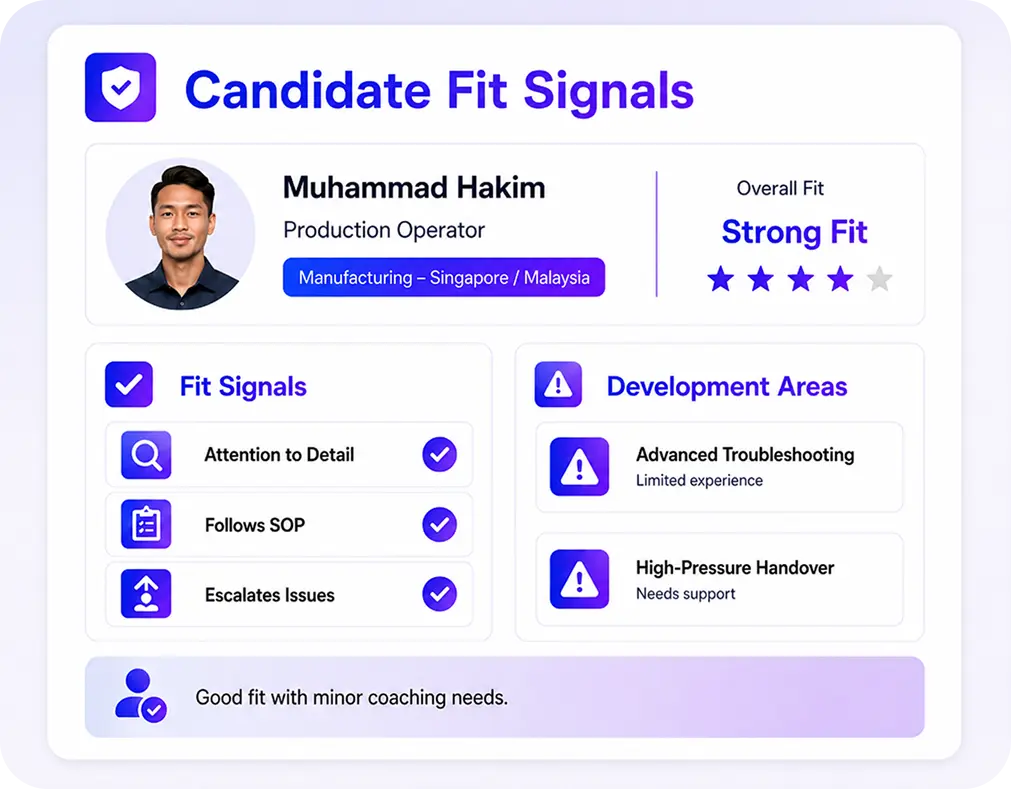
Candidate Fit Signal
A clear summary highlighting attention to detail on the line, adherence to procedures, and escalation habits when issues arise.

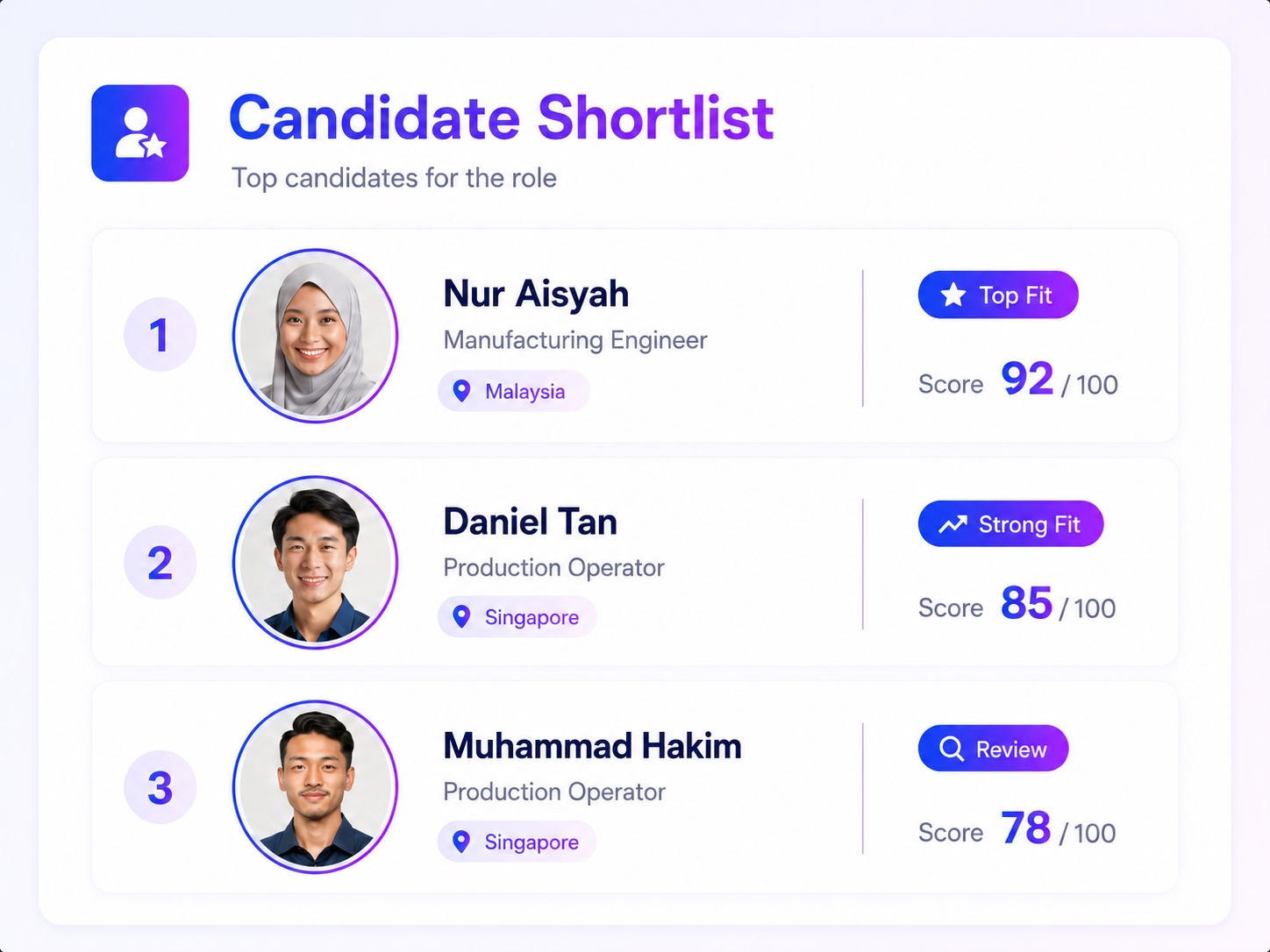
Candidate Shortlist
Compare candidates side by side against the same role criteria, then send stronger shortlists to hiring managers.
Recruitment Automation for Manufacturing Candidate Screening
Move manufacturing candidates from CV review to AI video interviews, reminders, assessments, and candidate
reports without managing every step manually.
reports without managing every step manually.
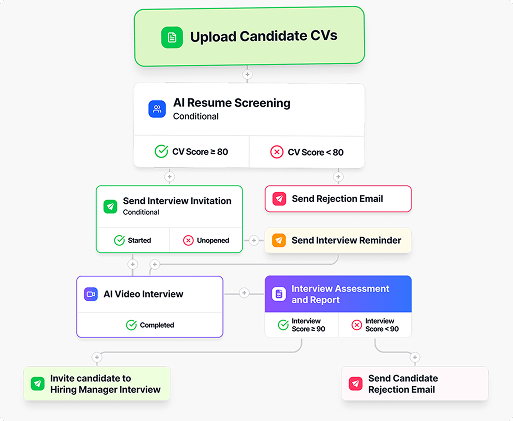
Set Recruiter-Approved Automation Rules
Automate follow-up steps after CV screening or interview completion. KitaHQ sends invitations, reminders, and status updates, prepares Interview Reports, and organises recruiter handoffs. Recruiters stay in control of every shortlist, manager interview, and rejection decision.

Features That Make Manufacturing Screening Easier
Help manufacturing teams screen candidates faster, especially when hiring across roles, locations, shifts,
or seasonal demand.
or seasonal demand.
Bulk CV Shortlisting
Upload candidate profiles in bulk and quickly surface strong profile matches.

Simultaneous Interviews
Let multiple candidates complete interviews at once, useful during hiring surges.

One-Click Mass Invite
Send interview invites through WhatsApp and email without messaging candidates one by one.
Custom Assessments
Customize assessments for manufacturing roles and get auto-generated reports after each interview.
Proven Candidate Screening Results Across Industries
Teams use KitaHQ to screen more candidates, reduce manual screening time, and review interview reports faster.

3x
Higher Interview Capacity
Bank Saqu increased monthly interview volume to 300 candidates with AI video interviews.

75%
Less Screening Time
PT Sejahtera Mitra Solusi reduced daily screening time from 2 hours to 30 minutes after replacing manual phone screens.

0
Manual Screening Calls
Mind Stretcher replaced first-round screening calls with AI video interviews candidates completed on their own time.
Before and After Using Manufacturing Hiring Software
See how manufacturing teams reduce manual screening, interview coordination,
and candidate tracking with a more automated hiring workflow.
and candidate tracking with a more automated hiring workflow.

Before Using KitaHQ

Review hundreds of CVs manually, making screening take too long.

Spend hours scheduling interviews for hundreds of factory applicants.

Repeat the same assessment for every candidate.

Summarize interview notes and candidate results manually.

Hard to compare candidates without clear insights and a shortlist.


After Using KitaHQ

Screen manufacturing CVs faster with AI resume screening.

Automate interview invites, reminders, and follow-ups to keep candidates moving faster.

Run structured AI interviews and skill assessments at scale.

Get recordings and automated transcripts from every candidate who completes an interview.

Compare manufacturing candidates with scores, summaries, and reports in one platform.
Where AI Fits in Manufacturing Recruitment
Good Fit
For KitaHQ

Filling short-staffed production shifts when roles need to be hired quickly
Adding extra workers quickly before peak production or holiday demand
Identifying qualified manufacturing candidates with the right technical fit
Where Humans Are
Still Required
- Running background and reference checks with site leaders
- Verifying licenses or certificates with the relevant labor ministry
- Conducting live aptitude tests, hands-on technical assessments, or machine-specific evaluations
- Making final hiring decisions and managing offer negotiations
Looking for Other Hiring Solutions?


Manufacturing Recruitment Software FAQs
Which manufacturing roles fit best?
Repeatable roles like line operator, packing, QC inspector, warehouse admin, and junior purchasing, especially across shifts/sites.
Does KitaHQ make hiring decisions?
No. KitaHQ supports early-stage screening and prepares candidate and Interview Reports. Recruiters and hiring managers decide who moves forward and make final hiring decisions.
What’s out of scope?
Background checks, employment validation, and any license/certification verification stay human-led.
How do we set pass vs fail quickly?
Pass = clear steps + checks + escalation. Fail = vague answers or ignores SOP/safety/quality.
What’s the common failure case?
Generic questions lead to scripted answers. Fix: scenario prompts tied to real floor issues (defects, stock mismatch, missed targets).
What do hiring managers review?
Hiring managers can review recordings, transcripts, summaries, role-relevant responses and candidate reports before deciding the next step.
Scale Your Factory Workforce Faster with AI Manufacturing Recruitment Software
Standardize early screening across plants and shifts, and give hiring managers structured outputs for the best decision.
Schedule Your Call