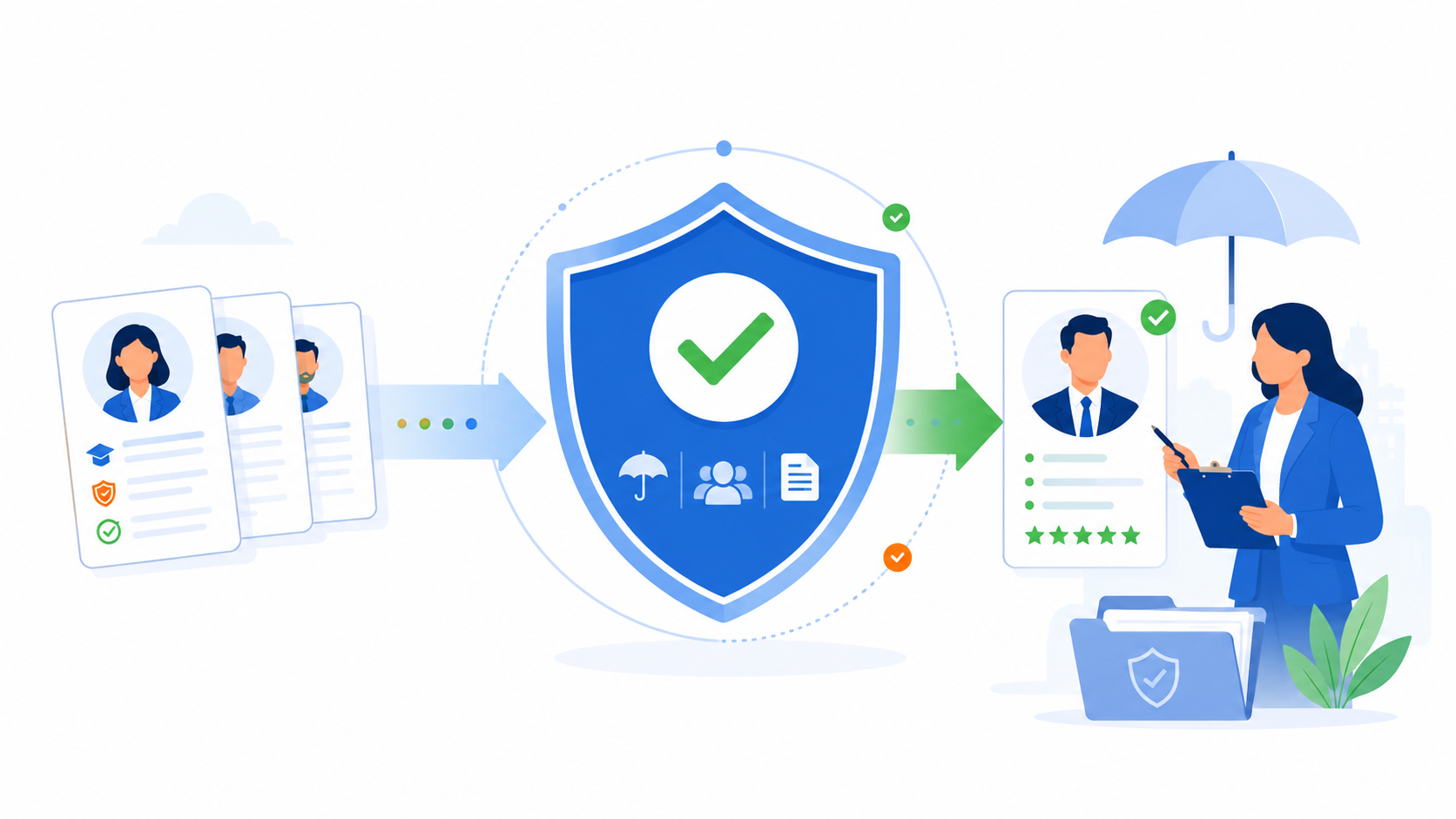
Candidate screening is where many hiring teams start losing good candidates without realizing it.
The problem is not always a lack of applicants. Often, the issue is a screening process that is too slow, too manual, too inconsistent, or too unclear for both candidates and hiring teams.
This article breaks down the candidate screening mistakes that can cost you qualified applicants, why they happen, and how to build a more consistent early-stage screening process.
How Candidate Screening Mistakes Cause Good Candidates to Drop Off
Candidate screening is not just an administrative step. It controls which candidates get seen, how quickly they move forward, and what information hiring managers receive before deciding who should be interviewed.
When screening works well, recruiters can identify relevant candidates faster and compare them more consistently. When screening breaks down, unqualified candidates take up recruiter time while qualified candidates may be missed, delayed, or pushed into a poor candidate experience.
The cost is not always visible. A strong candidate may not complain. They may simply accept another offer, stop replying, or assume the company is disorganized.
1. Starting Screening Without Clear Role Criteria
The first mistake is screening candidates before the team agrees on what actually matters for the role. This often happens when requirements sound too broad, such as “good communication,” “fast learner,” or “must be experienced,” without being tied to the actual work.
What it costs:
Recruiters end up making judgment calls from incomplete information. Good candidates may be rejected for not matching someone’s personal interpretation of the role, while weaker-fit candidates move forward because they use the right wording.
How to fix it:
Before screening begins, align on the role criteria that matter most, including required experience, must-have skills, communication expectations, availability needs, and any dealbreakers that require human review. The goal is not to create a rigid checklist, but to make sure every candidate is reviewed against the same job-related expectations.
2. Treating Resume Screening Like Keyword Matching
Resume screening becomes risky when recruiters rely only on exact keyword matches. A candidate may describe relevant experience differently from the job post, while another may include the right keywords without having the practical capability needed for the role.
What it costs:
Good candidates can be filtered out too early because their CV does not mirror the job description. At the same time, keyword-optimized CVs may look stronger than they actually are.
How to fix it:
Use resumes as an early signal, not the full decision. Look for relevant responsibilities, achievements, industry exposure, role progression, and transferable experience, then review borderline profiles before deciding who moves forward.
3. Moving Too Slowly After Candidates Apply
Speed matters because strong candidates are often comparing several opportunities at once. If the next step takes too long, they may assume the company is not interested or move forward elsewhere.
What it costs:
Qualified candidates may drop out before the hiring team has properly assessed them. Recruiters may still be reviewing CVs manually while stronger candidates are already engaging with other employers.
How to fix it:
Set clear response-time expectations for application confirmation, next-step invitations, reminders, rejection updates, and hiring manager handoffs. Recruitment automation tool can help reduce delays, but the workflow should still feel clear and intentional.
See also: How to Reduce Time-to-Hire With Better Candidate Screening
4. Making Candidates Repeat the Same Information
A common screening mistake is asking candidates to repeat information they have already provided. This can happen when candidates submit a CV, fill in the same details in a form, answer similar phone-screen questions, and repeat the same points in a live interview.
What it costs:
The process feels inefficient and disrespectful of candidate time. It can also weaken hiring manager confidence because each stage repeats information instead of adding a clearer picture of the candidate.
How to fix it:
Decide what each screening step should capture. Resumes can show background, video interviews can show communication and role understanding, and candidate reports can summarize what has already been collected so hiring managers do not restart from zero.
5. Using Unstructured or Generic Screening Questions
Unstructured interviews can make screening inconsistent because candidates may be asked different types of questions. Generic questions create a similar problem because they often test interview confidence more than role fit.
What it costs:
Hiring teams end up comparing candidates based on uneven signals. A polished candidate may appear stronger, while a better-fit candidate may not get the right opportunity to show role-specific judgment.
How to fix it:
Use structured, role-specific questions for candidates applying to the same role. A customer-facing role, for example, should test how someone responds to real customer situations, while a sales role may need to show how the candidate explains value or handles hesitation from a prospect.
6. Ignoring Role-Fit Signals Until Too Late
Some teams screen mainly for resume fit, then wait until the live interview to assess communication, motivation, judgment, and role understanding. This can overload hiring managers with candidates who look relevant on paper but are not ready for the role.
What it costs:
Hiring managers spend interview time discovering issues that could have been identified earlier. This slows the process and reduces the value of recruiter shortlisting.
How to fix it:
Use early screening to collect the signals that matter most before candidates move to human interviews. Resume fit is only one part of the picture; recruiters may also need to understand how candidates communicate, respond to realistic job situations, and match the role’s availability or work expectations.
7. Giving Candidates Unclear Instructions
Candidate experience can break down when the next step is confusing. This includes unclear deadlines, missing interview details, poor instructions, unclear device requirements, or no explanation of what happens after submission.
What it costs:
Candidates may miss the screening step, submit weaker responses, or feel the process is unfair. Some may simply stop engaging because the process feels disorganized.
How to fix it:
Make every screening step easy to understand. Candidates should know what they need to complete, how long it will take, what setup they need, when they should finish it, what happens next, and who to contact if they face issues.
8. Letting Automation Replace Human Review
Automation can improve speed and consistency, but it becomes a mistake when teams treat automated outputs as final decisions. Screening tools can organize candidate information, but hiring still requires context and judgment.
What it costs:
Teams may over-rely on scores or summaries without reviewing candidate context, edge cases, or role-specific nuance. The process may look efficient, but the decision quality can become weaker.
How to fix it:
Use automation as decision support. Screening outputs should help recruiters and hiring managers compare candidates more clearly before deciding who moves forward, while final hiring decisions stay with the hiring team.
See also: Should AI Recruitment Software Make Hiring Decisions?
A Better Candidate Screening Workflow
The best way to avoid candidate screening mistakes is to define what each stage should collect and how each output will be reviewed.
A stronger screening workflow does not need to be complicated. It needs to be clear, consistent, and reviewable.
See also: How to Improve Your Candidate Screening Process: 10 Practical Ways
How KitaHQ Helps Reduce Candidate Screening Mistakes
KitaHQ is an AI-powered early-stage candidate screening platform that helps hiring teams reduce candidate screening mistakes across resume review, interviews, follow-up, and hiring manager handoffs.
Instead of reviewing CVs inconsistently or relying on scattered notes, recruiters can use AI resume screening to check candidates against role-related criteria, then continue with AI video interviews and AI interview assessment to collect more structured responses without live scheduling.
Recruitment automation helps keep candidates moving with clearer invites, reminders, re-invites, and rejection messages, while candidate reports give recruiters and hiring managers better context before the next stage.
The final decision still stays with the hiring team, so KitaHQ supports the screening process without replacing human judgment.
Final Takeaway
The biggest candidate screening mistakes usually come from unclear criteria, slow follow-up, inconsistent evaluation, and weak handoffs.
To avoid losing good candidates, hiring teams should build a screening process that is clear, structured, candidate-friendly, and reviewable.
Once that workflow is defined, candidate screening software can help scale it without turning hiring into a black box. The goal is not to remove recruiters or hiring managers from the process.
The goal is to help them review better information, move faster, and make more consistent decisions about who should move forward.
.avif)
%20(1).png)