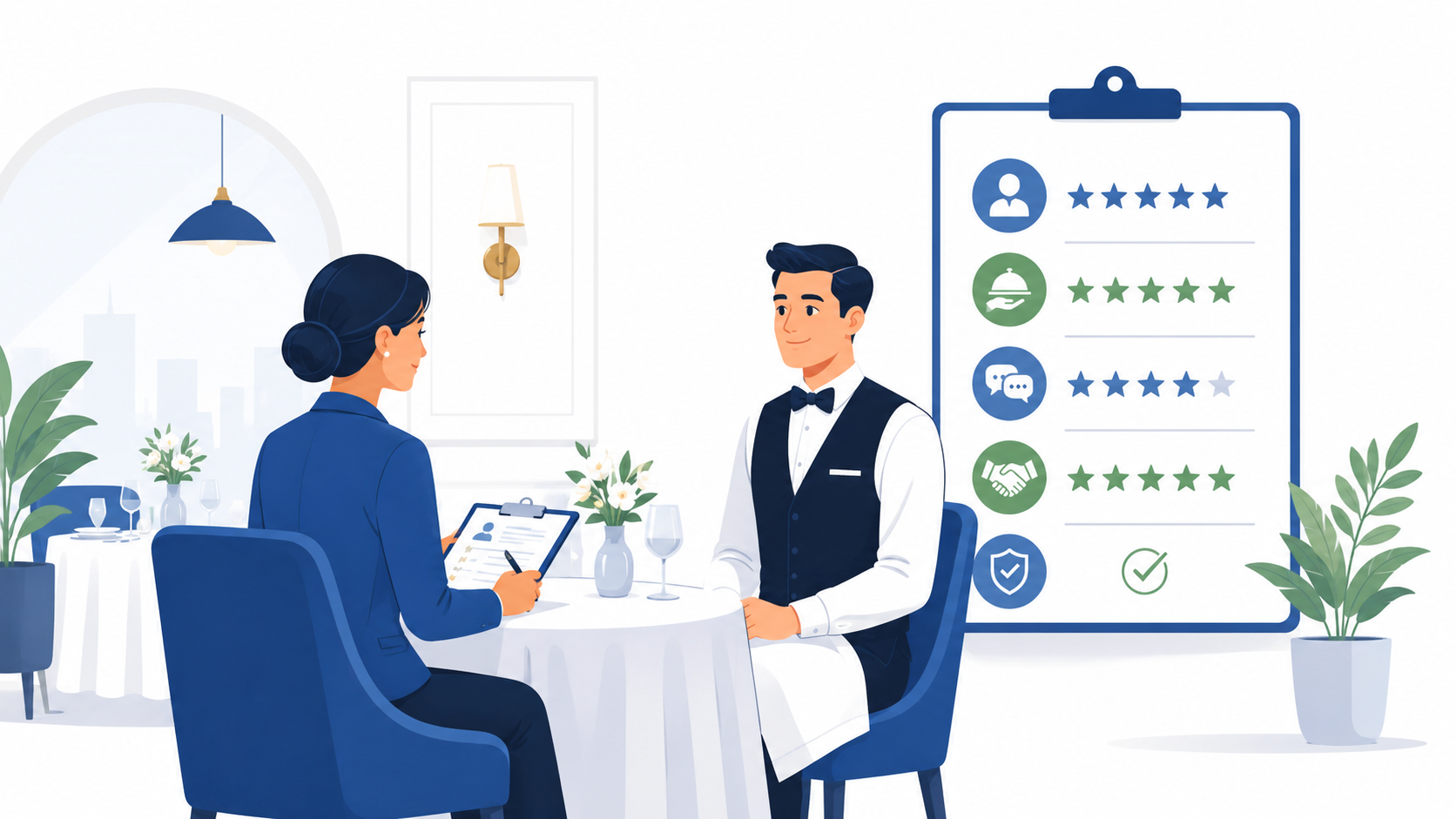
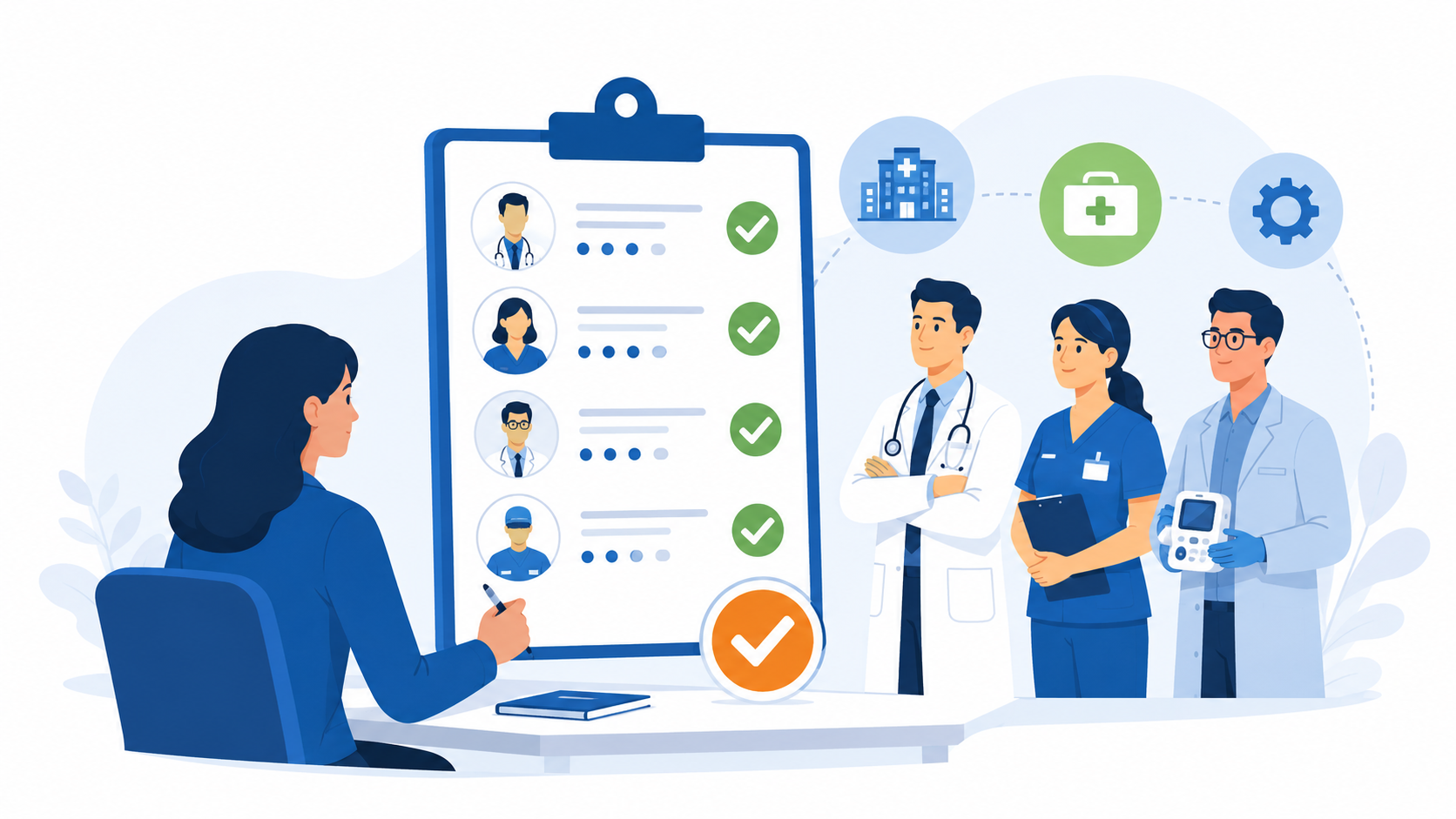
Fine dining recruitment challenges are different from general restaurant hiring problems. A fine dining team is not only looking for people who can serve food, greet guests, or work dinner shifts. It is hiring people who can protect the restaurant’s service standards in every guest interaction.
In a premium dining environment, small service gaps are highly visible. A server who cannot explain a dish clearly may make guests doubt the experience. A host who handles a reservation issue poorly can affect the guest’s first impression. A floor supervisor who misses the right moment to escalate a complaint can turn a small issue into a larger service failure.
For teams ready to turn these challenges into a more structured workflow, the first step is to identify which parts of early screening need more consistency before manager review.
Use this guide to understand where fine dining hiring often breaks down, which candidate signals are worth assessing earlier, and how to build a clearer shortlist before candidates reach the floor.
Why Fine Dining Recruitment Challenges Are Different
Many F&B hiring processes are designed around speed. Recruiters check whether candidates have restaurant experience, confirm availability, and move them to manager interviews quickly.
Fine dining needs a more careful approach.
A candidate may have worked in restaurants before but still struggle with fine dining expectations. The pace, tone, attention to detail, guest profile, menu complexity, and service recovery standards are different from casual dining, cafés, QSR, or general restaurant operations.
Fine dining hiring teams often need to assess qualities that are difficult to see from a resume:
- Can the candidate explain menu items clearly and confidently?
- Can they respond to guest concerns without sounding defensive?
- Can they handle allergy-related questions responsibly?
- Can they recommend without overselling?
- Can they stay composed during a full seating?
- Can they understand when to solve an issue directly and when to escalate?
- Can they adapt their tone for different guest expectations?
This makes fine dining recruitment less about filling roles quickly and more about protecting service quality consistently.
A practical way to separate general restaurant experience from fine dining readiness is to screen across four layers:
- Basic fit: availability, start date, location, shift expectations, and relevant F&B experience.
- Service communication: how the candidate explains menus, handles questions, and adapts tone for different guests.
- Judgment under pressure: how the candidate responds to complaints, allergy concerns, delays, or special requests.
- Manager validation: how the hiring manager reviews the candidate’s answers, confirms service polish, and decides whether to move the candidate to a trial shift or next interview.
This keeps early screening focused on signals that matter before managers spend time on deeper service validation.
Challenge 1: Restaurant Experience Does Not Always Equal Fine Dining Readiness
One of the biggest fine dining recruitment challenges is that past restaurant experience can look stronger on paper than it is in practice.
A candidate may have worked as a server, host, cashier, barista, banquet staff, or casual dining crew. That experience can be useful, but it does not automatically prove that the candidate is ready for a fine dining environment.
Fine dining often requires a different level of:
- Guest awareness
- Timing and pacing
- Menu explanation
- Discretion
- Emotional control
- Formal service etiquette
- Team coordination
- Attention to small details
For example, a candidate may be confident taking orders in a busy casual restaurant but struggle to explain a multi-course menu. Another candidate may be friendly and energetic but too informal for a premium guest setting.
This creates a screening problem. If recruiters only check for “restaurant experience,” managers may receive candidates who technically match the role but do not match the service standard.
What hiring teams should do:
Screen for the type of service environment the candidate has experienced, not just whether they have worked in F&B before. Ask candidates to describe the guest profile, service style, and responsibilities in their previous roles.
Challenge 2: Service Polish Is Hard to Judge From a Resume
Fine dining service depends heavily on communication style. But resumes rarely show whether a candidate can speak with clarity, confidence, and care.
A CV may show that someone worked as a server for two years, but it will not show whether they can:
- Explain a dish with unfamiliar ingredients
- Recommend a wine or menu item professionally
- Calmly respond to a disappointed guest
- Adjust their language for different guest types
- Speak with warmth without becoming too casual
- Avoid guessing when they are unsure
This is a major hiring risk because guest-facing communication shapes the dining experience. A candidate who sounds unclear, rushed, defensive, or overly casual may not be the right fit for a premium service environment.
The challenge becomes even bigger when recruiters need to shortlist candidates before managers have time to meet them.
What hiring teams should do:
Use structured service questions before manager interviews. Candidates should be asked to explain menu items, respond to guest scenarios, and show how they communicate in realistic service situations.
Challenge 3: Menu Confidence and Product Knowledge Take Time to Assess
Fine dining candidates do not need to know the restaurant’s exact menu before joining. However, they should show the ability to learn, explain, and communicate product details responsibly.
This is especially important for roles such as:
- Fine dining servers
- Sommeliers
- Beverage staff
- Hosts
- Guest relations staff
- Floor supervisors
- Assistant restaurant managers
The recruitment challenge is that menu confidence is not only about memorization. It is about judgment.
A strong candidate knows how to explain clearly, ask follow-up questions, and confirm information when unsure. A weaker candidate may guess, overclaim, or give vague answers.
This matters because menu-related mistakes can affect guest trust, especially when dealing with allergens, dietary restrictions, premium ingredients, wine pairing, or special requests.
What hiring teams should do:
Ask candidates how they would explain a dish, recommend an item, or respond when they do not know the answer. The goal is not to test your exact menu. The goal is to assess learning ability, honesty, and communication discipline.
Challenge 4: Guest Recovery Skills Often Appear Too Late
Many fine dining teams only discover a candidate’s guest recovery ability during a trial shift or after hiring.
That is risky.
Guest recovery is one of the most important parts of fine dining service. Candidates need to know how to respond when something goes wrong, such as:
- A guest is unhappy with a dish
- A guest complains about waiting time
- A reservation issue creates tension
- A guest raises their voice
- A dietary request was misunderstood
- A VIP guest has a poor experience
- A regular guest asks for something outside the usual process
In these moments, the candidate’s judgment matters as much as their personality. A friendly candidate may still respond poorly under pressure. A confident candidate may become defensive. A quiet candidate may avoid escalation when action is needed.
The challenge is that traditional interviews often ask generic questions such as “How do you handle difficult customers?” That question is too broad to reveal how someone would behave in a fine dining environment.
What hiring teams should do:
Use scenario-based screening before manager interviews. Strong questions should be specific enough to show judgment, not just personality.
Example screening questions:
AI video interviews can help collect these structured responses without live scheduling, but managers should still review the answers and decide who moves forward.
Challenge 5: Hiring Managers Spend Too Much Time on Basic Screening
Fine dining managers should spend their interview time assessing service polish, team fit, and floor readiness. But in many hiring processes, managers still have to repeat basic screening questions.
They may need to ask:
- Can you work dinner shifts?
- Can you work weekends?
- When can you start?
- What restaurant experience do you have?
- Why did you leave your last role?
- Have you handled premium guests before?
- Are you comfortable explaining menus?
This creates inefficiency. Managers spend time filtering candidates instead of evaluating the deeper service qualities that matter most.
It also slows the process. Strong candidates may wait too long for review, while weaker-fit candidates still take up manager time.
What hiring teams should do:
Move basic qualification, availability, and early service-readiness checks before the manager interview. Managers should receive a shortlist with enough context to focus on final validation.
Challenge 6: Different Managers May Apply Different Service Standards
Fine dining recruitment becomes harder when every manager evaluates candidates differently.
One manager may prioritize confidence. Another may focus on grooming and presentation. Another may value menu knowledge. Another may care most about availability and urgency.
All of these factors matter, but inconsistent evaluation can create uneven hiring quality across outlets or teams.
This is especially risky for restaurant groups that want a consistent guest experience across multiple locations. If each outlet uses a different hiring standard, service quality may vary even when the brand promise is the same.
What hiring teams should do:
Define shared criteria for each role. For example, all fine dining server candidates may need to be assessed on guest communication, menu explanation, service recovery, availability, and escalation judgment.
Challenge 7: Trial Shifts Are Important but Should Not Carry the Whole Screening Burden
Trial shifts can be valuable in fine dining. They help managers observe floor presence, teamwork, pacing, guest awareness, and live service behavior.
But trial shifts should not be the first time a team discovers basic red flags.
If a candidate struggles with communication, does not understand guest recovery, or cannot explain service scenarios clearly, hiring teams should identify that earlier. Otherwise, managers spend too much time testing candidates who may not be ready for a premium service environment.
Trial shifts are best used for validation, not discovery.
What hiring teams should do:
Use early screening to check communication, judgment, and role fit before inviting candidates to later-stage evaluation.
Challenge 8: Fine Dining Roles Need Different Screening Criteria
Fine dining recruitment also becomes difficult when every role is screened with the same questions.
A host does not need the same assessment as a sommelier. A floor supervisor does not need the same screening as an entry-level server. A restaurant manager needs a different evaluation from a guest relations candidate.
Each role affects the guest experience differently.
The challenge is not only finding people. It is matching the right screening criteria to the right role.
Common Mistakes in Fine Dining Recruitment
Mistake 1: Treating fine dining like general restaurant hiring
Fine dining hiring should not use the same screening process as casual dining, café, or QSR hiring. The expectations are different.
The process should test service detail, guest communication, menu confidence, and recovery judgment.
Mistake 2: Overvaluing confidence
Confidence can be helpful, but it is not the same as service quality. Some confident candidates may overpromise, interrupt guests, or guess when unsure.
Fine dining teams should look for controlled confidence: clear, calm, accurate, and guest-aware.
Mistake 3: Asking generic interview questions
Questions like “Tell me about yourself” or “How do you handle customers?” are not enough.
Fine dining teams need scenario-based questions that reflect real guest moments.
Mistake 4: Making managers do all the filtering
Managers should not have to spend most of their interview time checking basic fit. Early screening should prepare a stronger shortlist before managers step in.
Mistake 5: Expecting tools to replace human judgment
AI candidate screening and AI video interviews can support better early review, but they do not replace trial shifts, manager interviews, reference checks, onboarding, or final hiring decisions.
When KitaHQ Fits Fine Dining Hiring
For teams comparing fine dining hiring software, KitaHQ is most useful when the goal is to structure early-stage screening before manager review, especially for repeated guest-facing and service leadership roles.
It is most relevant for:
- Fine dining servers
- Hosts and guest relations roles
- Floor staff
- Sommeliers or beverage-facing roles
- Assistant restaurant managers
- Restaurant managers
- Multi-outlet premium dining teams
- New outlet openings
- Teams with high applicant volume and limited manager time
KitaHQ supports early-stage fine dining screening through AI resume screening, AI video interviews, AI interview assessment, candidate reports, and recruitment automation.
In a fine dining hiring workflow, that can mean:
- AI resume screening helps recruiters surface relevant hospitality, restaurant, premium service, or guest-facing experience.
- AI video interviews help candidates answer structured service-readiness questions on their own time, without live scheduling.
- AI interview assessment helps teams compare responses against the same role-specific criteria, such as menu explanation, complaint handling, allergy judgment, and guest communication.
- Candidate reports help recruiters and hiring managers review summaries, transcripts, recordings, strengths, concerns, and follow-up areas before deciding who moves forward.
- Recruitment automation can support interview invites, reminders, re-invites, and rejection messages so candidates are not left waiting unnecessarily.
KitaHQ should support recruiter and hiring manager review. It should not replace final hiring decisions, trial shifts, background checks, employment verification, credential or license verification, onboarding, service training, or post-hire performance tracking.
Example workflow from hospitality screening:
Restaurant and hospitality teams can use early screening to review service judgment, communication, operational readiness, and role fit before manager interviews.
For example, Initia Group used KitaHQ to screen restaurant and hospitality candidates on service judgment, operational readiness, customer handling, and communication before manager review.
For a fine dining team, the same principle applies: use early screening to collect clearer candidate signals before managers spend time validating service polish, team fit, and floor readiness. This should support human review, not replace manager judgment or trial shifts.
Build a Better Fine Dining Shortlist
Fine dining recruitment is difficult because the most important signals are not always visible on a resume.
Hiring teams need to know whether candidates can communicate with polish, explain menu details, handle guest concerns, stay composed under pressure, and represent the restaurant’s service standard consistently.
A better hiring process does not only move faster. It gives managers a clearer shortlist before candidates reach the floor.
For fine dining teams, the goal is simple: screen earlier for the service qualities that protect the guest experience later.
.avif)
%20(1).png)