%20(1).png)
July 1, 2026
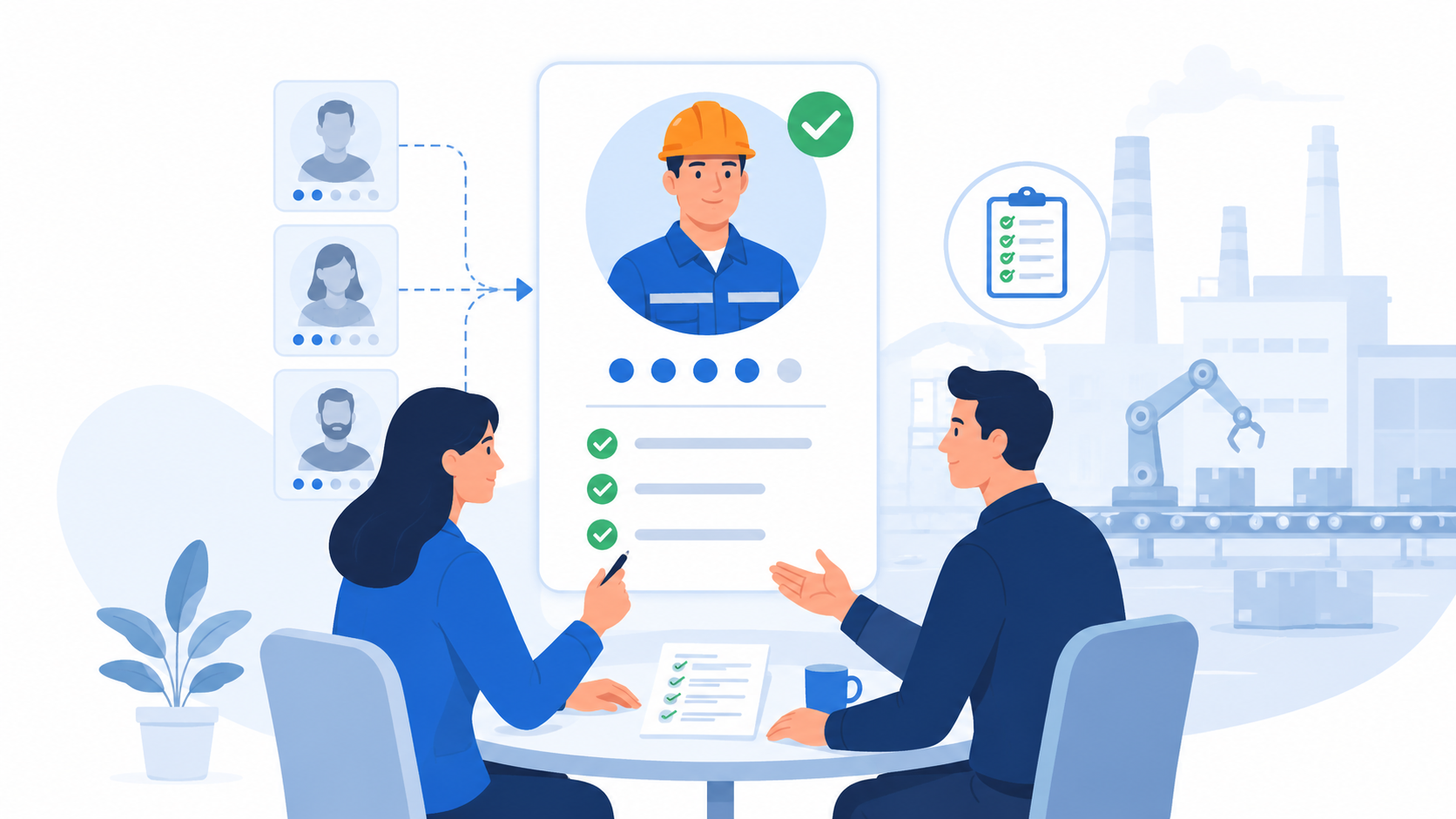
Manufacturing Candidate Screening Checklist for HR Teams
Use this manufacturing candidate screening checklist to review shift fit, safety awareness, SOP discipline, role readiness, and manager handoffs.
.avif)
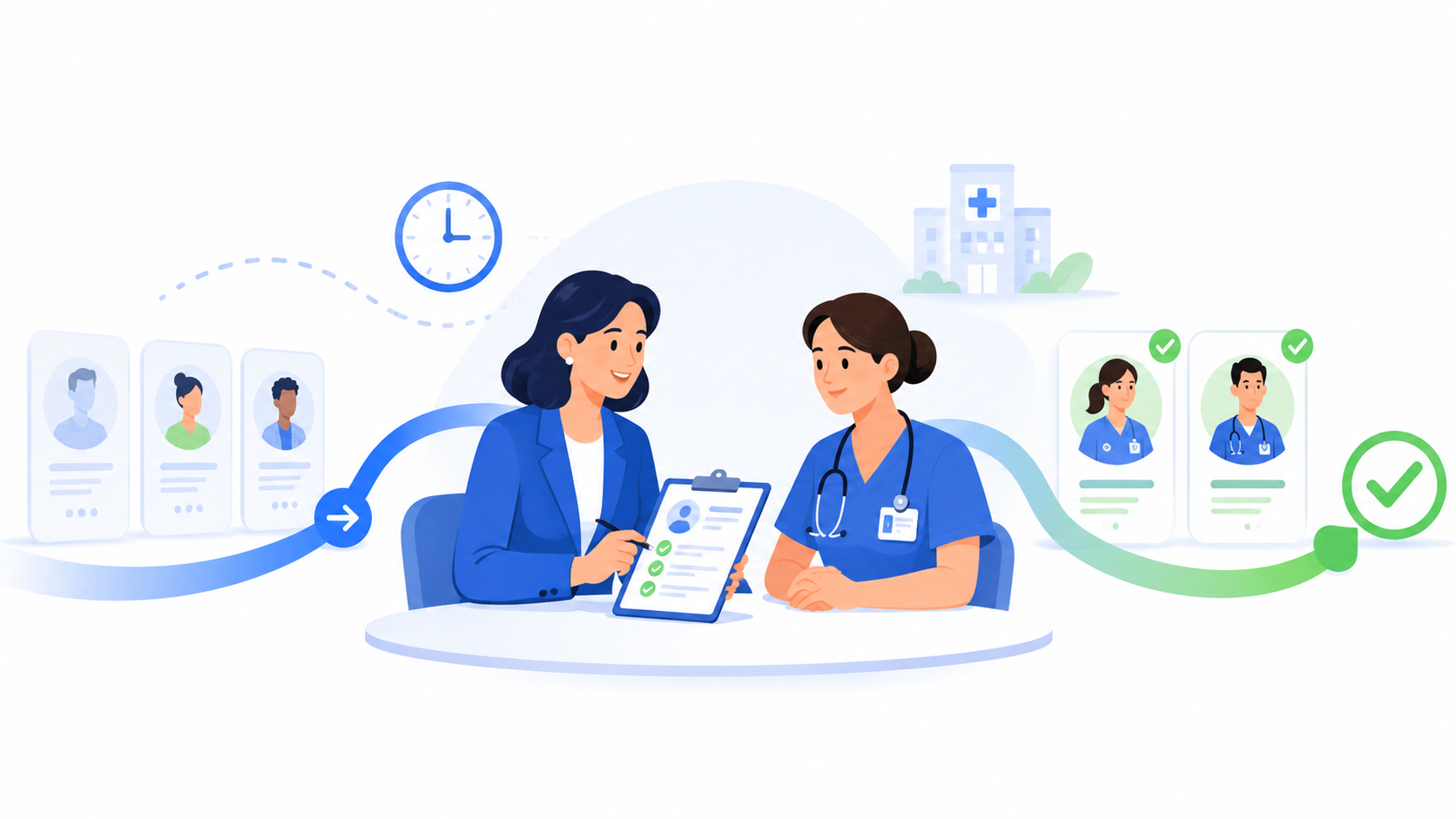
Healthcare candidate drop-off often happens when the early screening process feels slow, unclear, or too complicated. In healthcare hiring, even qualified candidates may lose interest if they do not receive clear information from the start.
Early-stage screening should help candidates understand the role, schedule, requirements, and next steps quickly. This makes the process feel more transparent and keeps candidates engaged.
By improving communication, simplifying screening steps, and setting clear expectations, healthcare teams can reduce drop-off and move stronger candidates forward more efficiently.
Healthcare candidates often apply around difficult schedules. They may be working shifts, moving between locations, handling patient-facing work, or applying from mobile devices during limited free time.
That means a small delay or unclear step can become a real reason to disengage.
Common causes of healthcare candidate drop-off include:
The issue is not always candidate motivation. Often, the process asks candidates to wait too long, repeat too much, or coordinate too many live steps before they know whether the role is a serious fit.
Healthcare teams should not measure candidate drop-off only as “candidate ghosting.” They should ask where the workflow creates avoidable friction.
Not every candidate who exits the process should be treated as a lost candidate.
Some drop-off is healthy. If a candidate realizes they cannot work the required shift, does not meet a must-have requirement, or is not comfortable with the role expectations, it is better to discover that early.
The bigger problem is avoidable drop-off.
The goal is not to keep every applicant in the funnel. The goal is to help serious candidates move through screening without unnecessary friction while filtering out poor fits earlier and more clearly.
That distinction matters in healthcare because hiring teams still need careful review. Speed should not come at the expense of role fit, patient safety, or human judgment.
Healthcare teams can reduce drop-off by treating the screening funnel as an audit, not just a reminder problem. At each stage, ask: how long does the candidate wait, what action is unclear, what requires live coordination, and where does internal review slow down the next step?
The pattern is simple: candidates drop off when the process asks too much before giving them enough clarity, speed, or flexibility.
Many candidate drop-off problems begin before technology enters the process.
If the job post or application does not make the role clear, healthcare candidates may apply without knowing whether the role fits their schedule, qualification level, or work expectations. Then the mismatch appears later, after recruiters have already spent time screening them.
Before improving screening speed, healthcare teams should clarify:
This does not mean the application needs to be long. It means the candidate should understand the deal-breakers early.
Clear requirements can reduce unnecessary applicants, but they also protect serious candidates from wasting time on roles that do not match their reality.
Candidate drop-off often increases when communication is vague.
A candidate should not have to guess:
A simple message can reduce uncertainty.
For example:
“Thanks for applying for the Clinic Nurse role. The next step is a short AI video interview that you can complete on your own time. You’ll receive the interview link through our candidate communication channel. After completion, our team will review your candidate report and contact shortlisted candidates for the next step.”
This message does three useful things:
That last point matters. In healthcare, candidates may be sensitive to unclear automation. Be transparent that AI supports the screening workflow, while recruiters and hiring managers remain involved in review and decisions.
Reminders can reduce healthcare candidate drop-off, but only if they are useful.
A reminder should help candidates complete a step, not pressure them with vague urgency.
Good reminders are:
This is where recruitment automation can support the workflow: interview invites, interview reminders, re-invites, and rejection messages can be handled more consistently without making recruiters chase every candidate manually.
A useful reminder might say:
“Reminder: please complete your AI video interview for the Pharmacy Assistant role. You can complete it from your phone or computer using the link below. Our team will review completed interviews before selecting candidates for the next stage.”
This is better than a generic “You have not completed your interview” message because it explains the role, the action, the device flexibility, and the next step.
Candidate drop-off is not only caused by the candidate side of the process. It can also happen when internal review is slow.
If hiring managers receive inconsistent recruiter notes, incomplete summaries, or unclear feedback, they may delay decisions or ask recruiters to re-screen candidates. That adds more time and friction.
Candidate reports help reduce this problem.
With KitaHQ’s AI candidate analytics, hiring teams can review structured candidate reports, compare candidates against the same rubric, and align on what to validate in the next step. Reports can include summaries, scores, transcripts, recordings, strengths, concerns, and follow-up areas for recruiter or hiring manager review.
For healthcare hiring, manager-ready reports should make it easier to review:
This helps managers avoid repeating the same early questions. Instead, they can use the next conversation to validate the areas that matter most.
Boston Scientific used KitaHQ to screen sales and business trainee candidates across Indonesia and the Philippines, helping recruiters review adaptability, resilience, business judgment, and sales motivation across regional locations before the next hiring step.
For healthcare-adjacent school health roles, Fairview used KitaHQ to screen school health candidates with questions on emergency response, student safety, parent communication, ethical judgment, and collaboration with school teams.
These examples show how structured early-stage screening can give recruiters and hiring managers clearer candidate information before the next hiring step. They should not be read as a claim that AI reduces drop-off by a fixed percentage.
A faster early-stage process should not blur important hiring boundaries.
Healthcare teams should not use AI candidate screening or AI video interviews to replace:
KitaHQ’s healthcare page is clear that humans and other systems are still required for license and certification verification, sanctions and fraud checks, employment validation, final face-to-face interviews, hiring decisions, and hands-on clinical competency validation where required.
This boundary should be communicated internally and to candidates where relevant.
The right use case is not “let AI decide who to hire.” The right use case is “use AI to reduce repetitive early screening work, improve consistency, and give humans better information for review.”
A candidate-friendly healthcare screening workflow could look like this:
This structure reduces avoidable waiting without weakening the hiring process.
Reducing healthcare candidate drop-off starts with a screening flow that is easy to understand, simple to complete, and flexible for busy candidates.
With healthcare recruitment software like KitaHQ, teams can use AI video interviews, automated reminders, and candidate reports to make early screening faster without relying on live scheduling.
KitaHQ helps healthcare recruiters reduce avoidable drop-off while keeping verification, clinical validation, and final hiring decisions with humans.
KitaHQ is an AI hiring software that helps teams screen faster, run AI video interviews, and evaluate candidates consistently.