.avif)


.avif)


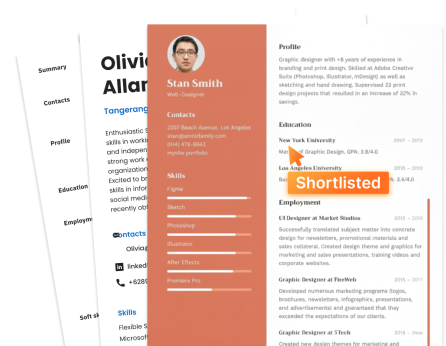
High-volume kitchen intake with many applicants per opening
Who This Is For in Kitchen Staff Hiring
Built for restaurant operators who hire kitchen staff repeatedly.

Kitchen Production

Kitchen Support

Pastry Kitchen
How Kitchen Staff Hiring Breaks with Scale
Repetitive hiring across multiple warehouses and shifts leads to redundant vetting and overlooked inconsistencies.
.svg)
Managers Repeat The Basics
Chefs and outlet leads spend too much time re-checking first-round fit.

Problems Show Up Too LLate
Weak urgency, poor communication, or weak kitchen discipline often appear only at trial shift.
.svg)
Resumes Miss Real Kitchen Fit
CVs rarely show service readiness, food safety judgment, or how someone handles pressure.
.svg)
Hiring stays inconsistent
Each outlet screens differently, so the standard changes across locations.
What to Assess in First-Round Interviews at Scale
Source through your existing channels, then let KitaHQ deliver consistent.
Product Consistency
Check whether candidates can follow recipes, measurements, and finishing standards consistently.
Speed Under Pressure
Check how they handle volume without losing quality, timing, or presentation standards.
Preparation Discipline
Assess how they plan prep, organize ingredients, and keep the station ready for service.
Attention to Detail
Assess how carefully they manage garnish, portioning, plating, and final presentation.
Food Safety and Hygiene
Look for clean handling habits, storage awareness, and basic sanitation judgment.
Team Communication
Check how they escalate delays, flag missing ingredients, and coordinate with the kitchen team.
How KitaHQ Fits Into a Kitchen Staff Hiring Workflow
Tap into your network and let KitaHQ standardizes early screening before chef interviews.
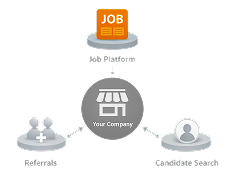
Sourcing
- Candidates still come from your existing job boards, referrals, walk-ins, hiring posters, or outlet campaigns
Manager Review
- Managers review only the shortlist
- Final interviews stay focused on practical fit, pace, and team judgment
- Trial shift remains a human-led validation step
Example Questions and Assessments for Kitchen Staff Roles
Adapt questions to station skills, speed, and food safety standards.
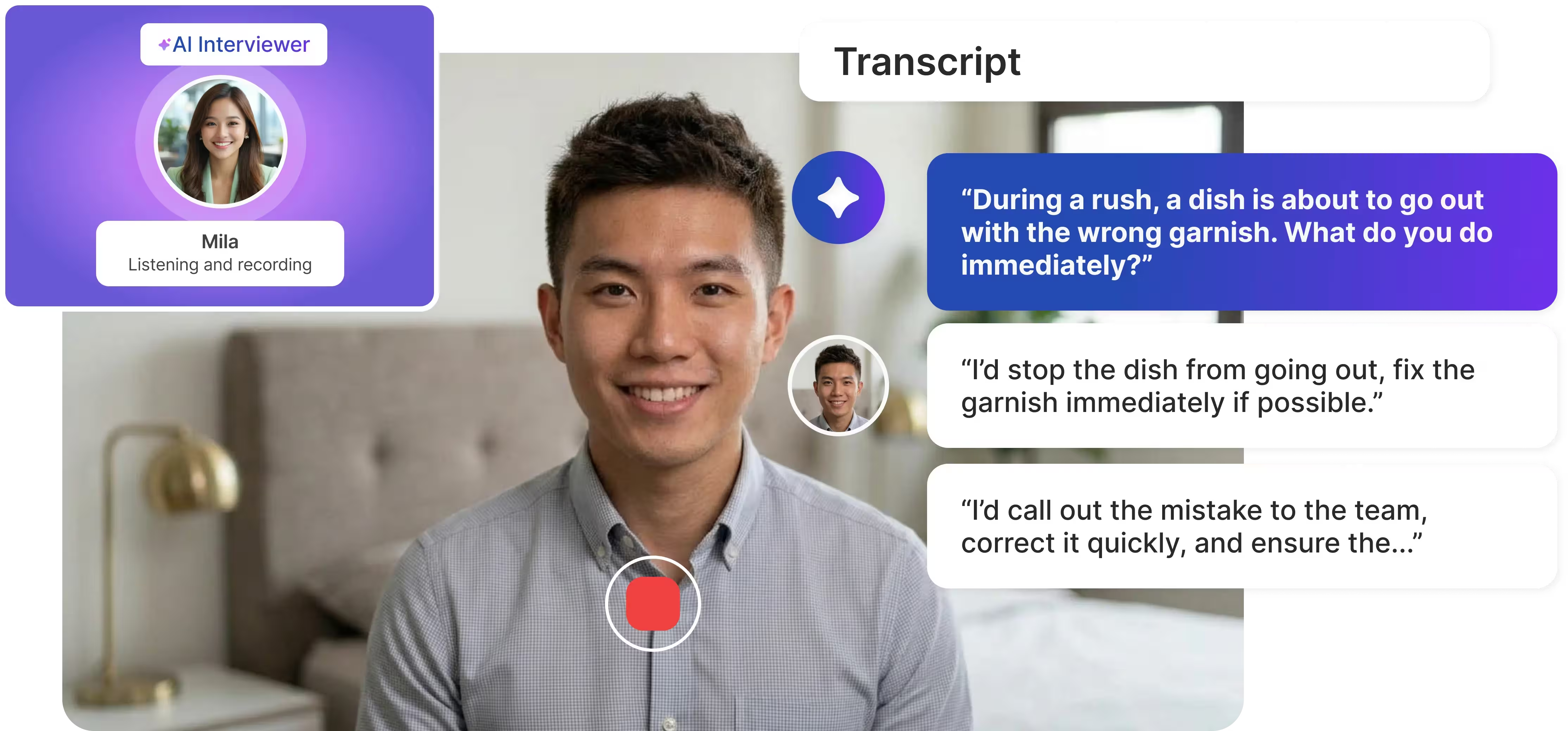
Role: Cooking Assistant
QUESTION
“During a rush, a dish is about to go out with the wrong garnish. What do you do immediately?”
SKILLS ASSESSED
Food quality discipline
Prioritization under pressure
Team communication
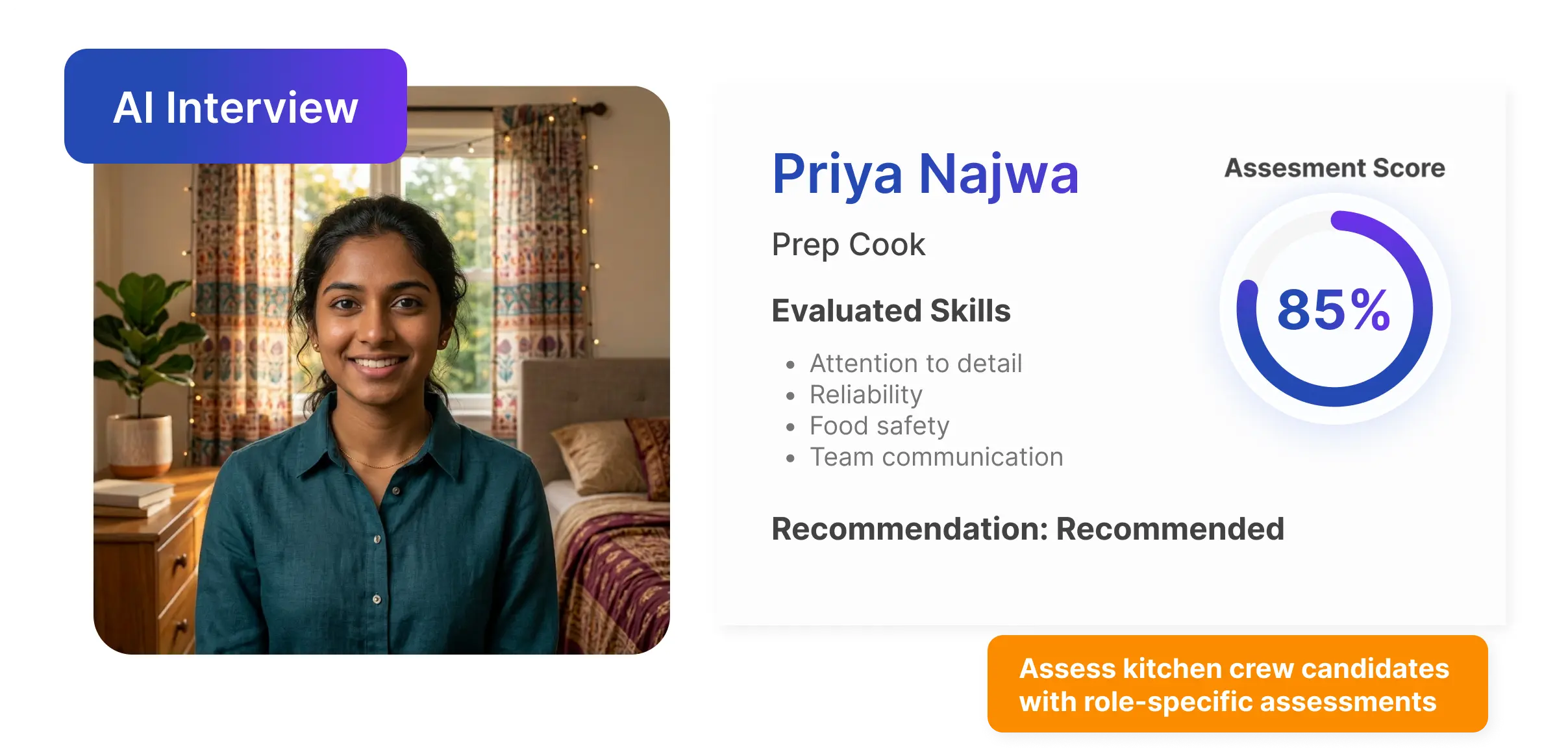
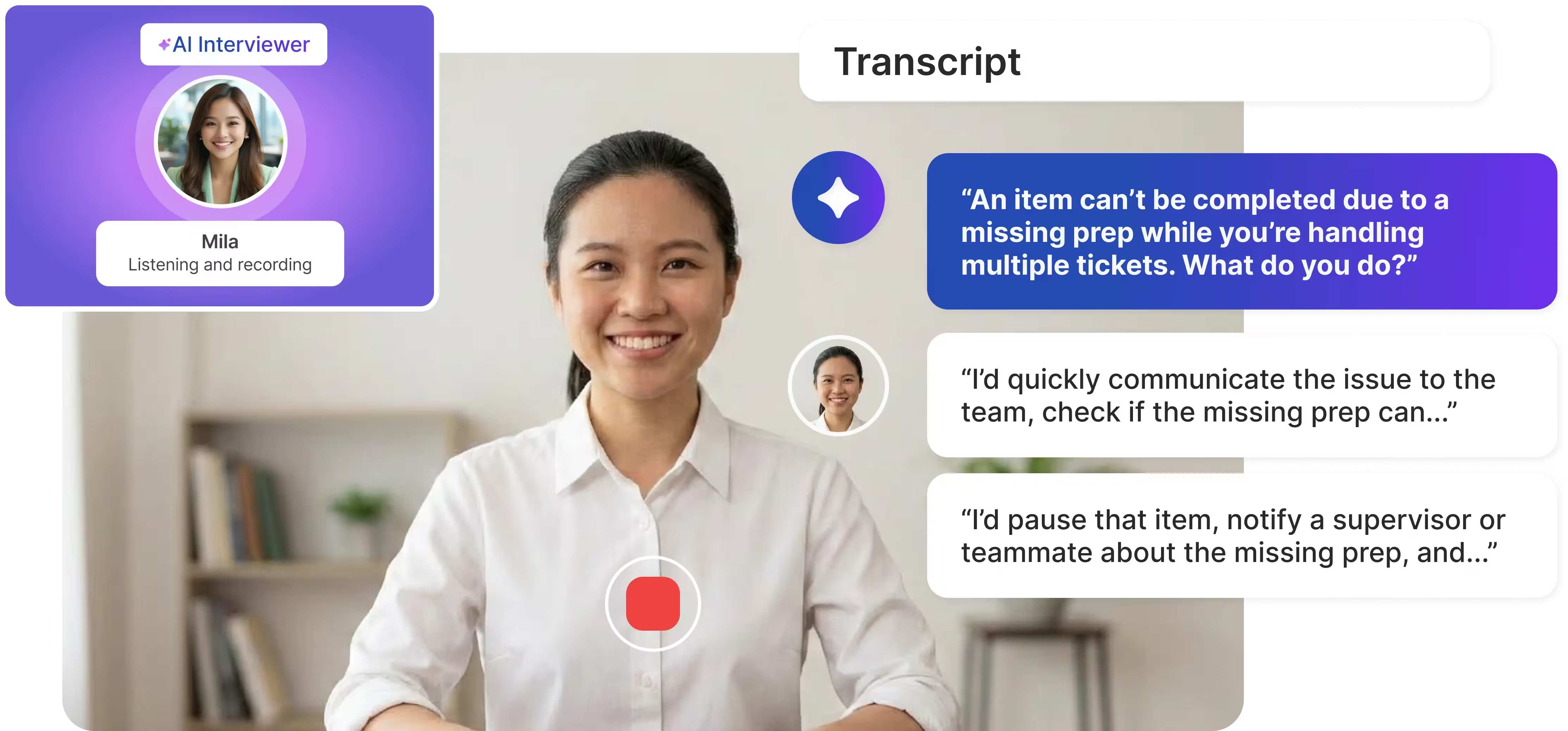
Role: Prep Cook
QUESTION
“An item can’t be completed due to a missing prep while you’re handling multiple tickets. What do you do?”
SKILLS ASSESSED
Attention to detail
Reliability
Team communication
What Hiring Managers Receive After Screening
Structured candidate data that makes comparing, shortlisting, and hiring effortless.

Kitchen-Fit Summary
A clear summary aligned to your kitchen-screening criteria, such as rush judgment, and shift constraints.
Transcript and Recording
Kitchen managers can review responses without repeating the first round.
Strengths and Follow-Ups
Highlights what looked strong and what still needs to be pressure-tested in the manager round or trial shift.
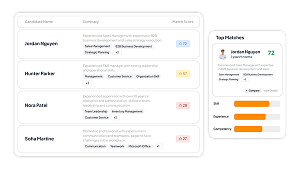
Shortlist View
Compare candidates across the same BOH criteria acrossoutlets, locations, or brands.
Where KitaHQ Fits Best in Kitchen Hiring
Manage high-volume kitchen hiring smoothly while chefs stay focused on quality, timing, and execution.
Fit Cases to
Use KitaHQ

Multi-location BOH hiring where consistency matters
Seasonal or launch-period hiring with repeated kitchen-role demand
Non Fit Cases To
Use KitaHQ
- Executive chef hiring
- Senior culinary leadership
- Highly bespoke specialist culinary hiring where the role is too custom
Explore Other Hiring Solutions

Hospitality

Banking

Education

Staffing
Frequently Asked Questions
Understanding AI Hiring in Kitchen Staff Roles
Can this replace a kitchen trial shift?
No. Use it to narrow the shortlist before live kitchen validation.
Who makes the final hiring decision?
The kitchen manager or hiring lead should make the final call.
What stays outside scope?
Reference checks, employment checks, and final decisions stay with your team.
When does this fit best?
For repeatable BOH roles like kitchen crew, prep cooks, and line cooks during backfill, expansion, or seasonal hiring.
What does the kitchen manager receive?
A structured summary, transcript, recording, and follow-up points for the next round.
What is the most common failure point?
Weak questions or unclear scoring can make poor candidates sound stronger than they are.
How do you keep screening consistent across outlets?
Use the same questions and the same pass, borderline, and fail standards.
When is this a poor fit?
For executive chefs or highly specialized kitchen hiring.
Better Screening to Build a Kitchen Team.
Simplify early screening and use structured insights to build a strong, high-performing kitchen team.
Schedule Your Call