.avif)
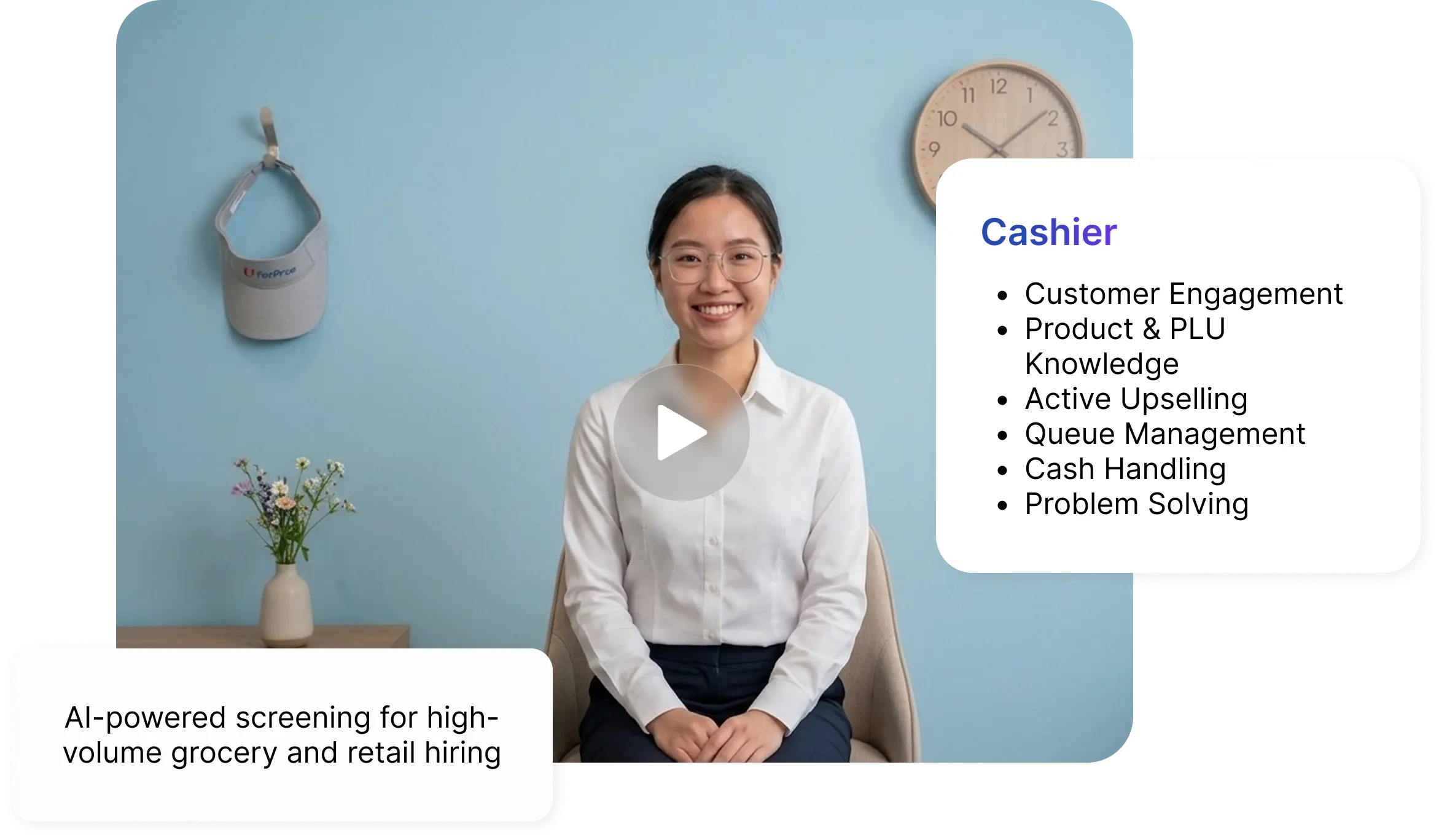


Who This Is For in Grocery and Convenience Store Hiring
Fast, consistent, and scalable store-floor hiring for supermarkets, grocery chains, and
convenience stores

Store Front & Checkout Team
- Cashier
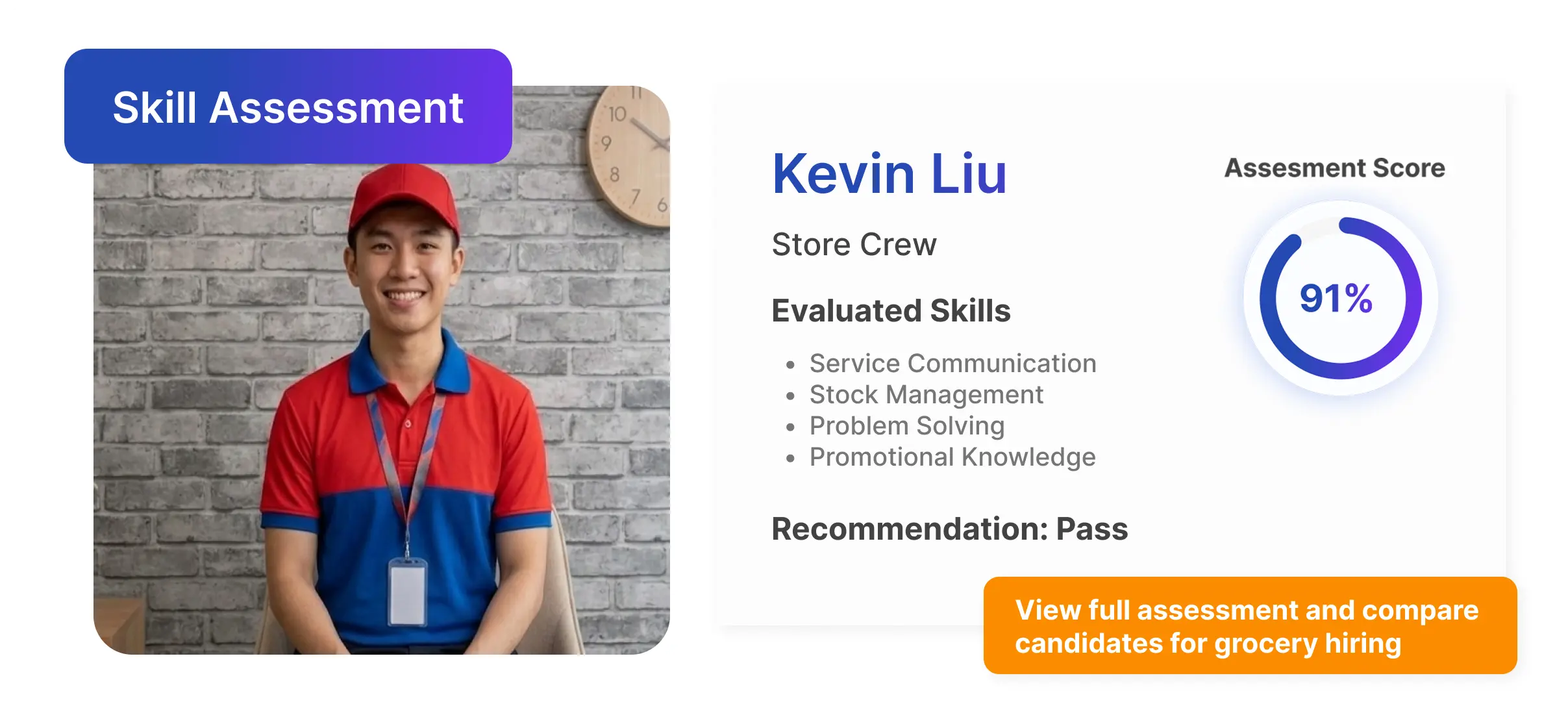
- Store crew
- Customer Service
.png)
Floor Management
& Stocking
- Merchandiser
- Inventory Assistant
- Shelf Replenisher

Backroom
& Receiving
- Receiving Crew
- Picker & Packer Staff
- Warehouse Assistant
What Breaks First in Grocery and Supermarket Hiring
High-volume roles create repeat work, inconsistent standards, and scheduling
bottlenecks for CX managers

Too Many Similar Applicants
Large numbers of applicants often look similar on paper, which slows down shortlisting and makes it hard to spot the obvious early mismatches.
.svg)
Recruiters Repeat the Same Questions
Shift fit, customer handling, payment basics, and attitude to store work are often checked over and over again by phone.
.svg)
Hiring Managers Re-Screen Basic Issues
Managers still end up checking availability, customer service basics, and role expectations.
.svg)
Late Store Fit Discovery
Problems like weekend restrictions, poor complaint handling, or weak POS judgment often surface only after time has already been spent.
What to Assess in Grocery Hiring
Keep this strictly early-stage screening signals
Prior Retail Experience
Evaluate their past exposure to fast-paced store environments and direct customer interactions.
Schedule Flexibility
Confirm their reliability to cover irregular hours, including weekends, holidays, and rotating shifts.
Conflict Resolution
Assess their ability to calmly de-escalate angry shoppers and handle complaints on the spot.
POS & Cash Handling
Check their basic numeracy and familiarity with operating registers or managing payment issues.
Product Adaptability
Gauge their capacity to quickly memorize store layouts, daily promotions, and new inventory.
Shop Floor Collaboration
Ensure they can communicate effectively with teammates during peak hours or shift handovers.
How KitaHQ Fits Into Grocery Hiring Workflow
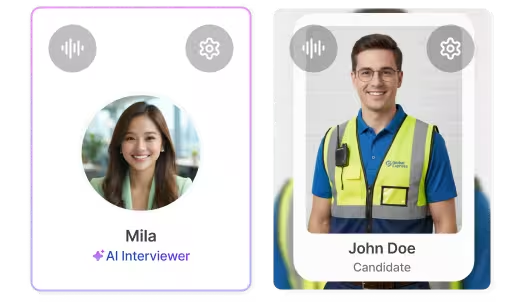
Streamline your retail hiring. KitaHQ standardizes early-stage candidate screening before handing them off to store managers
Sourcing
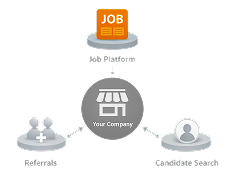
- Manage applicants from job boards, local hiring events, referrals, and walk-ins.
Manager Review
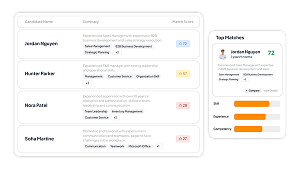
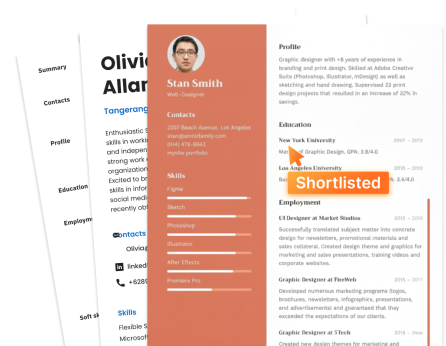
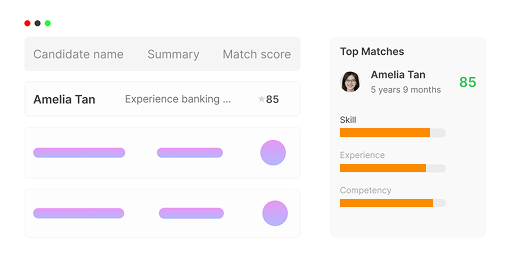
- Hiring managers receive structured summaries, transcripts, recordings, and candidate scores tied to scoring criteria so they do not need to restart from zero.
.avif)
Grocery & Convenience Interview Questions
Customize questions and assessment based on roles.
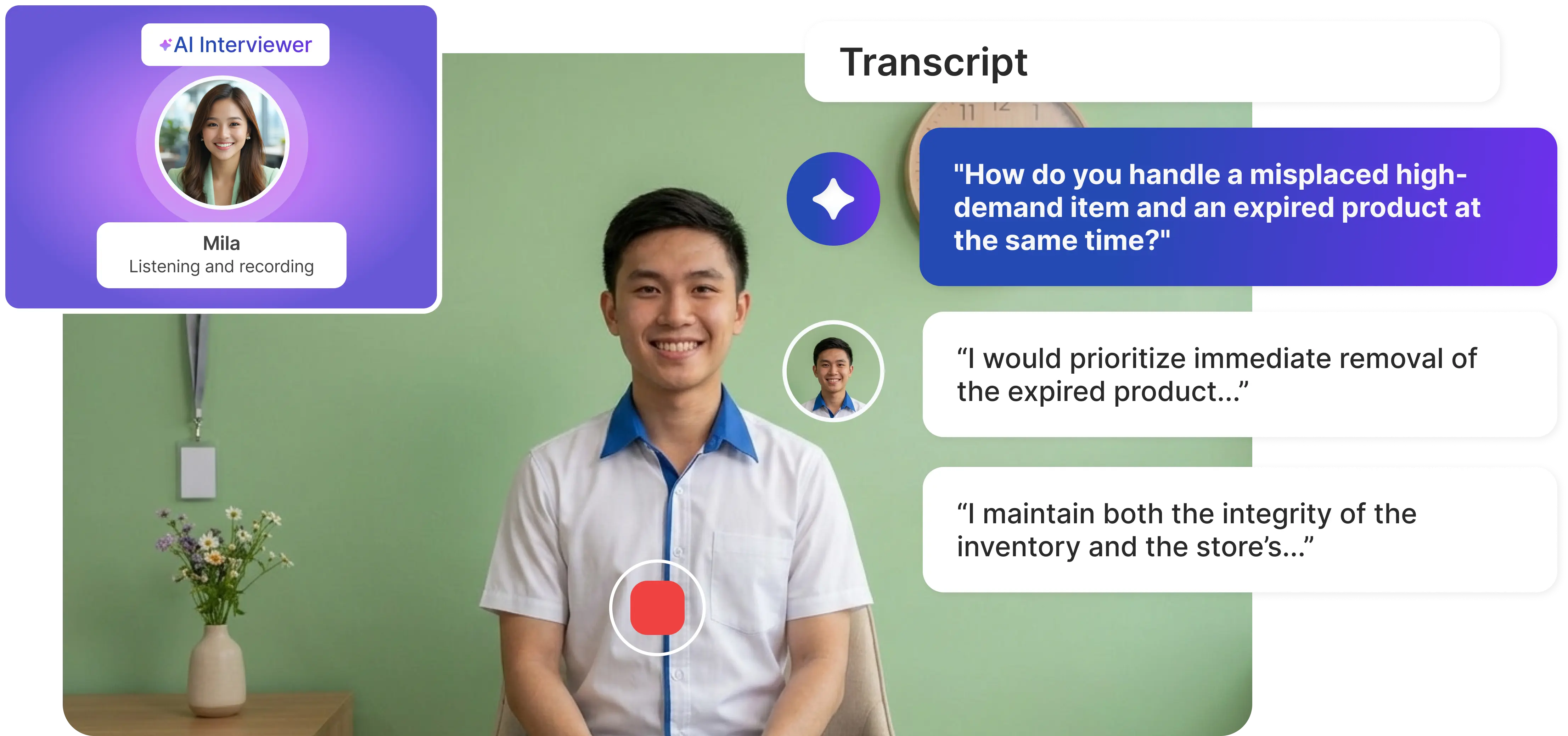
Role: Merchandiser
QUESTION
"How do you handle a misplaced high-demand item and an expired product at the same time?"
Skills Assessed
Stock Management
Planogram Compliance
Functional Communication
Role: Retail Associate
QUESTION
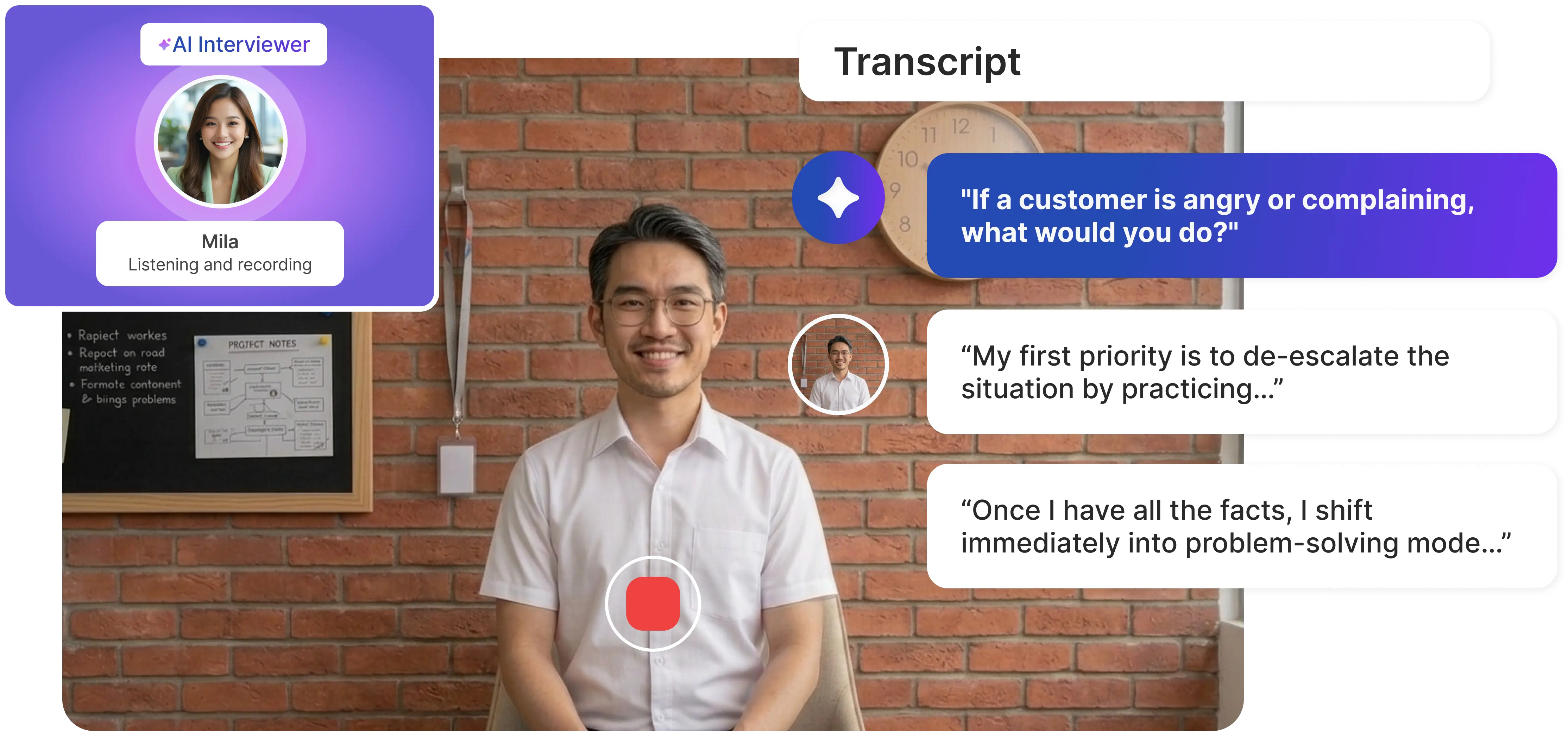
"If a customer is angry or complaining, what would you do?"
Skills Assessed
Problem solving
Emotional Intelligence
Conflict Resolution
Pass, Borderline, and Fail Scoring Guide
Fast, consistent, and scalable store-floor hiring for supermarkets, grocery chains, and
convenience stores
Service and Role Competencies
- Pass: Relevant customer-facing or grocery/store experience
- Borderline: Transferable experience but unclear depth
- Fail: No useful fit and weak role understanding
Shift and Schedule Availability
- Pass: Open to required shifts and store patterns
- Borderline: Some limits but still workable
- Fail: Major restrictions that conflict with the role
Customer and Store Judgment
- Pass: Calm, practical, process-aware answers
- Borderline: Polite but vague
- Fail: Reactive, careless, or unclear answers
What Hiring Managers Receive After the Interview
Structured candidate data that makes comparing, shortlisting, and hiring effortless.

Screening Summary
A role-based summary covering availability fit, customer judgment, payment handling, communication, and store-floor readiness.
Transcript and Recording
Full interview transcript and recording so store leaders can review the candidate without re-running the basics.
Final Scorecard
A scoring view tied to the screening criteria used for the role.
Shortlist View
A side-by-side shortlist that helps managers review candidates more consistently across stores or locations.
Where KitaHQ Fits in Grocery and Convenience Workflow
Fit Case To
Use KitaHQ

Repeated hiring for cashier and retail associate roles
Teams that want to reduce repeated phone screening
Hiring workflows where managers need structured first-round outputs
High-volume or ongoing store-floor recruitment
When KitaHQ Isn't
the Right Fit
Executive or senior retail leadership hiring
Roles that depend mainly on deep in-person assessment at the final stage
Hiring processes that need regulated verification or compliance checks
Teams expecting the system to make final hiring decisions automatically
Warehouse-heavy hiring workflows that need a different page and scorecard
Explore Other Hiring Solutions

Hospitality

Banking

Education

Staffing
Frequently Asked Questions
Understanding AI Hiring Platform for Grocery and Convenience Store
Is this workflow a fit for all grocery roles?
It fits best for repeatable store-floor roles such as cashiers, retail associates, convenience store crew, and similar frontline positions. It is less suitable for senior store leadership or roles that depend heavily on later-stage in-person assessment.
What still needs humans after screening?
Humans should still handle manager interviews, final hiring decisions, and any practical in-store validation. The workflow is meant to reduce repeated first-round screening, not replace hiring judgment.
What sits outside the scope of this workflow?
Humans still This workflow does not cover background checks, employment validation, reference checks, or final decisions. For any regulated or licensed role, structured screening can be supported, but required verification remains outside KitaHQ.the hiring criteria, run manager rounds for judgement and team fit, and make final hiring decisions.
Will store managers trust the screening output?
That usually depends on whether the team uses a clear scoring guide and role-relevant questions. Manager trust tends to improve when they receive structured summaries, transcripts, recordings, and role-based scores instead of a simple pass/fail result.
What is the most common reason this kind of workflow fails?
The most common failure is a weak or overly generic scoring guide, which lets polished but low-fit candidates look stronger than they are. The control is to use role-specific questions and pass / borderline / fail criteria tied to actual grocery store situations.
What if candidates give scripted or polished answers?
That risk is real, especially for customer-facing roles. The best control is to use scenario-based questions on complaints, busy-store prioritisation, shift fit, and payment issues, then validate borderline candidates in the manager round.
Can this work for multi-store grocery or convenience store hiring?
Yes, this is where it tends to fit best, especially when the same cashier or retail associate roles are hired repeatedly across outlets. The value depends on how consistent the role expectations and scoring criteria are across stores.
When should a team not use this workflow?
It is a weak fit when the process depends mainly on final-stage in-person trials, highly local manager discretion, or checks outside early-stage screening. It also should not be used as a substitute for verification or final hiring decisions.
Scale Your Grocery & Convenience Stores Faster.
Automate early-stage screening and deliver structured, data-driven insights to hire top talent for your shop floor.
Schedule Your Call