%20(1).png)

August 6, 2026
Ecommerce Hiring Process: A Practical Guide to Building a Team That Can Scale
Build a stronger ecommerce hiring process with eight practical steps for defining roles, screening candidates, running interviews, and scaling responsibly.
.avif)
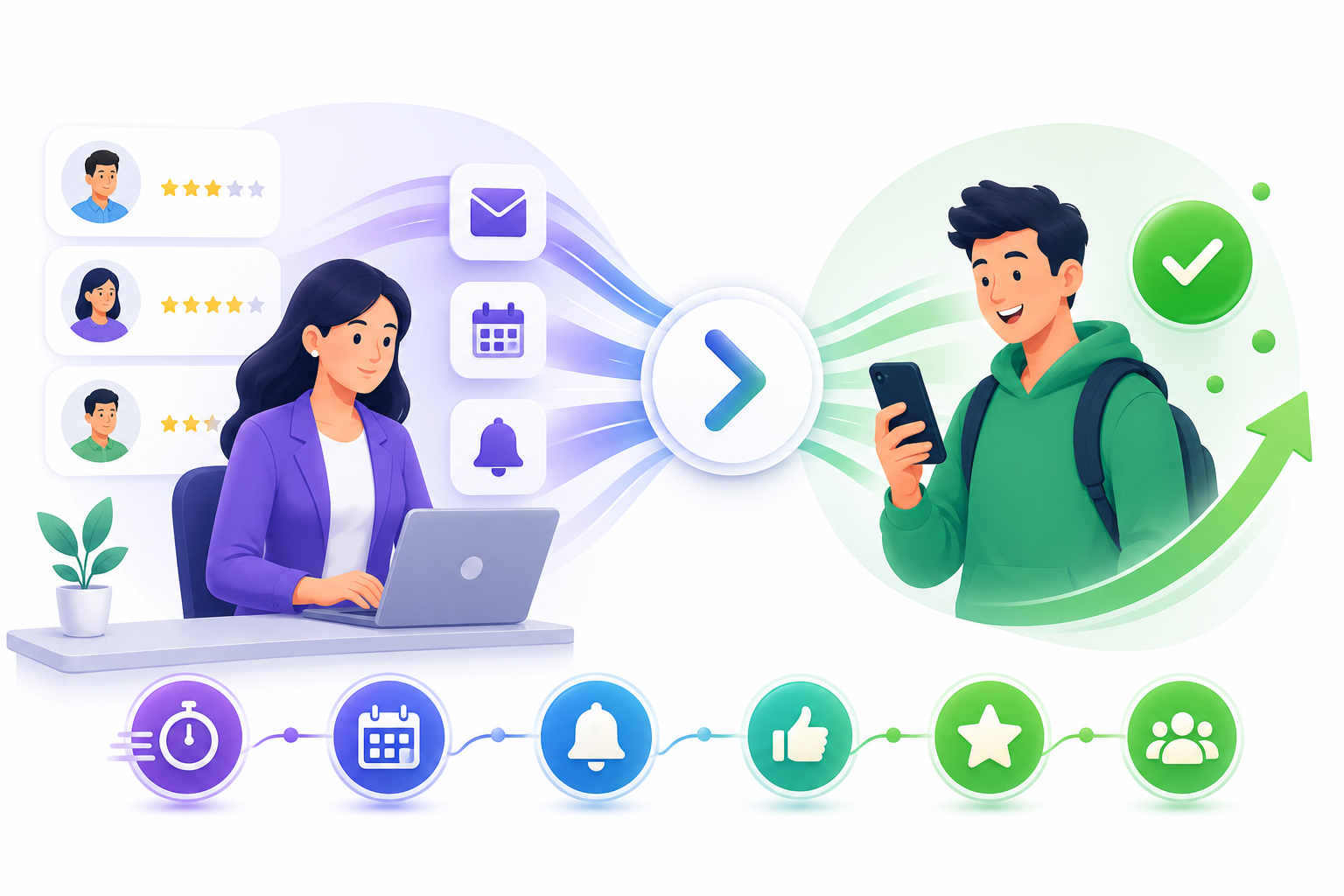
Hiring often feels slow from the candidate’s side. After applying, candidates may wait days for a response, miss an interview invitation, repeat the same information, or lose interest because the next step is unclear.
Recruitment automation can improve candidate experience when it removes friction from the early-stage hiring process. The goal is not to make hiring feel robotic. The goal is to make the process faster, clearer, and easier for candidates while keeping recruiters involved in the decisions that need human judgment.
Not every automated workflow improves candidate experience. Some workflows only make the process faster for the company, while candidates still feel confused, ignored, or handled too mechanically.
Candidate-friendly recruitment automation should improve five things: speed, clarity, flexibility, consistency, and human review.
That means candidates should receive faster follow-up, clearer instructions, easier access to interview steps, a more consistent screening process, and confidence that recruiters still review important context before decisions are made.
Instead of automating every interaction, automation should remove unnecessary waiting and confusion from repeatable screening steps.
Automation improves candidate experience by making early-stage hiring faster, clearer, and easier to complete. Here are the key areas where it helps.
A slow first response can make candidates lose interest, especially when they are applying to several companies at once.
Recruitment automation can reduce this delay by moving candidates to the next step based on agreed screening rules.
For example, once a candidate matches the required CV criteria, the system can send an interview invitation or reminder without waiting for a recruiter to process each profile manually.
This helps candidates know what to do next sooner, while recruiters avoid repeating the same follow-up tasks across every applicant. The key is to make sure automation follows clear role-based criteria, not vague assumptions about who looks like a good candidate.
See also: How to Use Automated Interview Invites and Reminders in Candidate Screening
Scheduling can slow down hiring even when both the recruiter and candidate are interested.
Candidates may only be available outside office hours, while recruiters may be handling many roles at once. Recruitment automation reduces this friction when early-stage interviews do not require live scheduling.
With structured AI video interviews, candidates can complete the interview on their own time, while recruiters review the responses later. This is useful for checking basic fit, communication, availability, motivation, role awareness, or practical judgment before deciding who moves forward.
Fast hiring still feels poor if candidates do not understand what is happening.
Recruitment automation can support clearer communication through approved templates for interview invitations, reminders, re-invites, and rejection messages. This helps candidates receive more consistent instructions and reduces delays caused by manual follow-up.
The message still needs to feel clear and respectful. A fast automated message is not useful if it sounds cold, vague, or misleading.
Manual screening can feel inconsistent when candidates are evaluated in different ways.
Recruitment automation can support a more consistent process by using the same screening flow, questions, and role-based criteria for candidates applying to the same role.
For example, customer-facing candidates can be asked similar questions about communication and customer handling. Operations candidates can be assessed on process discipline, issue escalation, and practical judgment.
This does not mean every candidate should be treated mechanically. It means recruiters get clearer context for comparison.
Candidate experience also depends on what happens after the screening step.
Recruitment automation should help prepare candidate reports for recruiter and hiring manager review. These reports can include summaries, scores, transcripts, recordings, strengths, concerns, and other structured outputs from the screening process.
This helps hiring teams review candidates more consistently before deciding who should move forward. It also reduces the need for candidates to repeat the same information across multiple stages.
A better candidate experience usually comes from improving the workflow, not from adding more technology for its own sake.
Recruitment automation can improve candidate experience, but only when the workflow has the right boundaries.
It should not make candidates feel like no human is involved. It should not reject candidates based on unclear rules. It should not replace recruiter review for edge cases, unusual profiles, or roles that need deeper human judgment.
See also: Recruitment Automation Without Automated Hiring Decisions: What Recruiters Should Still Review
KitaHQ supports candidate experience by helping hiring teams automate repetitive early-stage screening steps while keeping recruiters and hiring managers involved in review.
With KitaHQ’s recruitment automation software, teams can support workflows such as resume screening, interview invitations, reminders, AI video interviews, candidate reports, and handoff for human review.
This can help candidates receive faster next steps after applying, complete structured interviews without live scheduling, and experience a more consistent screening process across the same role.
For recruiters, the value is not only speed. KitaHQ helps reduce manual screening admin so recruiters can spend more time reviewing candidate context, handling edge cases, and deciding who should move forward.
KitaHQ is strongest when hiring teams need a more structured early-stage screening workflow for repeatable or high-volume roles. It is not meant to replace every part of recruitment.
Teams should still use the right tools and processes for live interview scheduling, full ATS workflows, sourcing, onboarding, background checks, credential verification, and compliance checks.
Most importantly, KitaHQ does not make final hiring decisions for the process to become faster. The stronger use case is helping recruiters reduce manual screening work, give candidates clearer next steps, and review candidate context more consistently before deciding who moves forward.
Industry: Banking
KitaHQ is an AI hiring software that helps teams screen faster, run AI video interviews, and evaluate candidates consistently.