%20(1).png)
June 4, 2026
Do We Need AI Recruitment Software? How to Know If It Is Worth It
Not every hiring team needs AI recruitment software. Use this practical checklist to decide when AI candidate screening and AI video interviews are worth it.
.png)
Not every hiring team needs AI recruitment software.
For some teams, the real problem is not software. It may be unclear hiring criteria, weak job descriptions, slow hiring manager feedback, or a role that needs deeper human evaluation from the start.
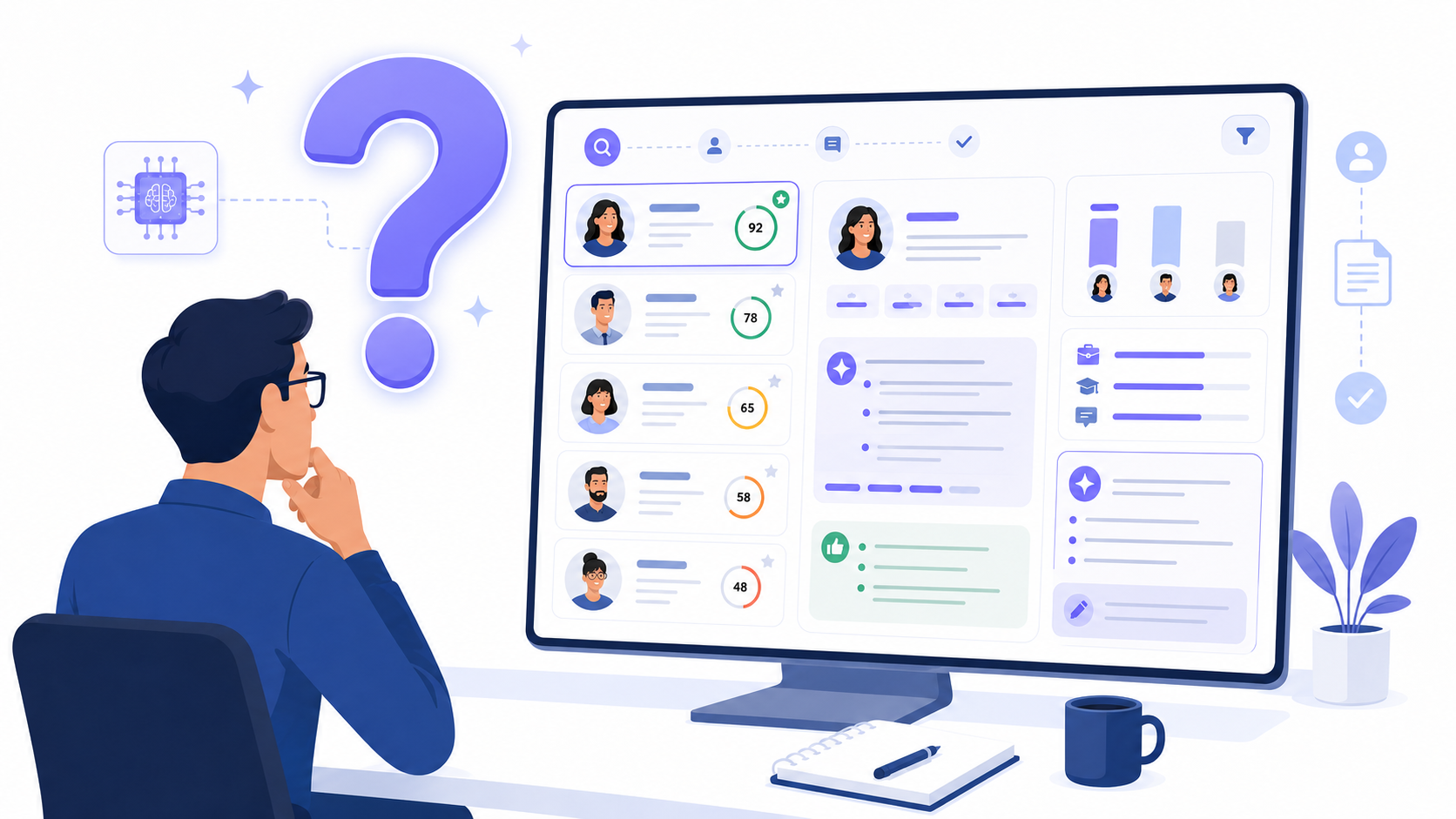
But for teams handling repeatable roles, high applicant volume, or early-stage screening bottlenecks, AI recruitment software can reduce manual work and make candidate review more consistent. So, “Do we need AI recruitment software?” The answer depends on “Which part of our hiring process is slow, repetitive, and ready to be structured?”
This guide helps you decide whether AI recruitment software is worth it for your hiring team, when to wait, and what to look for before choosing a platform.
A common mistake is treating AI recruitment software as a replacement for recruiters.
That is the wrong framing.
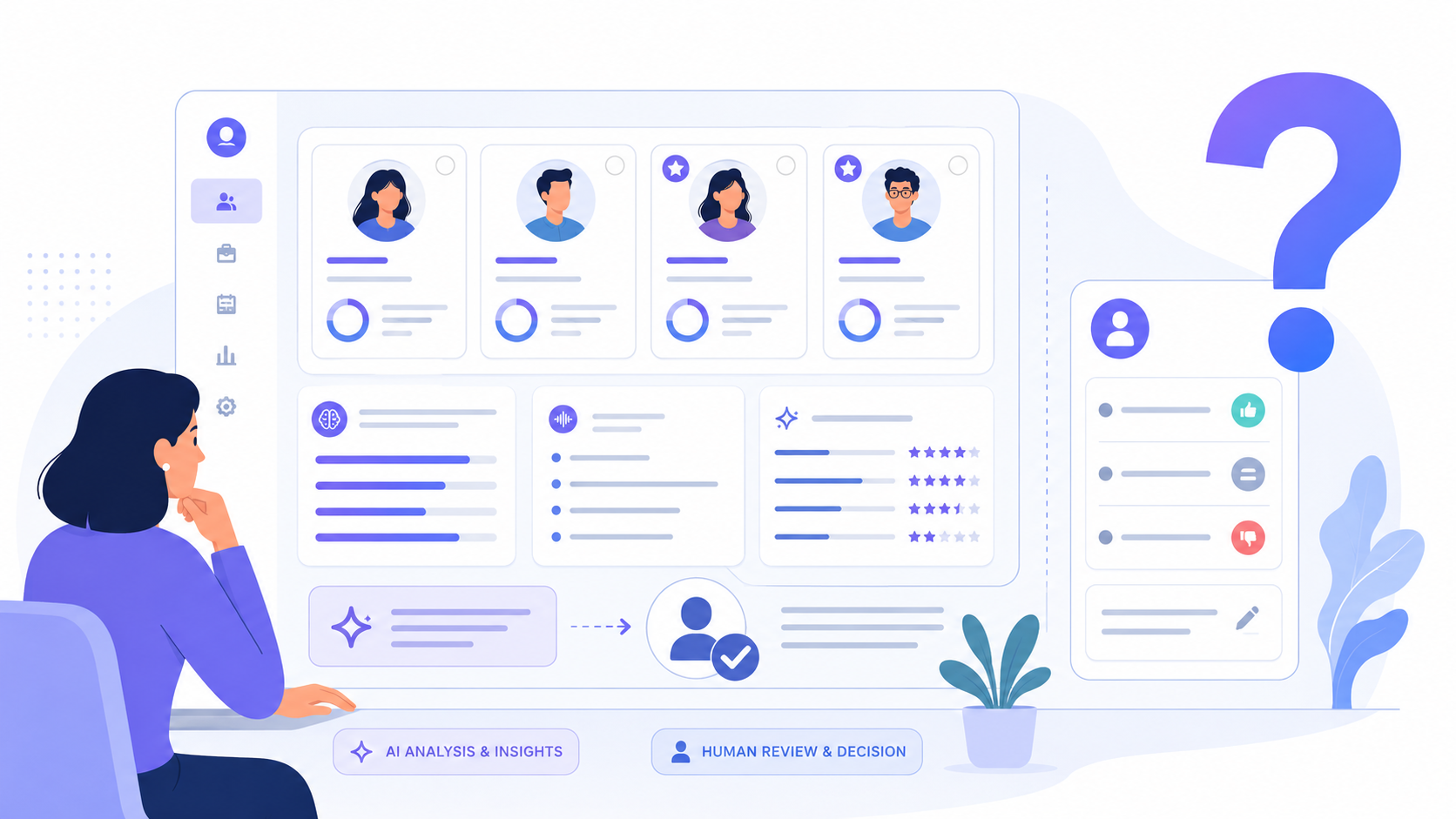
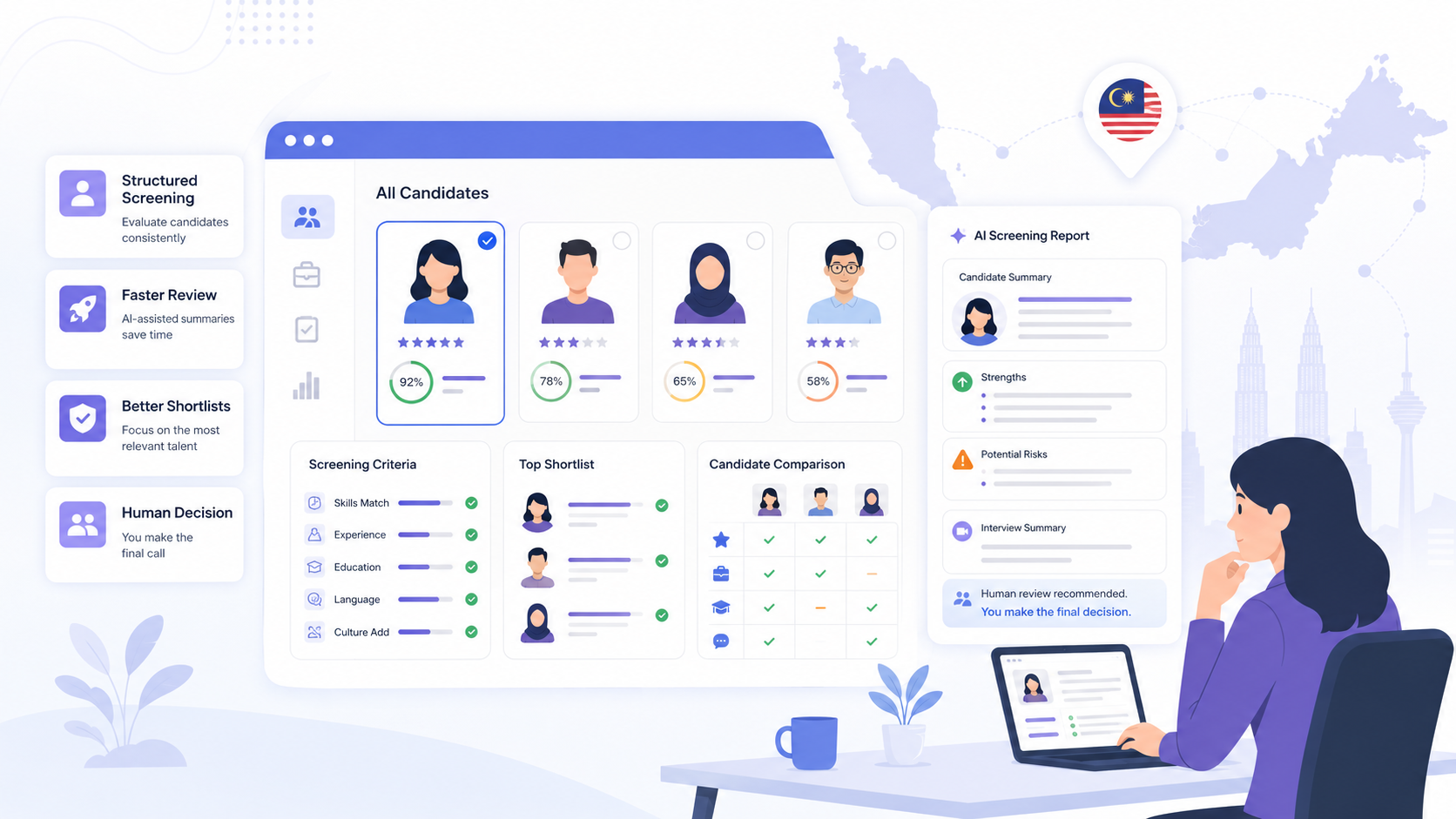
Good AI recruitment software should support recruiters and hiring managers, especially in early-stage candidate screening. It should help teams screen resumes, run AI video interviews, collect structured candidate responses, automate repetitive screening steps, and generate candidate reports for recruiter or hiring manager review.
It should not make final hiring decisions, replace human judgment, or remove accountability from the hiring team.
So the real question is not whether AI can “hire better than humans.” The practical question is whether your team is spending too much time on repeatable screening tasks before humans can focus on the candidates who deserve deeper review.
See also: AI Recruitment Software Cost: What Hiring Teams Should Compare Before Buying
AI recruitment software becomes more useful when recruiters are repeatedly reviewing large numbers of applications for similar roles.
This is common in retail, staffing, sales, customer service, operations, finance support, education support, warehouse, hospitality, and other repeatable hiring environments.
If every role is unique and low volume, AI may be less urgent. But if recruiters are reviewing hundreds of similar resumes, asking the same early screening questions, and manually deciding who should move forward, the process is likely ready for AI candidate screening.
Manual screening often slows down because recruiters have to call candidates, schedule interviews, follow up, and write summaries before hiring managers can review anyone.
That creates delays, especially when candidates are only available outside working hours or when recruiters are managing several openings at once.
AI video interviews can help here because candidates can complete interviews on their own time, without live scheduling. Recruiters can then review interview reports before deciding who should move forward.
A shortlist is only useful if it gives hiring managers enough context.
If managers often say, “Why was this candidate shortlisted?” or “I need more information before interviewing them,” the issue may not be applicant volume alone. It may be that your screening process does not capture enough role-fit signals before the manager interview.
AI recruitment software can help by structuring screening criteria, asking consistent questions, and giving hiring managers clearer candidate reports before the next step.
Inconsistent screening is common when teams grow across branches, locations, departments, or countries.
One recruiter may prioritize experience. Another may focus on communication. Another may rely heavily on resume keywords. The result is uneven shortlists.
AI candidate screening is more useful when the team wants to apply the same role criteria across a larger applicant pool, while still keeping recruiter and hiring manager review in control.
If candidates wait too long between application, screening, interview, and next-step updates, strong candidates may drop out or accept another offer.
AI recruitment software is worth considering when your delays are caused by repetitive screening tasks, not by strategic hiring decisions. For example, automated invites, reminders, re-invites, and candidate report generation can help keep the screening process moving without requiring recruiters to manually coordinate every step.
See also: Is AI Recruitment Software Fair for Candidate Screening?
You do not need a complex ROI model to start.
Begin with a simple screening cost checklist:
If these numbers are small, AI recruitment software may not be urgent.
But if recruiters are spending hours every week on repeated screening tasks, and hiring managers still lack clear candidate context, the business case becomes stronger.
AI recruitment software is not always the right next investment.
It may not be worth it yet if your team hires only a few people per year, every role is highly specialized, or the bottleneck is not early-stage screening.
For example, AI candidate screening will not fix a hiring process where the role requirements are unclear, hiring managers take weeks to give feedback, compensation is not competitive, or the team needs credential, license, employment, sanctions, fraud, or compliance verification.
It also should not be used as a way to hand final hiring decisions to software. Recruiters and hiring managers should still decide who moves forward.
See also: Should AI Recruitment Software Make Hiring Decisions?
Hiring teams do not need AI recruitment software just because AI is popular.
They need it when early-stage screening has become too slow, repetitive, inconsistent, or difficult to scale with recruiter capacity alone.
For teams with repeatable roles, high applicant volume, or early-stage candidate screening bottlenecks, AI recruitment software like KitaHQ can help structure the process. This platform can screen hundreds of resumes, run AI video interviews that candidates can complete on their own time, automate screening steps, and generate candidate reports for recruiter and hiring manager review.
KitaHQ is built to help hiring teams screen candidates faster and more consistently while keeping humans in control of who moves forward.
.avif)
KitaHQ is an AI hiring software that helps teams screen faster, run AI video interviews, and evaluate candidates consistently.