%20(1).png)
June 3, 2026
Best Candidate Screening Software Malaysia: 5 Tools to Compare
Find the best candidate screening software for Malaysia hiring teams by comparing AI video interviews, assessments, multilingual support, and reports.
.png)
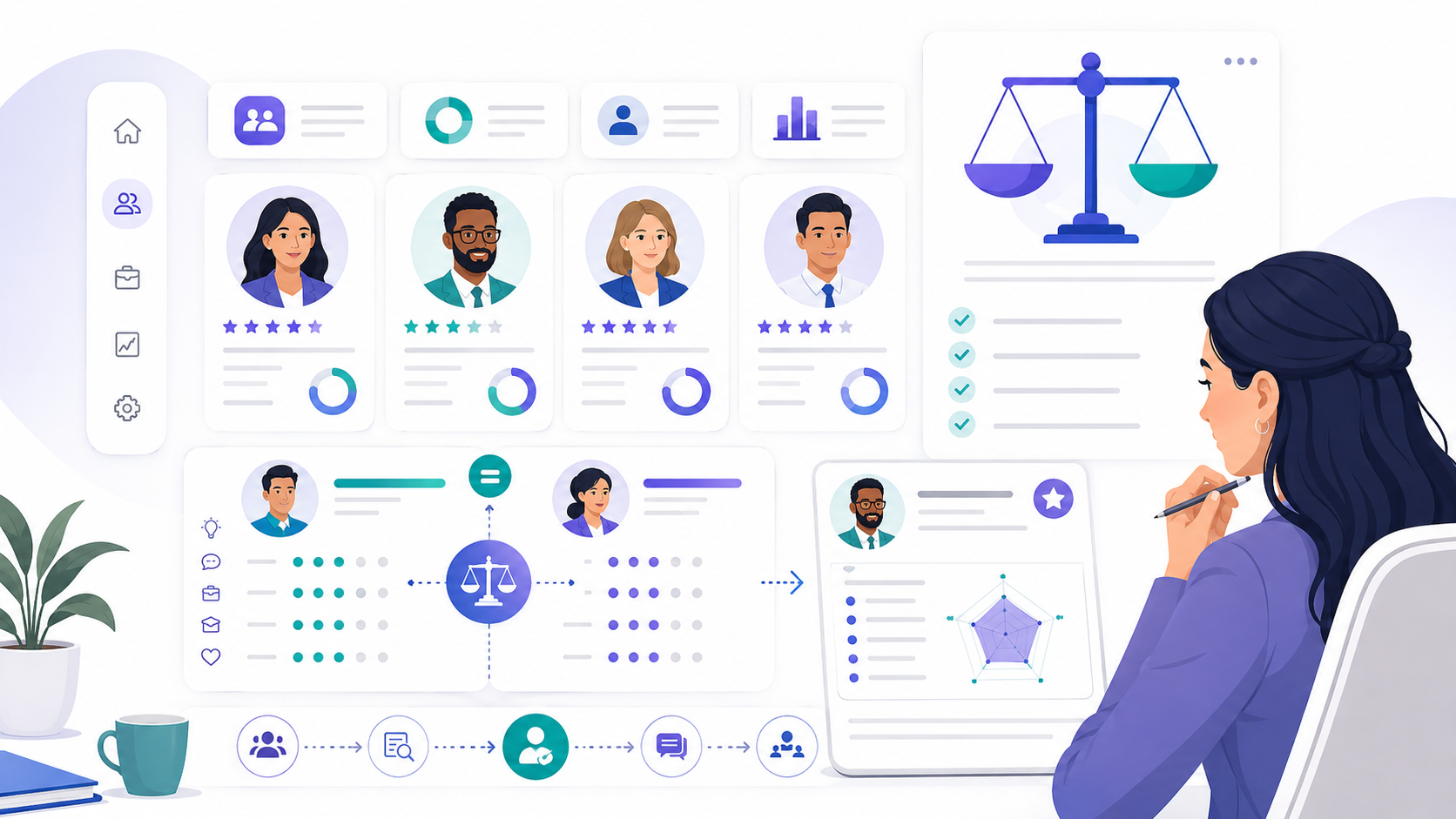
AI can help recruiters move faster, but speed is not the only thing hiring teams are worried about.
When AI starts screening resumes, asking interview questions, or summarizing candidate responses, a more sensitive question comes up: Is AI recruitment software fair for candidate screening?
The answer depends less on the word “AI” and more on how the screening workflow is built.
AI recruitment software can support a more consistent screening process when every candidate is assessed against job-related criteria, receives structured questions, and is reviewed through clear candidate reports. But it should not be treated as a final decision-maker. Recruiters and hiring managers still need to review the context, compare candidates carefully, and decide who moves forward.
That is the practical way to look at fairness in AI candidate screening: not as a promise from software, but as a workflow that combines structured AI support with human judgment.
Fair candidate screening does not mean every candidate gets the same outcome.
It means every candidate is reviewed through a process that is:
A fairer AI candidate screening process should help teams answer questions like:
This is important because “fairness” is not just a software claim. It is a hiring workflow issue.
For example, Singapore’s Fair Consideration Framework expects employers to consider the workforce fairly and avoid discrimination based on non-job-related characteristics such as age, sex, nationality, or race.
Singapore employers are also expected to follow fair employment practices, which makes job-related criteria and employer review especially important when using AI in screening.
That means AI recruitment software should support merit-based screening, not replace employer responsibility.
See also: Top AI Recruiting Tools in 2026: From Sourcing to Screening
Many teams worry that AI may introduce bias into hiring. That concern is valid.
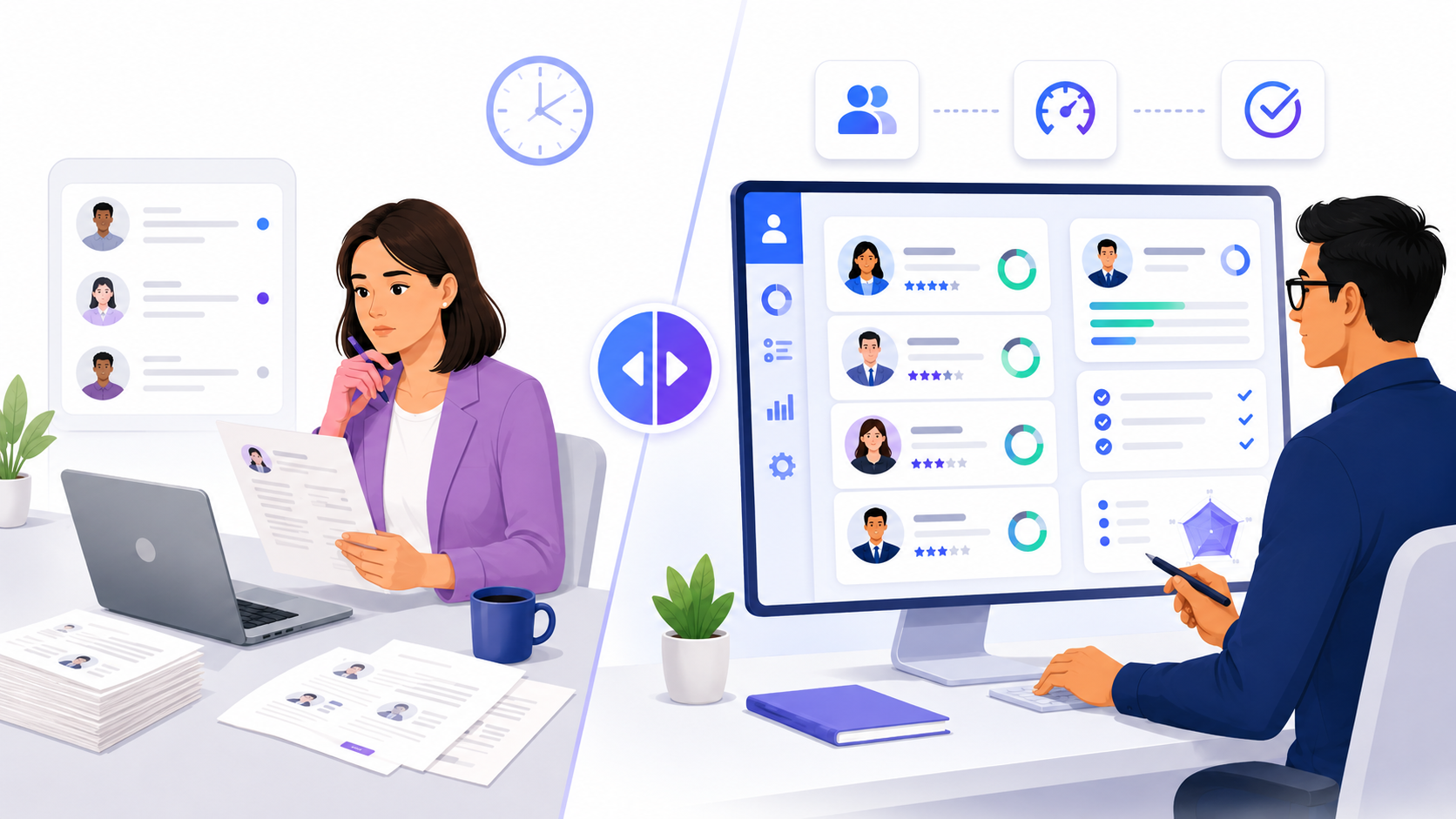
But manual screening can also be inconsistent.
A recruiter may spend more time on one resume than another. A hiring manager may prefer candidates from familiar companies or schools. Different interviewers may ask different questions for the same role. Candidate notes may be incomplete, subjective, or hard to compare.
These problems usually happen before the final interview stage.
The issue is not just whether the company uses AI. The issue is whether the screening process is structured enough for candidates to be reviewed consistently.
AI recruitment software can help here when it creates a more consistent workflow. But it can also create risk if the system is configured poorly or if recruiters treat AI output as final.
AI can support fairer candidate screening when it helps recruiters move away from scattered judgment and toward a repeatable review process.
That does not mean every AI-supported process is fair. The value comes from the structure around the AI: clear criteria, consistent questions, reviewable candidate reports, and human decision-making before candidates move forward.
Resume screening can become unfair when recruiters rely too much on surface-level signals such as school name, previous employer brand, formatting, or resume writing style.
A better workflow starts with role-related criteria. AI resume screening can help by organizing candidate profiles around defined criteria instead of leaving every resume review to individual interpretation.
Resumes often fail to show how candidates communicate, explain decisions, respond to scenarios, or handle role-specific situations.
AI video interviews can help recruiters assess candidates beyond the resume without scheduling every early interview live. For fairness, the important part is structure.
When candidates for the same role receive consistent questions and are assessed against the same criteria, recruiters have a clearer basis for comparison. This can reduce the risk of one candidate being judged through a detailed conversation while another is judged only from a resume or a short recruiter note.
AI screening becomes risky when recruiters only see a final score with no context.
A fairer workflow should give hiring teams something they can actually review, not just accept.
That means candidate reports should help recruiters understand:
A score can be useful, but it should not stand alone. Hiring teams need enough detail to compare candidates carefully and apply human judgment.
Screening is not only about selecting candidates. It is also about how information is passed to hiring managers.
If managers receive weak notes, inconsistent summaries, or unclear reasons for shortlisting, the next interview stage can become subjective again.
Candidate reports help make the handoff clearer. Instead of sending only a name and resume, recruiters can share structured context: candidate summary, interview performance, strengths, concerns, transcripts, and recordings.
This does not remove the manager’s judgment. It gives the manager a better starting point for review.
See also: How to Improve Your Candidate Screening Process: 10 Practical Ways
Fair screening is not only about how candidates are evaluated. It is also about how candidate data is handled.
AI recruitment software may process sensitive hiring information such as:
If that data is not handled carefully, the screening process can lose candidate trust.
For Singapore teams, the Personal Data Protection Act governs the collection, use, and disclosure of personal data by organisations. Singapore’s PDPA also recognises both the right of individuals to protect their personal data and the need for organisations to use personal data for reasonable purposes.
Fair candidate screening does not come from using AI alone. It comes from using clear criteria, structured interviews, reviewable reports, and human decision-making at the right stage.
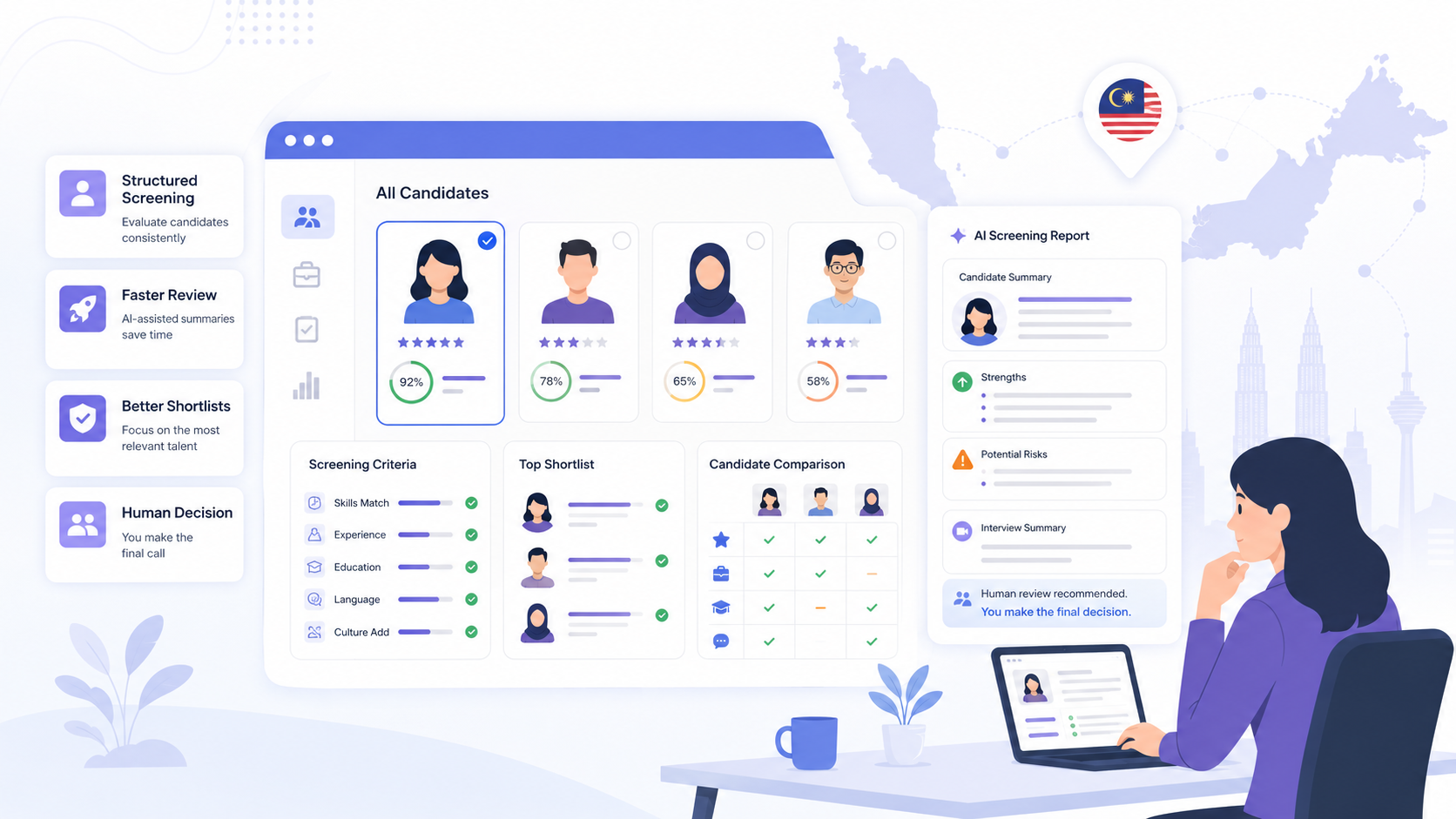
KitaHQ is AI recruitment software that helps hiring teams structure early-stage candidate screening with AI resume screening, AI video interviews, recruitment automation, and candidate reports for recruiter and hiring manager review.
Candidates can complete interviews on their own time, while hiring teams get clearer context before deciding who should move forward.
KitaHQ also supports secure candidate data handling through privacy practices, access controls, encryption, and SOC 2-aligned security procedures. This helps hiring teams protect candidate information and limit access to the relevant recruiters and hiring team members who need to review it.
For teams that want to reduce manual screening inconsistencies without handing hiring decisions over to AI, KitaHQ provides a more structured way to support fairer and more consistent review, with human judgment still in control.
.avif)
KitaHQ is an AI hiring software that helps teams screen faster, run AI video interviews, and evaluate candidates consistently.