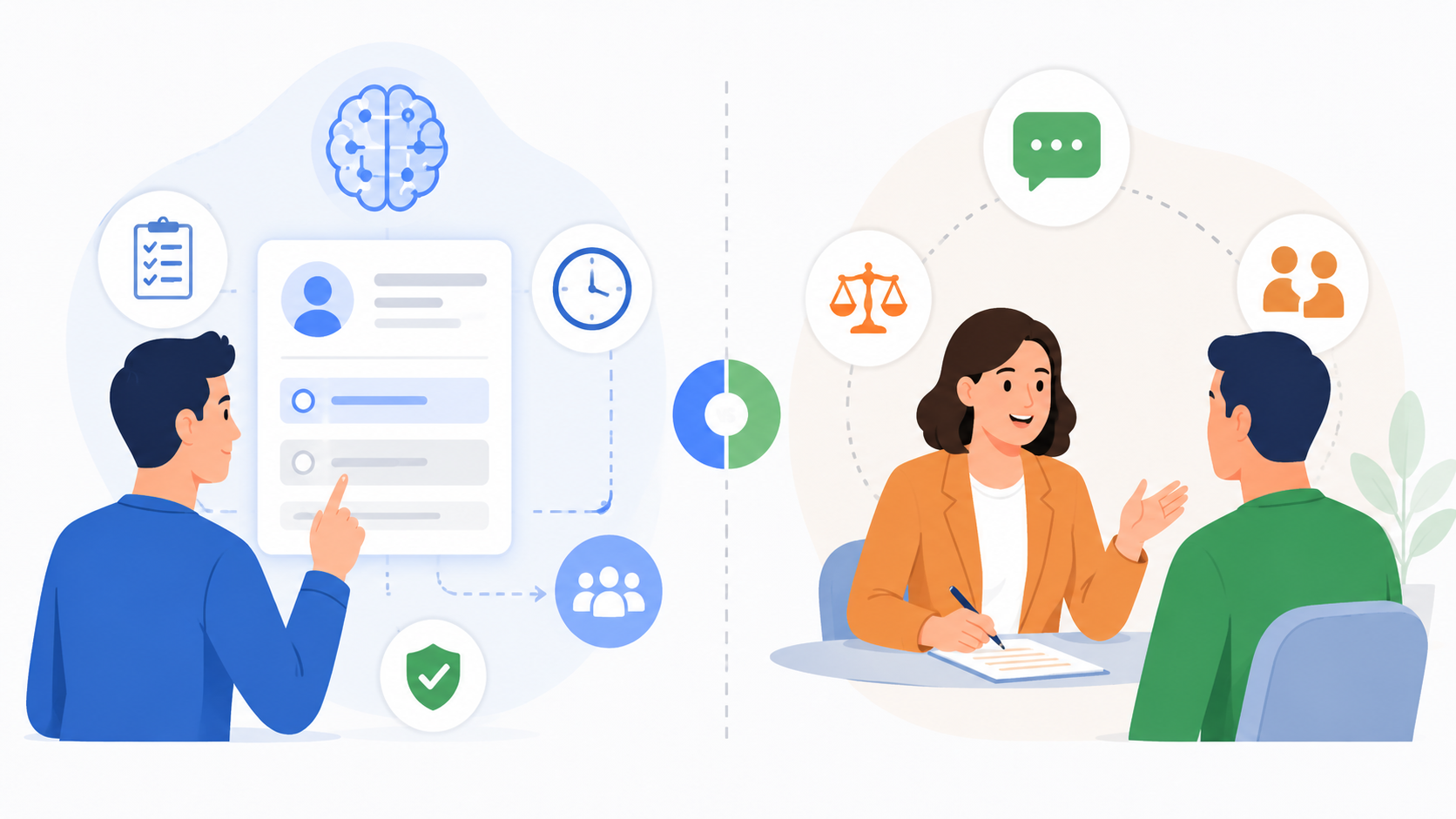
Hiring teams often frame AI screening interviews and human interviews as opposites. One seems faster and more scalable. The other feels more personal and judgment-based.
But the better question is not whether AI should replace human interviews. The better question is where each interview type belongs in the hiring process.
For hiring teams managing high-volume, regional, or multilingual candidate pipelines, AI screening interviews can help collect structured early-stage responses before recruiters spend time on live calls. Human interviews can then focus on the parts of hiring that need context, follow-up questions, manager judgment, and final decision-making.
Used well, the workflow is not AI screening versus human interview. It is AI screening before a human interview.
What Is an AI Screening Interview?
An AI screening interview is a structured AI video interview used earlier in the hiring process to collect candidate responses before a live recruiter or hiring manager interview.
In most workflows, candidates receive a link, answer role-related questions, and complete the interview on their own time. The system may then generate transcripts, scores, summaries, recordings, or candidate reports for recruiter review.
What Is a Human Interview?
A human interview is strongest when the hiring decision needs context, judgment, and real-time follow-up.
Human interviewers can ask deeper questions, clarify unclear answers, read the broader situation, and evaluate whether a candidate’s goals, expectations, and working style fit the role. They can also handle sensitive or complex topics that should not be reduced to a score.
AI Screening vs Human Interview: Main Differences
With both interview types defined, the next step is to compare where each one fits in the hiring process.
The key difference is not which interview type is better. It is which one fits the hiring stage and decision needed.
See also: Should AI Recruitment Software Make Hiring Decisions?
When to Use AI Screening Interviews
AI screening interviews are most useful when hiring teams need structured early-stage information before deciding who should move forward to a human interview.
They work especially well for:
When a role receives many applicants, recruiters may not have enough time to screen every candidate through live calls. Structured screening helps collect comparable responses first.
- Repeatable screening questions
Early interviews often cover similar areas such as experience, role interest, availability, work scenarios, or language comfort. When the questions are repeatable, candidates can be reviewed more consistently.
Early screening can slow down when recruiters and candidates need to coordinate short calls. Letting candidates complete the interview on their own time helps reduce this friction.
- Regional or multilingual hiring
When candidates are spread across countries, time zones, or languages, structured interviews help teams collect responses more consistently without requiring every candidate to join a live call.
- Preparing better human interviews
Recruiters and hiring managers can review candidate answers, transcripts, recordings, scores, summaries, strengths, and concerns before deciding what to ask next.
See also: 5 Most Common Candidate Screening Methods (Plus Recommended Tools)
When to Use Human Interviews
Human interviews are most useful when the hiring team needs depth, context, and judgment that cannot be fully captured in a structured screening step.
They are especially important for:
A candidate’s first answer may be incomplete, unclear, or unexpectedly strong. Human interviewers can ask follow-up questions, clarify examples, and understand how the candidate thinks beyond the first response.
- Senior, specialized, or high-context roles
Some roles require deeper discussion around judgment, influence, team dynamics, business context, or past decisions. In these cases, human conversations should lead to deeper evaluation.
AI can help organize candidate information, but the decision to move forward, reject, offer, or hire should involve recruiters, hiring managers, and relevant decision-makers.
- Candidate relationship-building
Hiring is not only evaluation. Human interviews help candidates understand the manager, team, role expectations, and company culture.
- Sensitive or complex context
Some situations need careful interpretation, such as career gaps, role transitions, compensation expectations, or unique candidate circumstances.
A Practical Workflow: AI Screening Before Human Interview
Once the role of each interview type is clear, the next step is building a workflow where AI screening interviews support, rather than replace, human interviews.
The strongest hiring workflows usually combine both interview types. A practical flow could look like this:
Recruiters and hiring managers agree on what matters for the role, such as required experience, communication level, schedule fit, language needs, or role-specific competencies.
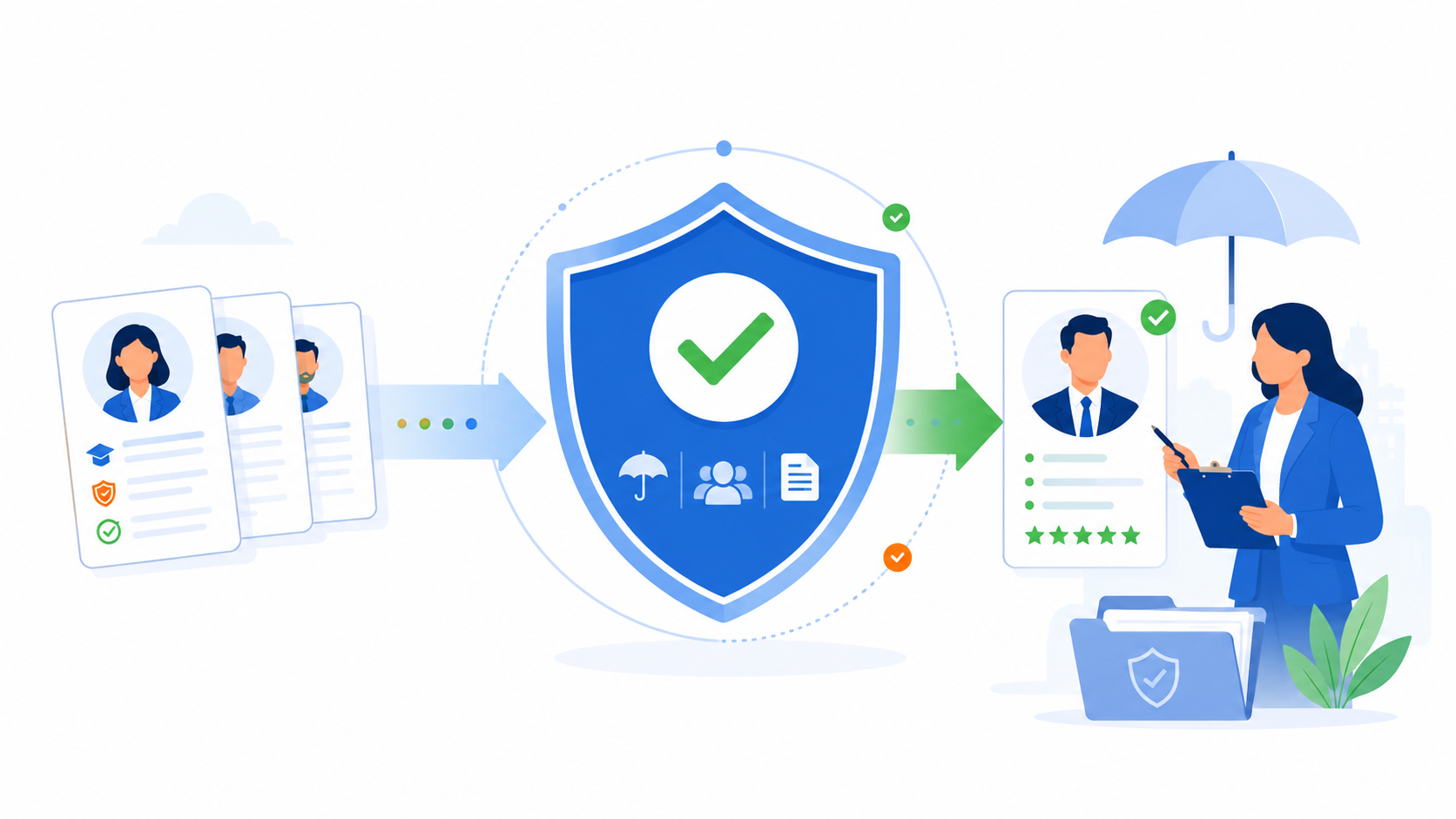
Candidates are reviewed against role-related requirements. AI resume screening can help organize CV information, but recruiters should still review the results.
- Run AI screening interviews
Relevant candidates complete structured AI video interviews with questions based on the role criteria.
Recruiters review summaries, transcripts, recordings, scores, strengths, and concerns before deciding who should move forward.
- Invite shortlisted candidates to human interviews
Human interviews focus on deeper follow-up, motivation, team fit, manager judgment, and final decision-making.
- Make final decisions with human review
Hiring teams use the full context from CVs, screening interviews, human interviews, and business needs before deciding next steps.
This workflow keeps AI in the part of the process where it is most useful: reducing repetitive early-stage work and organizing candidate signals. It keeps humans in the part of the process where they are most needed: judgment, context, and decision-making.
See also: AI in Recruitment Singapore: Trends, Challenges, and What Hiring Teams Should Watch
How KitaHQ Supports Structured Screening Before Human Interviews
KitaHQ helps hiring teams structure the early stages of recruitment before deeper human interviews.
The platform supports AI video interviews that candidates can complete on their own time without waiting for a recruiter to join a live call. After the interview, recruiters and hiring managers can review summaries, transcripts, recordings, and scores before deciding the next step.
KitaHQ is not meant to replace final hiring decisions. It is best used to support early-stage screening, so recruiters and hiring managers can spend more time on conversations that require judgment.
Final Takeaway
AI screening interviews and human interviews should not compete for the same role in the hiring process.
AI screening interviews are best used to make early-stage screening faster, more structured, and easier to review. Human interviews are best used for deeper judgment, follow-up questions, candidate relationship-building, and final hiring decisions.
The right approach is to use AI screening interviews before human interviews, not instead of them.
That way, recruiters can reduce repetitive screening work, candidates can move through the process with less scheduling friction, and hiring managers can focus their time on the candidates who are most worth a deeper conversation.
.png)
%20(1).png)

.avif)