%20(1).png)
July 1, 2026
Manufacturing Candidate Screening Checklist for HR Teams
Use this manufacturing candidate screening checklist to review shift fit, safety awareness, SOP discipline, role readiness, and manager handoffs.
.png)

Manufacturing hiring moves quickly. A production line may need operators next week. A warehouse team may need more packers before peak season. A maintenance team may need technicians who can respond to machine issues without slowing down operations.
But many manufacturing recruitment teams still rely on manual CV review, repeated screening calls, and live interview scheduling before hiring managers can review strong candidates.
That creates a gap between candidate volume and hiring speed.
The goal is not just to get more applicants. The goal is to build a recruitment workflow that helps recruiters identify relevant, available, and role-ready candidates faster.
This guide explains practical manufacturing recruitment strategies for factory, warehouse, technician, quality, and production roles, with a focus on reducing screening bottlenecks before manager review.
Manufacturing recruitment is different from office-based hiring because the hiring need is often tied directly to operations.
When production demand increases, the hiring team may need to fill multiple roles at once. When attrition happens, supervisors may need replacements quickly to avoid overtime pressure. When a new line, site, or shift opens, recruiters may need to screen many candidates in a short window.
The slowdown usually comes from a few repeatable issues:
This is why manufacturing recruitment strategies should focus on screening throughput, not only candidate attraction.
A factory hiring process becomes faster when recruiters can quickly answer:
A practical manufacturing recruitment strategy should improve four stages of the hiring workflow:
The best strategy is not to fix only one stage. It is to remove the handoff delays between stages.
For manufacturing teams, the highest-impact question is usually: “Where does the candidate stop moving?” If candidates stop before CV review, the issue is qualification. If they stop before the first interview, the issue is scheduling. If they stop before manager review, the issue is shortlist quality. A good recruitment strategy should diagnose the stuck point before adding more sourcing channels.
A common mistake in manufacturing recruitment is treating every factory applicant the same.
A line operator, warehouse worker, maintenance technician, forklift operator, and quality inspector may all be part of manufacturing hiring, but they should not be screened with the same criteria.
Each role needs its own hiring lane.
For example:
This helps recruiters avoid vague screening. Instead of asking whether someone is “good for manufacturing,” the team can decide whether the candidate fits a specific role path.
This also helps hiring managers because they receive candidates who have already been reviewed against the right job context.
Manufacturing recruiters often lose time because the screening criteria are unclear.
If the job requirement is too broad, recruiters may review every CV manually and only discover late in the process that a candidate cannot work the required shift, lacks relevant machine exposure, or does not meet a basic requirement.
Before screening starts, define the must-have criteria clearly.
For factory and production roles, this may include:
For regulated or certification-based roles, screening can help flag whether a candidate appears to mention a requirement, but it should not replace formal credential, license, background, or compliance verification.
This is where AI resume screening can help recruiters work faster. Instead of reviewing every CV from scratch, recruiters can use screening criteria to prioritize candidates who appear more relevant for the role, then review the shortlist before moving candidates forward.
For teams hiring at volume, this can reduce repetitive manual review while keeping recruiters in control of the next step.
Live interview scheduling is one of the biggest slowdowns in factory hiring.
Candidates may be working shifts, commuting, or applying to several jobs at once. Recruiters may need to coordinate with dozens or hundreds of applicants. Hiring managers may only have limited windows between production priorities.
The result is a slow process where qualified candidates drop off or accept other offers before the team finishes screening.
AI video interviews help reduce this delay by letting candidates complete interviews on their own time, without live scheduling.
For manufacturing hiring, AI video interviews can be used to ask structured questions about:
Recruiters can then review the candidate report, interview report, transcript, recording, and assessment results before deciding who should move to the next stage.
This is useful for first-round screening because the recruiter does not need to repeat the same basic questions in every live call. Hiring managers can spend more time with candidates who already show relevant signals.
Many manufacturing hiring workflows over-focus on availability.
Availability matters, but it is not enough.
A candidate may be able to work the shift but still struggle with safety expectations, quality discipline, or pressure on the production floor.
A stronger recruitment strategy should assess practical work judgment early.
For example, recruiters can ask role-specific questions such as:
These questions help recruiters and hiring managers see how candidates think about safety, quality, teamwork, and escalation.
The goal is not to make an automated final hiring decision. The goal is to collect better information earlier so recruiters can send stronger candidates to manager review.
In high-volume manufacturing hiring, inconsistency can create problems.
One recruiter may ask about shift availability first. Another may focus on experience. A hiring manager may ask about safety. Another may only ask about start date.
This makes candidate comparison harder.
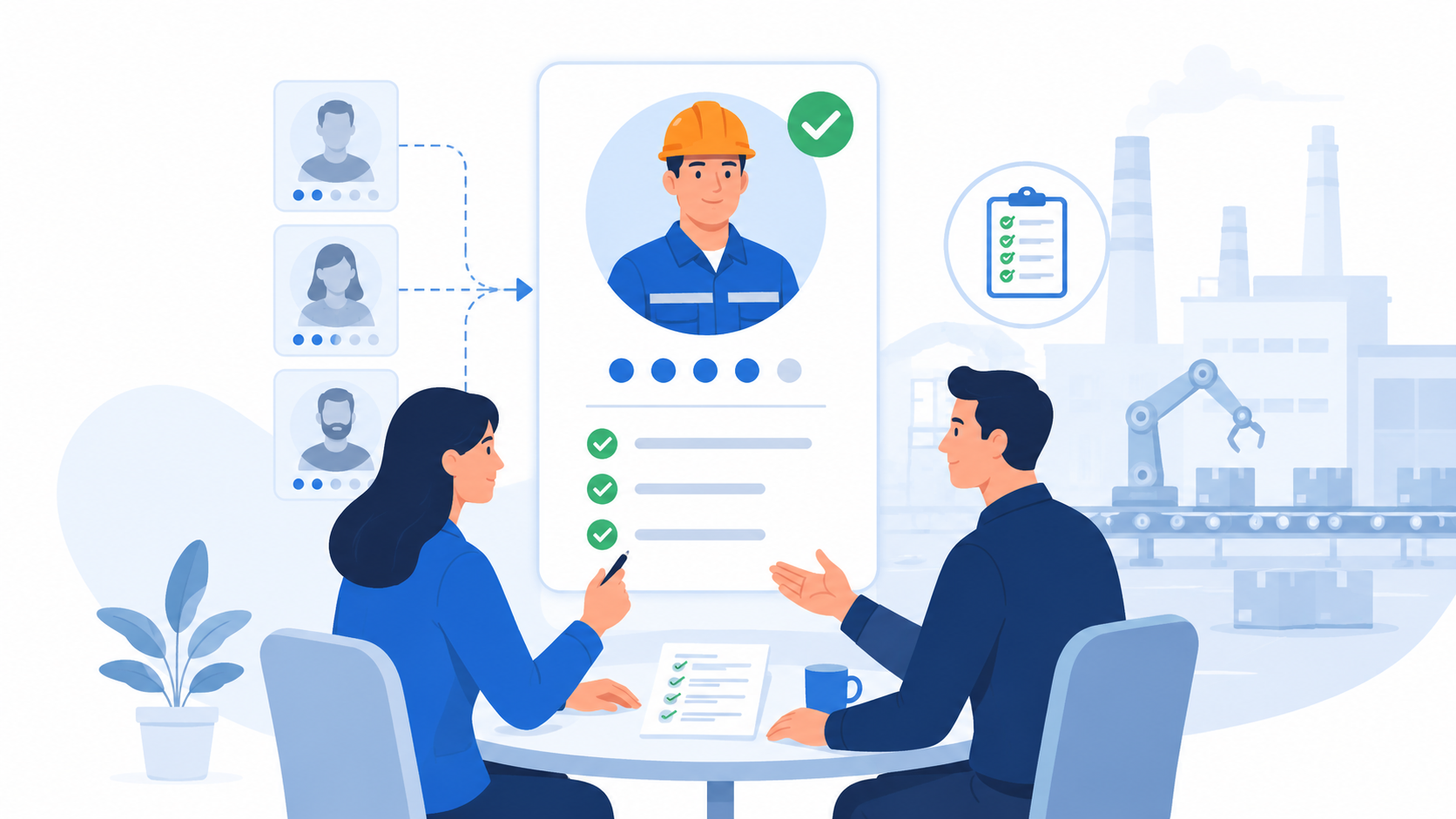
Standardizing screening questions helps every candidate for the same role get reviewed against the same criteria.
For example, every line operator candidate can be asked about:
Every quality control candidate can be asked about:
This makes shortlisting more consistent. It also helps hiring managers compare candidates based on role-relevant signals instead of incomplete notes.
KitaHQ supports this type of workflow by helping teams create role-specific AI interview assessment criteria, then generating candidate reports for recruiter and hiring manager review.
Recruitment speed is not only about screening. It is also about communication.
Manufacturing candidates may apply to multiple employers at the same time. If your team waits too long to invite, remind, or follow up, candidates may disappear from the process.
Recruiters can reduce drop-off by automating repetitive communication steps, such as:
This does not mean removing human judgment. It means recruiters do not need to manually send every repeated message.
For high-volume hiring, small delays add up quickly. A faster communication workflow can help keep candidates moving while recruiters focus on reviewing the right people.
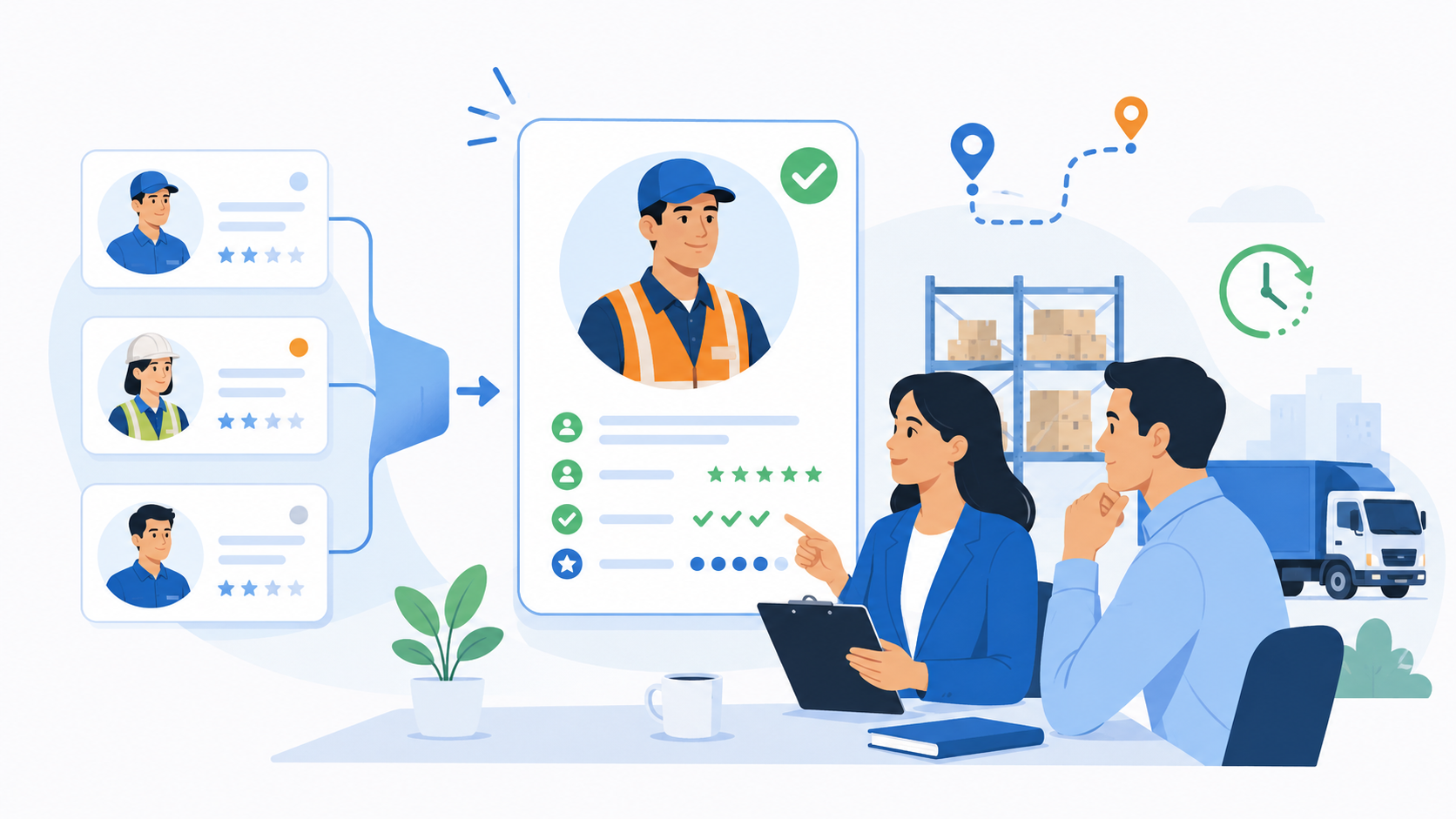
In manufacturing hiring, recruiters often act as the filter before supervisors or hiring managers get involved.
If the recruiter handoff is weak, managers may waste time interviewing candidates who are unavailable, underqualified, or poorly matched to the role.
A stronger candidate report should summarize:
This is especially useful when hiring managers are busy with production responsibilities.
Instead of reading scattered notes or asking recruiters for context, managers can review a structured candidate report before deciding who to interview next.
KitaHQ’s manufacturing workflow is designed to support this handoff by helping teams screen CVs, run AI video interviews, assess responses, and prepare clear reports before manager review.
See also: How Recruitment Automation Improves Candidate Experience
Not every manufacturing team has the same recruitment problem.
Some teams need more applicants. Others already have enough applicants but cannot screen them fast enough. Some teams lose candidates during scheduling. Others struggle because hiring managers receive weak shortlists.
Before adding more channels or tools, identify the bottleneck.
This prevents the team from solving the wrong problem.
For example, adding more job boards may not help if recruiters already have enough applicants but cannot screen them quickly. Likewise, improving interview questions may not help if candidates are dropping off before the interview starts.
Manufacturing teams may not always need more recruiters to move faster. In many cases, they need a more scalable way to screen candidates before supervisors spend time on interviews.
For manufacturing and technical hiring workflows, KitaHQ has supported manufacturing and technical screening workflows across technical, engineering, industrial, operations, sales, and support roles before recruiter or hiring manager review. For example, PT Benderang Hidup Indonesia used KitaHQ to screen technical and engineering candidates through structured interview questions before deeper technical review. PT SCG Indonesia used KitaHQ to support screening for industrial and manufacturing-related candidates with role-specific questions before recruiter or manager review.
If the team wants a published cross-industry efficiency example, use it carefully: PT Sejahtera Mitra Solusi reduced daily screening time from 2 hours to 30 minutes after replacing manual phone screens. This is not a manufacturing-specific proof point, but it is relevant to high-volume teams facing repeated screening questions and limited recruiter capacity.
AI candidate screening and AI video interviews fit best when manufacturing hiring is repeatable, high-volume, and criteria-based.
The best use of AI in manufacturing recruitment is to reduce repetitive early-stage screening work, improve consistency, and prepare better candidate information for human review.
Use this checklist to review your current process.
If most answers are “no,” the recruitment issue may not only be candidate supply. It may be a screening workflow problem.
Manufacturing recruitment moves fastest when the process is built around operational urgency.
Recruiters need to identify relevant candidates quickly. Candidates need a simple way to complete screening without waiting for live scheduling. Hiring managers need clear reports before spending time on interviews.
The strongest manufacturing recruitment strategies combine role-specific hiring lanes, clear must-have criteria, AI candidate screening, AI video interviews, automated communication, and structured candidate reports.
KitaHQ supports manufacturing teams that need to screen factory, warehouse, technician, and quality candidates before recruiter or hiring manager review.
Teams can use AI resume screening, AI video interviews, recruitment automation, and candidate reports to reduce repetitive early-stage work while keeping humans in control of verification and final decisions.
For teams that need a structured way to move candidates from application to manager review, explore KitaHQ’s manufacturing recruitment software for factory and production hiring.
.avif)
KitaHQ is an AI hiring software that helps teams screen faster, run AI video interviews, and evaluate candidates consistently.