

August 6, 2026
Ecommerce Hiring Process: A Practical Guide to Building a Team That Can Scale
Build a stronger ecommerce hiring process with eight practical steps for defining roles, screening candidates, running interviews, and scaling responsibly.
.avif)
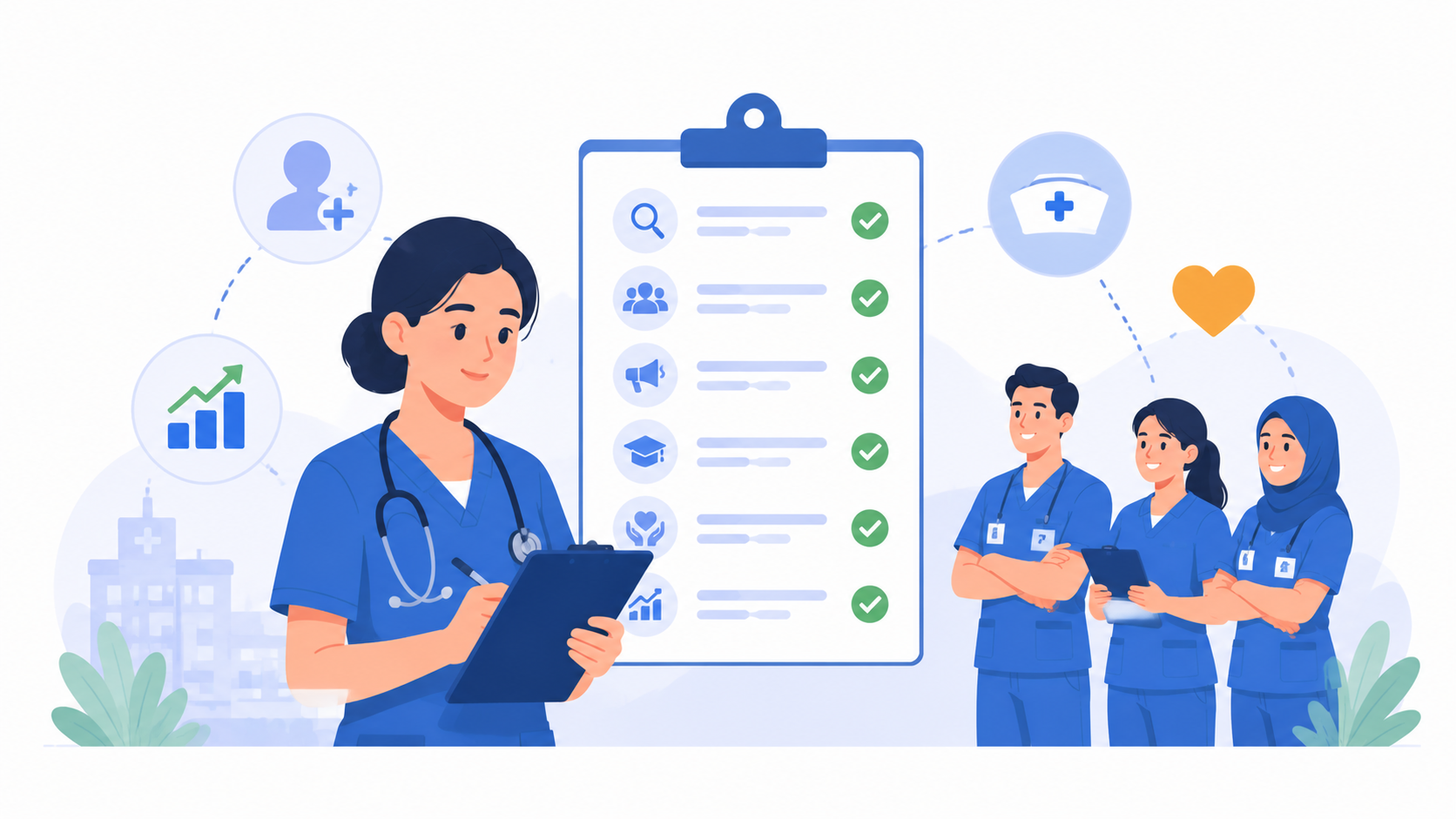
Nurse hiring is difficult because several pressures happen at the same time. Demand remains high, experienced nurses are leaving or changing settings, some specialties have small local talent pools, and nurse recruiters often compete for the same candidates.
The 2024 National Nursing Workforce Study from NCSBN found that 40% of registered nurses reported plans to leave the profession within five years. That figure reflects intent rather than a guaranteed outcome, but it highlights why retention concerns cannot be separated from recruiting.
Location also changes the challenge. HRSA's nurse workforce projections estimate a larger RN shortage in nonmetropolitan areas than metropolitan areas by 2038. A rural hospital, urban health system, outpatient clinic, and long-term care provider may therefore need different sourcing messages and incentives.
The process itself can create another disadvantage. Nurses working day, night, weekend, or rotating shifts may not be available for repeated screening calls. Slow replies, vague job details, and long scheduling gaps give candidates more time to accept another opportunity.
For hospitals and clinics that hire repeat roles, nursing recruitment software can help standardize early-stage screening before nurse manager review. It should support the workflow, not replace sourcing, license checks, hands-on clinical validation, or human hiring judgment.
The strongest plan does not depend on one job board, one sign-on bonus, or one piece of software. It connects a credible offer with targeted sourcing, fast communication, consistent screening, and a clear path into onboarding.
Start with the staffing gap you are actually trying to solve. A broad target such as "hire 50 nurses" is not enough to guide recruiters or candidates.
Break demand down by:
Separate genuine must-haves from skills that can be developed through orientation, residency, or cross-training. Requiring every preferred qualification may exclude promising new graduates or experienced nurses moving into a related specialty.
Recruiting, nursing leadership, HR, and the appropriate credentialing or compliance team should agree on these requirements before applications are reviewed. This prevents criteria from changing halfway through the process and gives candidates a more consistent experience.
Generic job ads make it difficult for nurses to judge whether a role fits their license, experience, schedule, and career plans. A useful description should answer the practical questions a candidate will ask before applying.
Include:
Be honest about difficult parts of the role. If the team is addressing staffing pressure, mandatory weekends, or a demanding patient mix, explain both the reality and the action plan. Credible detail builds more trust than polished promises that do not match the job.
Employer branding should show what it feels like to work in the organization, not only repeat its mission statement.
Use nurse-led stories to demonstrate how teams handle shift handoffs, patient safety, workload escalation, recognition, learning, and collaboration with leadership. Short day-in-the-life videos, employee interviews, unit profiles, and realistic workplace photos can give candidates more useful context than generic recruitment creative.
Ask current nurses why they joined, why they stay, and what nearly caused them to leave. Their answers can reveal which claims are credible enough to feature in recruitment campaigns and which workplace problems need to be fixed first.
The goal is not to present a perfect workplace. It is to show a clear employee value proposition supported by evidence candidates can see.
Sign-on bonuses can attract attention, but they rarely solve an offer that is weak in other areas. Compare the full package with the local and specialty market.
Depending on the role, the offer may include:
Only promote flexibility the unit can consistently provide. If scheduling options differ by location or specialty, make those differences clear in the job ad and recruiter conversation.
Nursing school relationships work best as a pipeline, not a last-minute request for applicants.
Healthcare organizations can support guest lectures, clinical placements, paid externships, job-shadowing, scholarships, career events, and nurse residency programs. These activities help students understand the workplace before graduation and give recruiters time to build trust.
Create a clear transition from student engagement to employment. Identify who follows up, when candidates become eligible to apply, how residency cohorts are selected, and what mentorship new hires receive.
For hard-to-fill locations, partner with schools that serve the surrounding community. Candidates with local ties may be more likely to understand the setting and stay, although recruiters should still build a wider regional or national pipeline where needed.
Current nurses know former colleagues, classmates, and professional peers who may not be actively searching. A simple referral program can turn those networks into a steady source of candidates.
Make the process easy to understand. Explain which roles qualify, how to submit a referral, when incentives are paid, and how employees can check the status. Consider milestone-based rewards after the new hire starts and remains for an agreed period.
Nurse ambassadors can also answer candidate questions at events or in recruitment content. Their role should be to share an authentic perspective, not deliver a rigid script.
Referrals can reproduce the same networks if they become the only channel. Balance them with school partnerships, specialty communities, job boards, and outreach that reaches candidates from different backgrounds.
Use a channel mix that matches the role rather than posting every opening in the same places.
Potential channels include:
Adapt the message for each audience. New graduates may value residency, preceptors, and a visible learning path. Experienced specialty nurses may focus more on workload, leadership, autonomy, schedule, and the resources available to deliver safe care.
Track which sources produce qualified candidates, accepted offers, and retained hires. A channel that generates many applications but few viable hires may be less valuable than a smaller professional community with stronger conversion.
See also: How to Reduce Healthcare Candidate Drop-Off During Screening
A nurse should be able to understand the role and complete the initial application on a mobile device without re-entering the same information several times.
Keep the first step focused on information needed to decide whether screening should continue. Acknowledge the application immediately, explain the next step, and give candidates a realistic timeline.
Set an internal service level for reviewing priority roles and contacting qualified applicants. The right standard depends on hiring volume and team capacity, but ownership should be clear. If no one is responsible for the queue, strong candidates can sit untouched while the unit remains understaffed.
Review drop-off by stage. If many candidates leave during the application, screening invitation, or interview scheduling step, fix that specific point instead of increasing ad spend.
Before screening begins, turn the role requirements into a short, job-related scorecard. Recruiters and nurse managers should know which signals belong in early screening and which require deeper clinical review later.
Early criteria may cover:
License, certification, sanctions, employment, reference, and background verification should remain in the appropriate specialist or human-led process. Early screening can confirm what a candidate reports, but it is not the same as authoritative verification.
Apply the same core questions and criteria to candidates for the same role. Recruiters should still review context, nontraditional backgrounds, transferable experience, and edge cases instead of treating a score as a final verdict.
Live screening calls can be difficult to arrange around clinical shifts. On-demand AI video interviews let candidates complete a structured first round without coordinating a live time with a recruiter.
Questions should be reviewed by the hiring team and tied to the role. For example, a clinic nurse may be asked how they would respond to an anxious patient, while a ward nurse may be asked to explain prioritization, escalation, or a safe handoff.
Use the same job-related questions and review criteria for comparable candidates. Recruiters and nurse managers can then examine reports, transcripts, recordings, strengths, and concerns before deciding who deserves a deeper interview.
An asynchronous interview is not a hands-on clinical test, a license check, or a final decision. Nurse leaders must still validate clinical competence, investigate concerns, and decide who moves forward.
Repeated invitations, reminders, status updates, and report handoffs take time when they are managed one candidate at a time. Automation can keep the process moving while recruiters focus on review and candidate conversations.
Useful steps to automate include:
Recruiters should still review role criteria, thresholds, message templates, candidate responses, exceptions, and any recommendation that affects progression. Scores can help prioritize attention, but they should not make the employment decision.
For a closer look at these review points, see Recruitment Automation Without Automated Hiring Decisions.
Retention begins when a candidate first encounters the job. If the recruitment message hides weekend requirements, workload realities, or limited growth options, the organization may fill the role but lose the hire early.
Give candidates a realistic preview of the setting, expectations, support, and development path. Connect recruitment with onboarding so commitments made during interviews reach the nurse manager, preceptor, and HR team.
Useful retention practices include:
The 2026 NSI National Health Care Retention & RN Staffing Report, an industry survey of 527 hospitals, reports that 22.7% of newly hired RNs left within one year. That makes first-year retention a recruitment outcome, not only an HR metric after the hire.
Review the funnel by role, location, specialty, and source. A systemwide average can hide a serious bottleneck in one unit or shift.
If screening is the slowest stage, this guide to reducing time-to-hire through better candidate screening explains where manual resume review, repeated calls, scheduling, and weak handoffs create delays.
Track a compact set of metrics:
Agree on definitions before comparing results. For example, one team may stop the time-to-fill clock at offer acceptance while another uses the employee start date. Consistency matters more than choosing a universal definition.
KitaHQ supports the early stage between application and nurse manager interview. It can help healthcare hiring teams:
Recruiters and nurse managers still review the evidence and decide who moves forward. KitaHQ does not verify licenses or certifications, conduct hands-on clinical skills tests, or make final hiring decisions.
If repetitive screening and follow-up are slowing the shortlist, explore how recruitment automation software can support a clearer early-stage workflow while keeping human review in place.
Overcoming the nurse recruitment challenge starts with creating credible roles and a workplace nurses genuinely want to join. Success also depends on clear communication, faster candidate progression, and consistent evaluation by recruiters and nurse managers.
Begin with the weakest point in your hiring funnel. If applicant quality is low, improve the role definition, messaging, and channel mix. If qualified nurses are dropping out, reduce delays and communicate the next steps clearly.
If managers repeatedly conduct basic screenings, use structured criteria and nurse recruitment software to automate early-stage screening and provide comprehensive candidate reports before live interviews.
The goal is not simply to hire faster, but to create a process that respects nurses’ time, protects clinical judgment, and produces hires who understand the role and are prepared to stay. Ready to improve your nurse hiring process? Book a demo with KitaHQ today.
Industry: Banking
KitaHQ is an AI recruitment software that helps companies screen candidates, manage applicants, and keep candidate communication moving in one connected workspace.