.avif)
How BeFa Cut Interview Time by 70% in High-Volume Hiring
Industry: Real Estate/ Industrial Estate
Role: Officers, Technicians, Environmental Specialists, and Managerial Positions
Insights from:

Farhan Hidayat
Human Capital Development
Use case: Reducing initial interview workload, evaluating role-specific competencies
Industry
Real Estate/ Industrial Estate
Region
Indonesia
Employees
200
Roles hired
Officers, technicians, environmental specialists, construction-related technical roles, and managerial positions
Hiring activity
Multiple vacancies, with up to 3,000 applications per position
Screening process before KitaHQ
Screening interviews taking 25 minutes per candidate
Result
70%
Reduction in interview time
2
1
week
Reduction in screening time
40%
Higher shortlist-to-hire conversion
The Challenge
“An initial interview can take 20 to 30 minutes per person. If we need to interview 20 people for one position, that can add up to 10 hours.”
Farhan Hidayat
Human Capital Development
Repeated Interviews Took Up Recruiter Time
With a lean recruitment team managing multiple vacancies and up to 3,000 applications per role, BeFa had to be selective about where recruiters spent their time. After reviewing CVs, the team conducted similar screening conversations lasting around 25 minutes each. Across multiple vacancies, these repeated interviews left less time for other recruitment priorities.
Hiring Managers Needed More Context Than a CV
For BeFa’s technical and specialized roles, a promising CV did not always translate into the knowledge or hands-on experience hiring managers needed. Recruiters needed stronger evidence behind their recommendations: what candidates had actually done, how they explained their work, and which details still needed technical verification.
What They Implemented and Benefits
1. AI Video Interviews to Reduce Repetitive First-Round Interviews
BeFa deployed KitaHQ’s AI Video Interviews as a step for shortlisted candidates right after CV screening. The interactive sessions and resulting candidate reports provided upfront behavioral and technical insights.
Recruiters could confidently fast-track top talent or filter out mismatches without ever scheduling a live call. Any follow-up interviews were highly targeted, focusing only on verifying crucial details rather than general introductions.
Recruiters could confidently fast-track top talent or filter out mismatches without ever scheduling a live call. Any follow-up interviews were highly targeted, focusing only on verifying crucial details rather than general introductions.
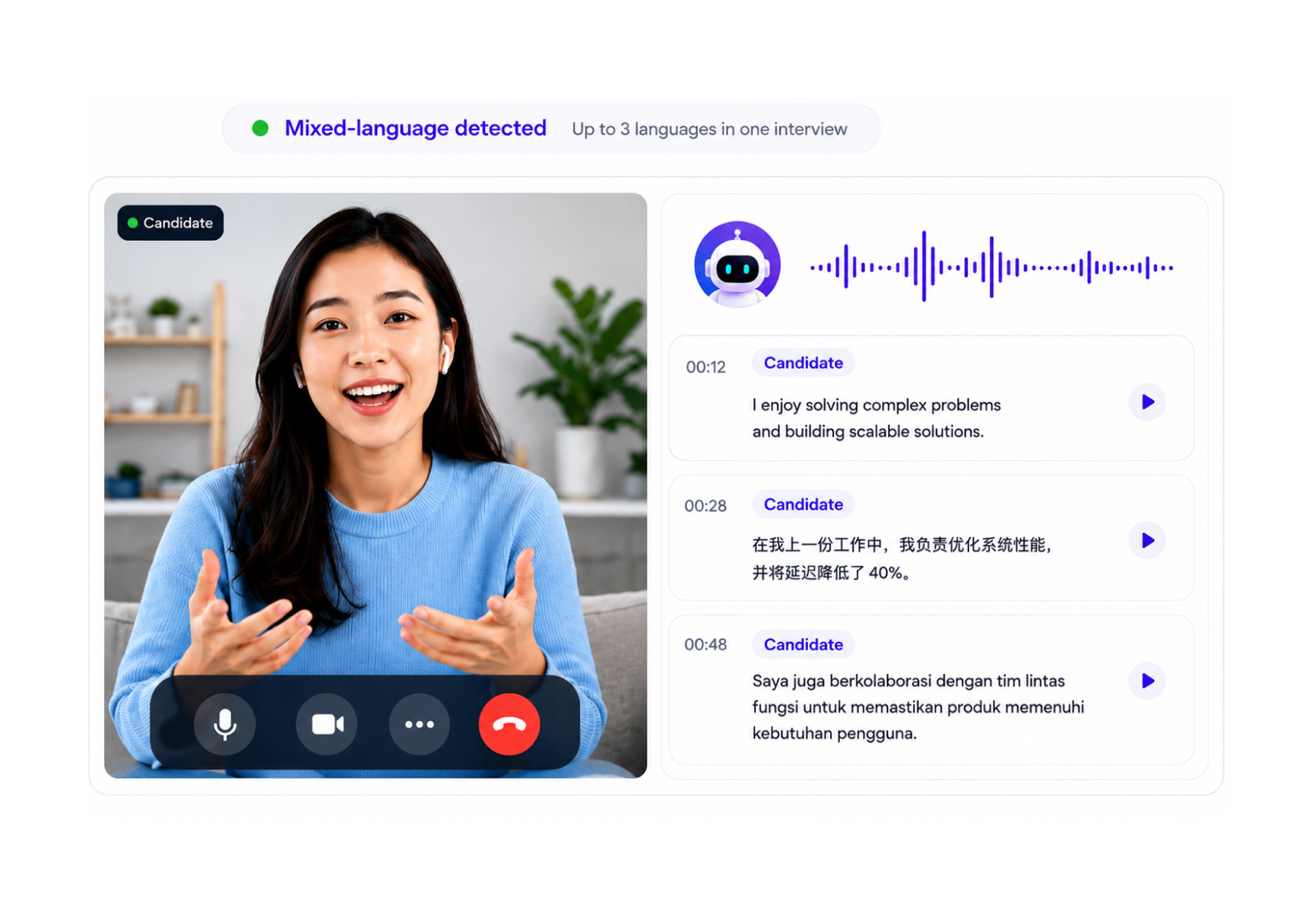
What changed:
•
No recruiter-led initial interviews
•
Results ready for recruiter review
•
Follow-ups only where needed
Impact:
•
Saved 70% of initial interview time
•
Removed 25-minute manual interviews per candidate
•
Reduced early screening from 2 days to 6 hours
2. Custom Assessments to Evaluate Role-Specific Competencies
To effectively screen technical roles like construction technicians, BeFa moved beyond surface-level resumes by building custom assessment scenarios directly into KitaHQ. Instead of relying on generic Q&A, candidates were tested on real-world site scenarios, such as identifying and resolving discrepancies between physical construction work and technical drawings.
This structured framework gave recruiters a clear benchmark: top candidates demonstrated rigorous protocols (checking drawings, escalating to site supervisors, and verifying fixes), while underqualified applicants exposed gaps by giving vague answers or suggesting unapproved changes.
This tailored evaluation enabled recruiters to confidently filter for proven technical problem-solving, ensuring hiring managers only spent time interviewing pre-validated, high-caliber candidates.
This structured framework gave recruiters a clear benchmark: top candidates demonstrated rigorous protocols (checking drawings, escalating to site supervisors, and verifying fixes), while underqualified applicants exposed gaps by giving vague answers or suggesting unapproved changes.
This tailored evaluation enabled recruiters to confidently filter for proven technical problem-solving, ensuring hiring managers only spent time interviewing pre-validated, high-caliber candidates.
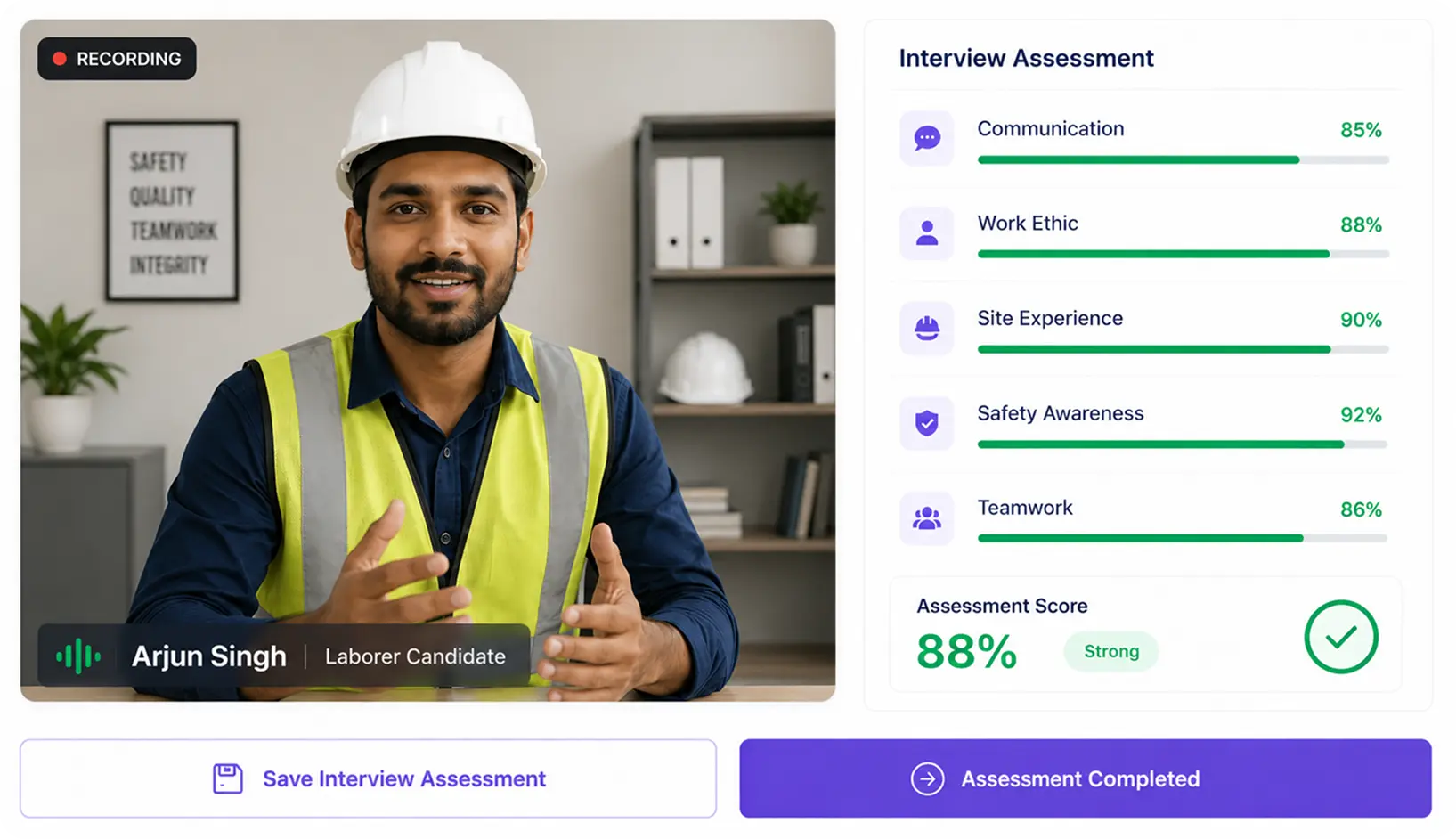
What was assessed:
•
Reading technical drawings
•
Construction methods and materials
•
Equipment troubleshooting
•
Site safety procedures
Impact:
•
Improved interview success rate by 40%
•
Clearer insights before manager interviews
•
Greater focus on best-fit candidates
3. Structured Interview Reports to Support Hiring Manager Decisions
Before advancing candidates to technical rounds, BeFa needed to ensure Hiring Managers and recruiters were completely aligned on evaluation standards. Instead of passing along unstructured interview notes, the recruitment team standardized candidate handoffs using KitaHQ's interview reports.
This gave Hiring Managers additional insights into candidate responses and competencies before the next interview, helping them focus their discussions on areas requiring further validation.
To protect the candidate information used in these reviews, KitaHQ encrypts recruitment data in transit and at rest and applies role-based access controls. Interview recordings and transcripts are not used to train KitaHQ or third-party AI models. Data retention follows employer instructions, applicable agreements, and legal requirements. Learn more about KitaHQ’s data protection
This gave Hiring Managers additional insights into candidate responses and competencies before the next interview, helping them focus their discussions on areas requiring further validation.
To protect the candidate information used in these reviews, KitaHQ encrypts recruitment data in transit and at rest and applies role-based access controls. Interview recordings and transcripts are not used to train KitaHQ or third-party AI models. Data retention follows employer instructions, applicable agreements, and legal requirements. Learn more about KitaHQ’s data protection
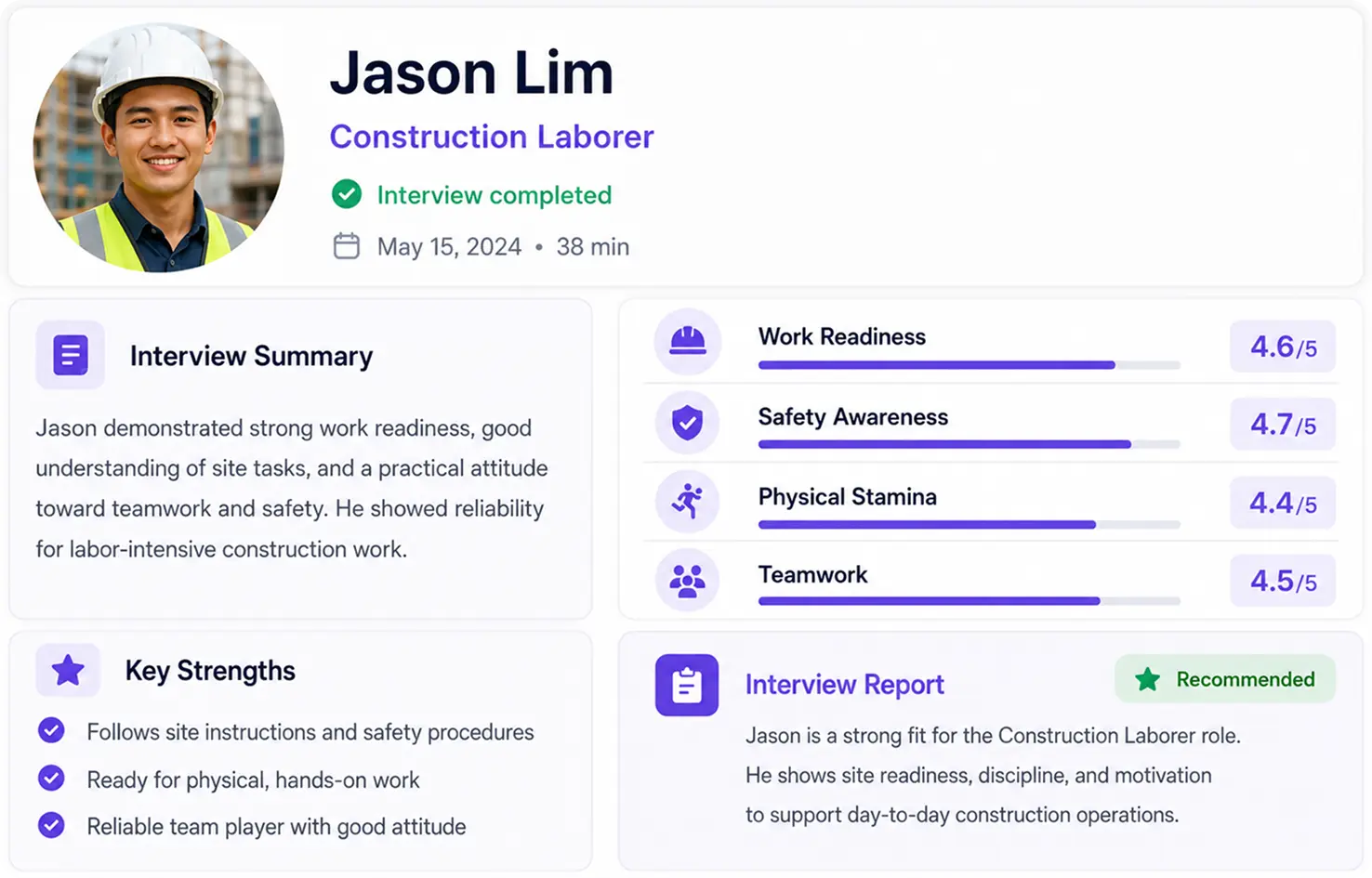
What changed:
•
Consistent reporting
•
Shared benchmarks
•
Verifiable evidence
Impact:
“We reduced the time needed to prepare and share candidate reports from two weeks to one."
Why This Matters for Industrial Estate and Technical Hiring
Recruitment across industrial estate operations involves different technical disciplines, levels of seniority, and business requirements. Teams need to understand how candidates explain their experience and respond to role-specific questions before moving them into deeper technical interviews.
BeFa Industrial Estate’s experience shows how AI interviews and custom assessments can make that early evaluation more efficient while giving hiring managers clearer candidate information.
“Candidates told us the interview experience felt new and technologically advanced. It helped us present BeFa as a company that embraces modern technology.”
BeFa Industrial Estate’s experience shows how AI interviews and custom assessments can make that early evaluation more efficient while giving hiring managers clearer candidate information.
“Candidates told us the interview experience felt new and technologically advanced. It helped us present BeFa as a company that embraces modern technology.”
Make High-Volume Hiring Easier to Manage
See how KitaHQ helps teams screen large applicant pools, reduce repetitive interview work, and move relevant candidates forward.
Who This Is For
•
HR teams managing hundreds or thousands of applications per role
•
Construction and industrial estate teams hiring technical and operational talent
•
Recruiters handling multiple vacancies with limited capacity
•
Hiring managers who need evidence behind shortlist recommendations
Ready to Transform Your Hiring?
See how KitaHQ helps you run AI-based interviews at less than $1 per candidate.
GET STARTED WITH A DEMO