

How SCG Indonesia Screens Up to 4x More Candidates
Industry: Manufacturing and Distribution
Role: Sales and Officer-level Positions and Above
Insights from:

Velayati Apriani
Asst. Workforce Planning & Talent Acquisition Manager
Use case: Increasing interview capacity, reducing scheduling delays, and supporting hiring manager review across group companies
Industry
Manufacturing and distribution
Region
Indonesia, with hiring across Java, Sumatra, and Bali
Employees
8,000+
Recruitment team
2 recruiters hiring officer-level roles and above across 36 companies
Hiring activity
20 vacancies/month; up to 1,000 applicants per role
Screening process before KitaHQ
Phone screening via WhatsApp
Result
4x
More candidates screened
7
2
days
Shorter interview stage
20%
Recruitment cost savings
The Challenge
“We had to ask candidates when they were available. When we contacted them, they were not necessarily available.”
Velayati Apriani
Asst. Workforce Planning & Talent Acquisition Manager
Managing High Applicant Volumes Across Companies
SCG Indonesia managed around 20 vacancies a month across 36 group companies, with up to 1,000 applicants per role. Sales hiring was one of its highest-volume recruitment areas. With two recruiters handling officer-level positions and above, the team had to balance candidate sourcing, CV review, early interviews, and coordination with hiring managers.
Short Interviews Still Required Back-and-Forth Scheduling
A manual early interview usually lasted only 10–15 minutes. The bigger constraint was finding a time when both the recruiter and candidate were available. Those scheduling exchanges limited daily interview capacity to around 5 candidates and added delays before candidates could be sent to hiring managers.
What They Implemented and Benefits
1. AI Video Interviews to Increase Daily Interview Capacity
To eliminate high drop-off rates and scheduling bottlenecks, SCG implemented a self-service screening workflow via KitaHQ. Candidate profiles were bulk-imported, triggering dynamic email invitations with structured completion windows. Candidates completed their conversational AI interviews at their convenience, even outside business hours, removing the need for live recruiter availability.
This shift expanded the screening window to 24/7, allowing the team to scale from 5 live screening calls per recruiter to 20 completed candidate evaluations per day.
“Some candidates seemed more comfortable answering questions during AI interviews and shared more details than they did in conversations with our recruiters.”
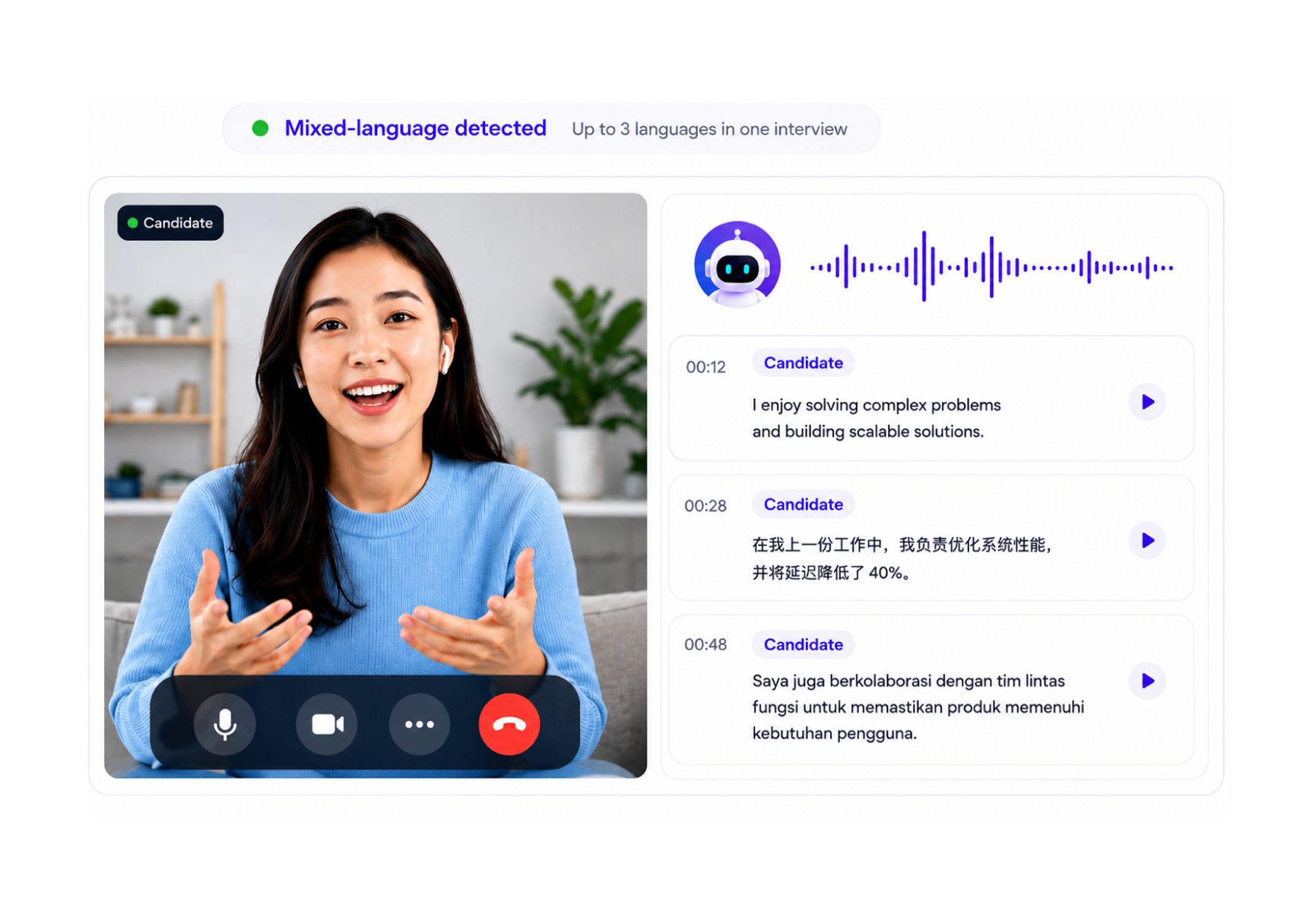
What changed:
•
Shift to interactive conversational AI
•
Zero scheduling back-and-forth
•
Targeted human intervention
Impact:
•
Daily interview capacity increased from 5 candidates to up to 20.
•
The first round interview stage shortened from 7 to 2 days.
•
Average time-to-hire dropped from over 45 days to around 35 days.
•
Up to 20% annual recruitment cost savings.
2. Custom Assessments for Different Role Requirements
Hiring across manufacturing and distribution meant that SCG needed different questions for different roles. The team used custom questions in AI video interviews to explore role-specific capabilities before candidates reached hiring managers.
For sales roles, questions could assess customer relationship management, negotiation, and commercial judgment. For example, candidates might be asked how they would respond to a customer requesting a lower price while protecting margins. A good signal would be considering both the customer relationship and business impact; a bad signal would be offering a discount without weighing the trade-offs.
For operations-related roles, questions could assess stakeholder communication and problem-solving through scenarios such as handling a customer delivery issue. A good signal would be a structured approach to resolving the issue; a bad signal would be vague escalation or shifting blame.
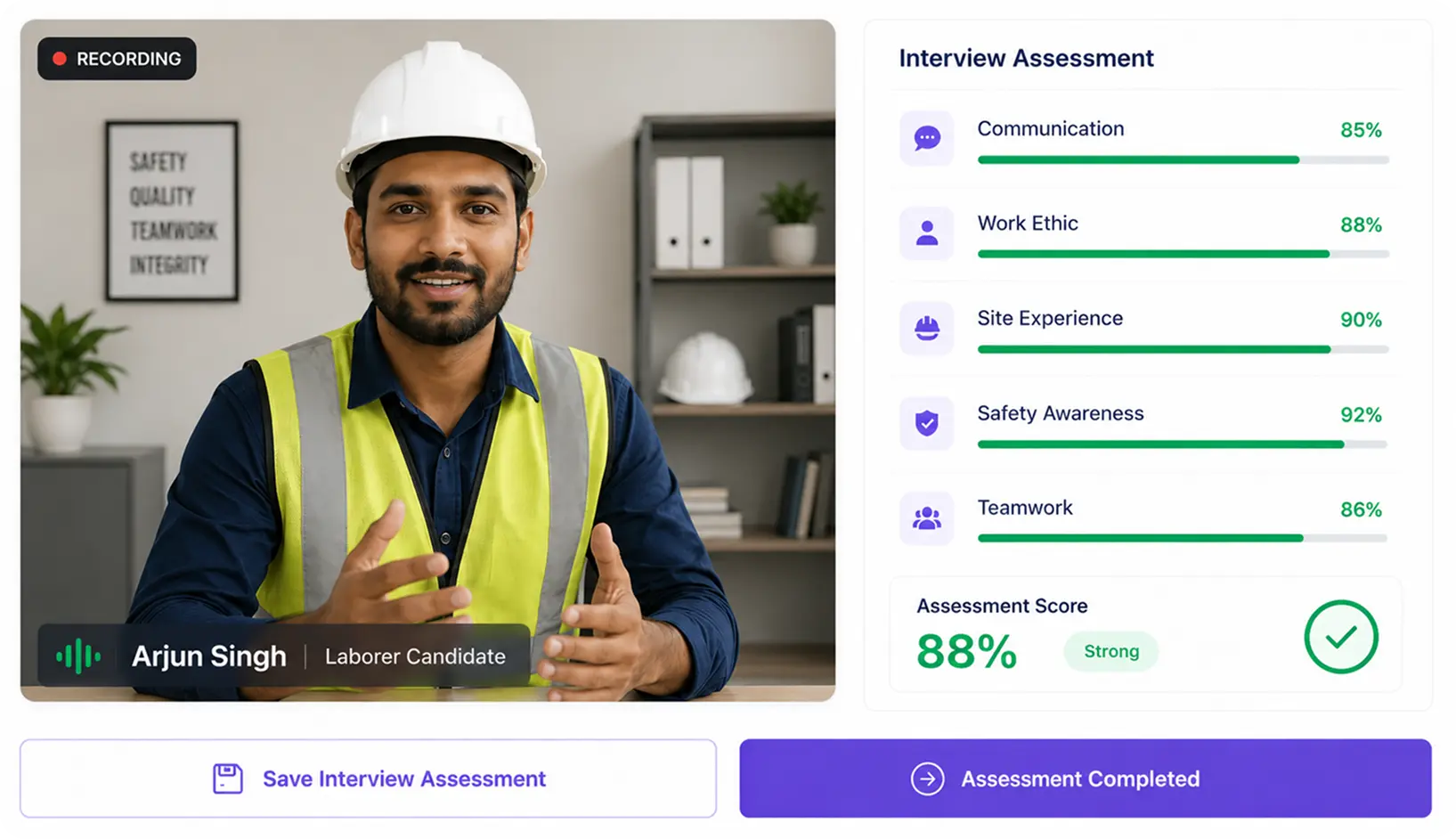
What was assessed:
•
Role-specific competencies (e.g., negotiation, problem-solving).
•
Practical reasoning applied to real-world scenarios.
Impact:
•
Managers received deeper candidate insights much earlier in the pipeline.
•
Live interviews became highly targeted verification sessions.
3. Candidate Reports to Support Multilingual Reviews and Manager Handoffs
SCG shared the AI interview reports with hiring managers, giving them more information than a recruiter’s summary of a phone call. For roles requiring Mandarin, English-language reports helped recruiters understand the interview results even when they did not speak Mandarin. Hiring managers could use those results to guide the next conversation and verify the role’s requirements.
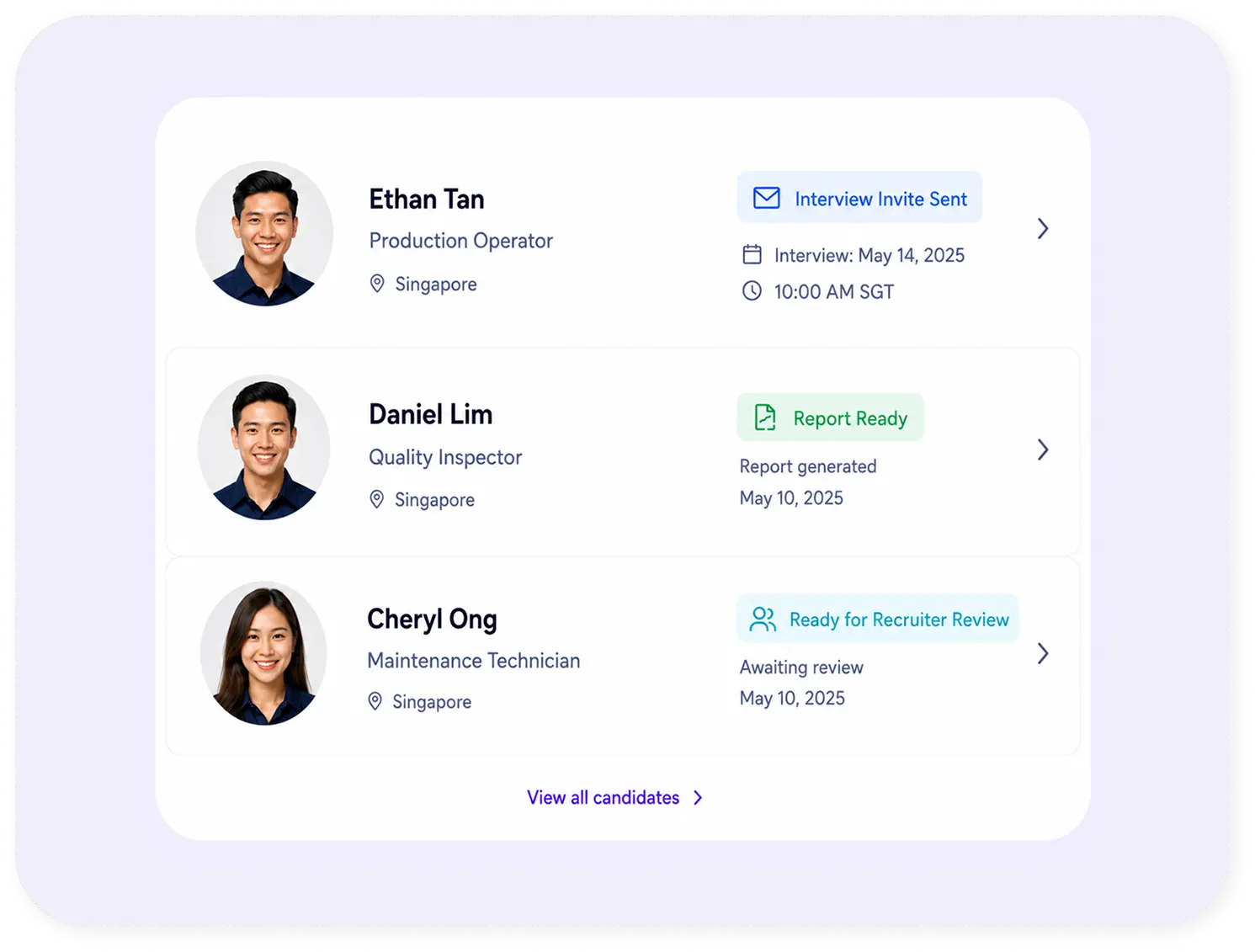
What changed:
•
Managers reviewed structured insights rather than brief, subjective recruiter notes.
•
English-language reports supported recruiter review of Mandarin interviews.
Impact:
“We could see more of each candidate’s capabilities and make better shortlist decisions with KitaHQ.”
Why This Matters for Recruitment Across Business Units
For shared service recruitment teams, applicant volume is only part of the workload. Each vacancy brings a different business unit, location, and hiring manager into the process. SCG’s experience shows how moving early interviews away from individual live calls can expand recruiter capacity and give hiring managers more candidate information before they invest time in the next stage.
Make High-Volume Hiring Easier to Manage
See how KitaHQ helps teams screen more candidates, reduce scheduling work, and keep hiring moving across locations and business units.
Who This Is For
•
HR shared service teams supporting several companies or business units.
•
Manufacturing and distribution teams recruiting sales and officer-level roles.
•
Lean recruitment teams managing large applicant pools and hiring SLAs.
•
Recruiters who need to share interview results with hiring managers across locations.
See How Much Time Your Team Could Save
Stop losing time to hiring admin. Start hiring intelligently.
GET STARTED WITH A DEMO