Trust Center · Fair Hiring
Fair Hiring Practices with KitaHQ
KitaHQ supports more consistent and accountable candidate review through recruiter-defined job-related criteria, structured interviews, recruiter oversight and reviewable records. Outcomes also depend on employer configuration, criteria, safeguards and human use.

Structured Review with Human Accountability
These controls support transparency, consistent criteria and human accountability. Their effectiveness also depends on employer configuration, criteria, safeguards and human use.
01
Employers Configure the Role
Define the questions and job-related assessment criteria.
02
Candidates Receive Clear Information
Explain the AI-assisted interview and how answers are analyzed.
03
KitaHQ Organizes the Evidence
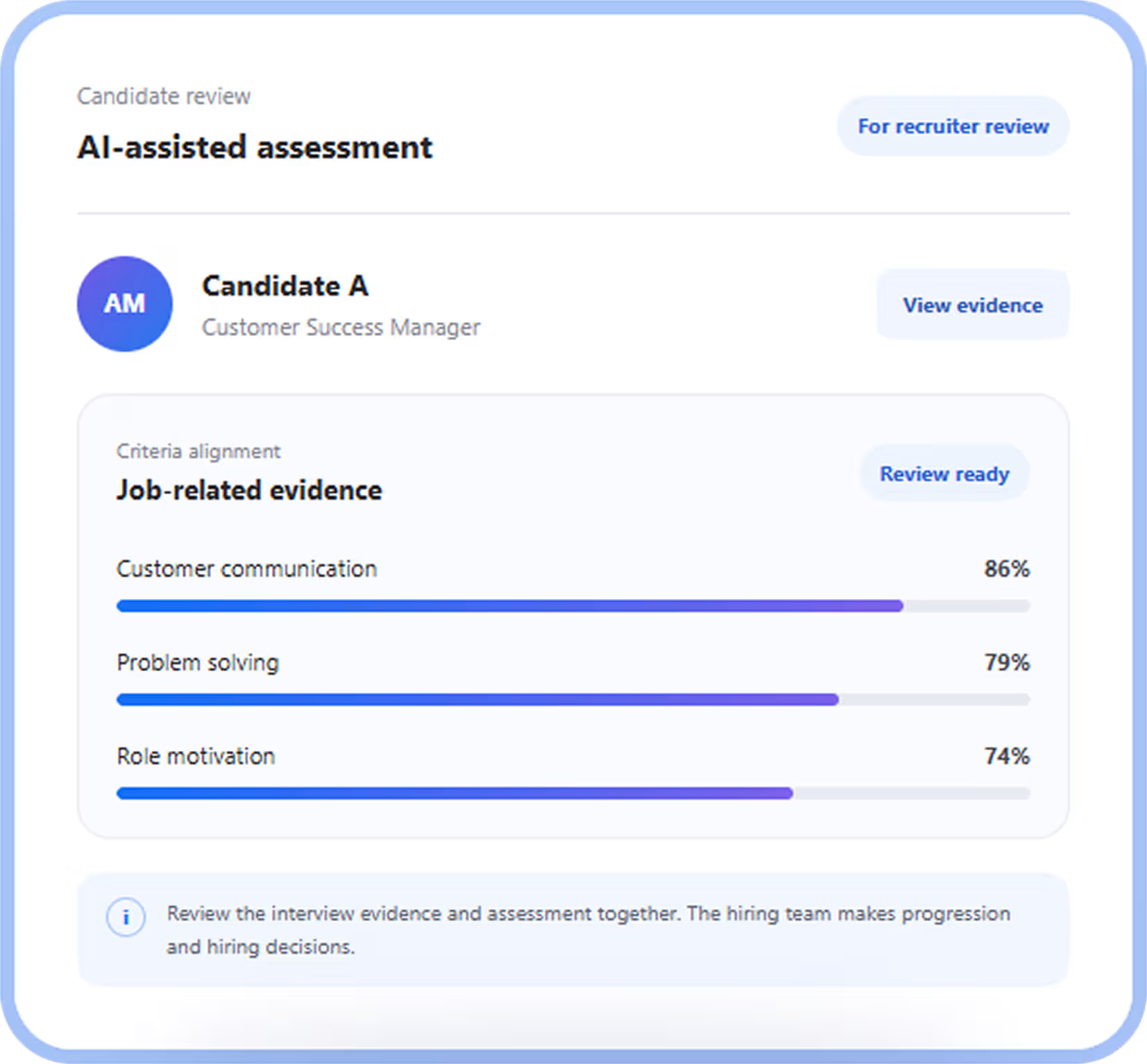
Create criteria-alignment scores, rankings, summaries, notes and reports.
04
Recruiters Inspect the Assessment
Review the interview evidence and disregard the AI-assisted output.
05
Employers Retain Decision Authority
KitaHQ does not automatically reject candidates; an authorized recruiter confirms adverse decisions.
Our Product Approach
01
Job-Related Criteria
KitaHQ evaluates candidate answers against recruiter-defined, job-related criteria. Employers should ensure that each criterion is relevant to the role, clearly described and applied consistently.
02
Structured Interview Frameworks
Structured interviews help teams apply a common core question framework to candidates for the same role. Follow-up questions may vary based on the content or depth of a candidate’s answer. Employers remain responsible for configuring and applying the framework consistently.
03
Decision Support and Employer-Controlled Workflows
KitaHQ provides criteria-alignment scores, criteria-alignment rankings, summaries, AI-assisted assessments and reports for recruiter review. Criteria-alignment rankings indicate alignment with recruiter-configured criteria and support structured review; they are not predictions of future job performance or final hiring decisions. Employers control the criteria and workflow rules. KitaHQ does not automatically reject candidates, and an authorised recruiter must confirm any rejection or other adverse progression decision.
Employers may configure workflow rules that create interview invitations, reminders, manager-interview invitations or review requests when stated conditions are met. KitaHQ does not automatically reject candidates. An authorised recruiter must review relevant candidate evidence before confirming any rejection or other adverse progression decision. The employer remains responsible for each rule and confirmed decision.
Human Oversight and Hiring Decisions
Assessment
Trust Center · Fair Hiring
Decision remains human
Human Oversight and Review Records
Recruiters and hiring managers can inspect the candidate’s interview evidence and AI-assisted assessment and disregard the assessment. KitaHQ does not automatically reject candidates. An authorized recruiter must confirm any rejection or other adverse progression decision after reviewing relevant candidate evidence.
KitaHQ retains identifiable assessment and workflow records so authorized employer users can review available evidence and actions recorded in the workflow.
Employer Responsibilities
The hiring employer determines who enters its recruitment process and configures the role, criteria, questions, workflow settings and reviewer access, subject to applicable law.
Employer Checklist
Define lawful, necessary and job-related criteria.
Apply a consistent framework to candidates for the same role.
Review AI-assisted outputs with relevant source information and context.
Avoid criteria or practices that directly or indirectly discriminate.
Provide required candidate notices and a route for questions.
Provide accommodations or an appropriate alternative assessment route where required.
Investigate credible concerns about errors, accessibility or unfair outcomes.
Complete local bias audits, impact assessments or governance reviews where required.
Retain appropriate human authority over progression and hiring decisions.
Recommended Recruiter Review
Confirm that the role criteria are current and job-related.
Review the candidate’s underlying answer, transcript, CV or other relevant source material where appropriate.
Consider whether audio, language, accent, disability, connection problems or an accommodation need may have affected the result.
Avoid treating one score as conclusive.
Document the independent reasons for a material progression or rejection decision where required.
Candidate Support
Candidates who need an accommodation or alternative assessment route should contact the hiring employer before starting. Video interviews require camera and microphone access. Some interviews may require the camera to remain on.
Human Oversight and Hiring Decisions
Candidate Transparency, Choices and Support
Candidates should be told before the interview that it is recorded and that AI analyzes the content of their answers against recruiter-configured, job-related criteria.
Depending on applicable law and the employer’s process, candidates may contact the hiring employer to:
Explain the AI-assisted interview and how answers are analyzed.
Technical support:
support@kitahq.com
Privacy questions:
privacy@kitahq.com
Human Oversight and Hiring Decisions
Evidence and Ongoing Review
KitaHQ can support a review with available product documentation, data-flow information, disclosed limitations, candidate interview evidence and identifiable assessment or workflow records. Recruiters can inspect the assessment and disregard it.
KitaHQ grounds its fair-hiring statements in documented product practices, including job-related criteria, candidate transparency, recruiter review and identifiable assessment and workflow records. Regulatory audits and impact assessments remain specific to each employer’s deployment and applicable requirements.
Employers should periodically review whether criteria, scores and progression patterns remain relevant and appropriate for the role.
KitaHQ grounds its fair-hiring statements in documented product practices, including job-related criteria, candidate transparency, recruiter review and identifiable assessment and workflow records. Regulatory audits and impact assessments remain specific to each employer’s deployment and applicable requirements.
Employers should periodically review whether criteria, scores and progression patterns remain relevant and appropriate for the role.
Country-Specific Fair Hiring Information
KitaHQ applies one global product approach: recruiter-configured job-related criteria, clear AI-use information, inspectable assessments, recruiter authority, review records, disclosed limitations and candidate support routes. The sections below explain how those practices relate to selected local requirements.
These references connect confirmed KitaHQ practices with selected local requirements. Employers remain responsible for determining which obligations apply to their recruitment process and configuration.

United States
US employment-discrimination and disability laws continue to apply when AI makes or assists employment decisions. State and city rules can add notice, consent, audit, impact-assessment, recordkeeping or review obligations.KitaHQ supports employer governance through AI-use transparency, recruiter review and identifiable assessment and workflow records designed to help employers prepare for applicable obligations under Colorado’s Automated Decision-Making Technology Act. Employers remain responsible for determining applicability and providing any required interaction notice, adverse-outcome explanation, access or correction process, meaningful human review and reconsideration.
For employers using automated employment decision tools in New York City, KitaHQ provides candidate transparency, recruiter review and assessment and workflow records that can support employer governance. Employers remain responsible for determining applicability and completing any required independent bias audit, publication and candidate notice. Where the Illinois Artificial Intelligence Video Interview Act applies, the hiring employer is responsible for the required AI-use explanation, consent, sharing and deletion requirements and any applicable sole-reliance reporting.
KitaHQ supports these responsibilities through candidate-facing AI-use information, a recorded checkbox selection, authorised access controls and its documented data-handling process. California and federal anti-discrimination and accommodation rules also remain applicable.
For employers using automated employment decision tools in New York City, KitaHQ provides candidate transparency, recruiter review and assessment and workflow records that can support employer governance. Employers remain responsible for determining applicability and completing any required independent bias audit, publication and candidate notice. Where the Illinois Artificial Intelligence Video Interview Act applies, the hiring employer is responsible for the required AI-use explanation, consent, sharing and deletion requirements and any applicable sole-reliance reporting.
KitaHQ supports these responsibilities through candidate-facing AI-use information, a recorded checkbox selection, authorised access controls and its documented data-handling process. California and federal anti-discrimination and accommodation rules also remain applicable.

United Kingdom
UK responsible-AI guidance for recruitment emphasises safety, transparency, fairness, accountability, contestability and effective human oversight. KitaHQ explains how AI is used, states relevant limitations, enables recruiters to inspect and disregard AI-assisted assessments, makes employer-controlled workflow automation and final hiring accountability clear, and provides routes for candidate, privacy and technical questions.
KitaHQ supports meaningful human review by allowing authorised recruiters to inspect relevant candidate evidence, review the AI-assisted assessment and disregard it. Employers remain responsible for job-related criteria, reasonable adjustments and any required impact or data-protection assessment. Where a significant decision is based solely on automated processing, the employer must provide applicable safeguards, including clear information, a route to make representations or challenge the outcome, and meaningful human intervention.

Canada
Canadian human-rights and privacy requirements emphasise non-discrimination, accommodation, transparency, appropriate purposes, safeguards and accountability. KitaHQ supports these principles through job-related criteria, clear AI-use information, recruiter review and reviewable assessment records.Employers remain responsible for criteria, accommodations and hiring outcomes. Provincial requirements may add duties. In Ontario, employers with 25 or more employees generally must disclose in a publicly advertised job posting whether artificial intelligence is used to screen, assess or select applicants.

Australia
Australian employment and anti-discrimination laws require employers to use lawful criteria and avoid discriminatory outcomes. Government and human-rights guidance on AI recruitment also emphasises governance, transparency, accessibility, accuracy and human oversight.
KitaHQ supports reviewable use through criteria-based assessments, recruiter access to underlying candidate evidence, disclosed limitations and employer-controlled decisions. Employers remain responsible for accommodations, local-law assessment and outcomes.

New Zealand
New Zealand law prohibits unlawful discrimination in employment and may require reasonable accommodation. Privacy rules also require appropriate handling of applicant information.
KitaHQ supports structured, criteria-based review and makes assessments available for recruiter inspection. Employers remain responsible for lawful criteria, candidate support, meaningful review and hiring decisions.

Singapore
Singapore’s fair-employment framework promotes merit-based and non-discriminatory recruitment. KitaHQ supports a job-related and reviewable process through recruiter-configured criteria, structured interviews, human review and candidate transparency.
Employers remain responsible for advertisements, criteria, accommodations, workflow settings and decisions, including preparation for applicable Workplace Fairness Act requirements as they take effect.

Malaysia
Malaysian employers should use lawful, job-related recruitment criteria and follow applicable sector-specific, privacy and employment requirements. Malaysia’s National Guidelines on AI Governance and Ethics promote fairness, inclusivity, transparency and accountability.
KitaHQ supports selected fairness, transparency and accountability themes in Malaysia’s National Guidelines on AI Governance and Ethics through criteria-based assessments, candidate transparency, recruiter review and identifiable assessment and workflow records. Employers remain responsible for assessing applicable transparency, human-review, sensitive-data and impact-assessment expectations under Malaysia’s current data-protection guidance.

Indonesia
Indonesian manpower law protects equal opportunity and treatment in employment, while national AI ethics guidance identifies inclusivity, humanity, transparency and accountability as important values.
KitaHQ supports these values by explaining AI-assisted processing, evaluating answer content against job-related criteria, keeping employers responsible for decisions and providing privacy and technical-support routes. Employers remain responsible for lawful criteria, accommodations and hiring outcomes.

Germany and the European Union
Germany’s General Equal Treatment Act protects applicants throughout recruitment. The EU AI Act classifies certain AI uses in recruitment and candidate evaluation as high-risk, with obligations that phase in for providers and deployers.
KitaHQ supports transparent and reviewable use by explaining the system’s purpose, using recruiter-configured job-related criteria, documenting limitations, preserving assessment and workflow records, and enabling recruiters to inspect and disregard AI-assisted outputs.
KitaHQ provides controls supporting selected EU requirements for transparency, human oversight, limitation documentation and reviewable records. Employers remain responsible for lawful deployment, workplace consultation where applicable, candidate information, data-protection assessments and review or contestability routes.
KitaHQ supports transparent and reviewable use by explaining the system’s purpose, using recruiter-configured job-related criteria, documenting limitations, preserving assessment and workflow records, and enabling recruiters to inspect and disregard AI-assisted outputs.
KitaHQ provides controls supporting selected EU requirements for transparency, human oversight, limitation documentation and reviewable records. Employers remain responsible for lawful deployment, workplace consultation where applicable, candidate information, data-protection assessments and review or contestability routes.
Explore KitaHQ Trust
Responsible AI
Learn what KitaHQ's AI processes, what outputs it creates, how those outputs should be interpreted, where automation may occur and how human responsibility is maintained.
Security Control
Review KitaHQ’s documented security controls, including encryption, access controls, monitoring, vulnerability scanning, and incident response practices.
Privacy Notice
Learn how KitaHQ collects, uses, stores, and protects personal data across our website, products, and services.
Candidate Guide
Understand how to prepare for a KitaHQ AI video interview, how AI is used, how to request help and where hiring decisions are made.
.png)
.avif)